










Ready to try eSIMs and change the way you stay connected?
Download the Airhub app to purchase, manage and top up your eSIMs anytime, anywhere!
App exclusive5% off at checkout
Plan your American adventure with this USA travel guide. Get itinerary tips and discover U.S. destinations.

Let's start with the piece of advice that will save your first trip to the USA: you cannot see it all. The country runs across a whole continent and six time zones, and almost every first timer makes the same mistake trying to bolt the East Coast cities, the Western canyons, and the Florida theme parks onto a single two-week trip. What you get is a blur of airports and a suitcase you never fully unpack. The travelers who come home raving did the opposite: they picked one region and went deep.
That's the idea this USA travel guide is built around. From here, we'll work through where to go by region, when to go, roughly what it all costs, how to get around, what you need to actually get into the country, and how to keep your phone working once you land the practical layers that turn "I want to go to America someday" into a trip with dates on it.

The USA isn't really one destination; it's a dozen of them wearing the same flag. New York to Los Angeles is a six-hour flight about the same as London to the Middle East so "a trip to America" is a bit of a fiction. What you're actually choosing is which America you want to see first.
Here's the fast way to narrow it down:
Lock in the region before you book a single flight or hotel. Your budget, your transport, your whole itinerary all of it flows from this one decision, which is exactly why it should come first.

Here's a regional overview with a standout or two in each. It's not the full map no single guide can be but it's enough to anchor a first trip.
The Northeast history and big-city energy. New York City is the natural opener: world-class museums, Broadway, the Statue of Liberty, and neighborhoods that each behave like a small city of their own. Pair it with Washington, D.C. for the free Smithsonian museums and the monuments, then Boston for compact, walkable, colonial-era history. Because all three link up by train, this is the one region you can do properly without ever renting a car.
Travelling at a specific time of year? Our guide to the best places to visit in December in the USA breaks down festive and warm-weather picks.

In a country this size, there's no single "best time" only the best time for wherever you're headed. Broadly:
| Season | Great for | Watch out for |
|---|---|---|
| Spring (Mar–May) | Cities, national parks warming up, fewer crowds | Variable weather; spring-break crowds in Florida |
| Summer (Jun–Aug) | Beaches, the Northeast, road trips | Peak prices and crowds; the desert Southwest is brutally hot |
| Fall (Sep–Nov) | New England foliage, comfortable city weather, deals | Hurricane season on the Gulf and Atlantic coasts |
| Winter (Dec–Feb) | Skiing, warm escapes (Florida, Hawaii), holiday lights | Cold and possible flight delays up north |

A week is plenty to enjoy one region without rushing; two weeks lets you thread a couple together. A few ready-made starting points:
The pattern that consistently works: base yourself in one or two hubs, take day trips out from them, and resist the temptation to switch cities every night. Changing beds constantly is how a holiday starts to feel like a commute.

The US works on almost any budget, but let's be honest it isn't a cheap destination, and two things routinely catch visitors out. Sales tax is added at the register, not shown on the shelf price, and tipping (usually 15–20% in restaurants) is expected on top. So the number you see is rarely the number you pay. A rough daily picture, per person, excluding your international flights:
The big swing factors are flights, the city (New York and San Francisco run expensive, the Midwest and South are noticeably cheaper), and the season. These are ballpark figures based on recent published cost surveys always sanity check against current listings for your specific dates and cities before you set a budget.

Your region quietly decides your transport for you:
Pre-book what you sensibly can. Rental cars and popular routes only get pricier as they fill up.
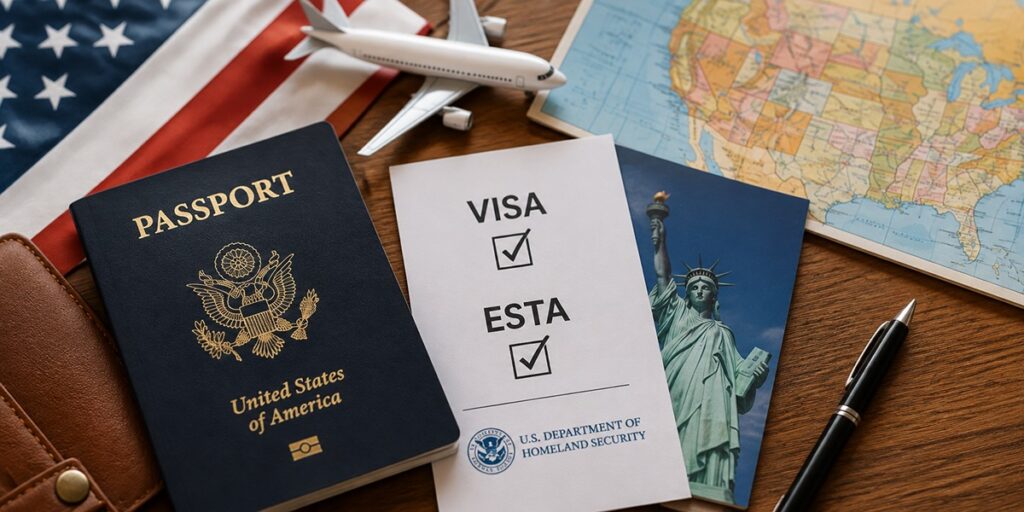
Most international visitors need one of two things to enter the US as a tourist: a visa, or if you're from a Visa Waiver Program country an approved ESTA. Apply early either way. ESTA approval is usually fast but never guaranteed, and visa interview appointments can stretch into weeks or months depending on where you are.
The essentials:
Entry rules and eligible-country lists do shift, so confirm your own situation on the official sites above close to your travel date rather than relying on any guide, including this one.
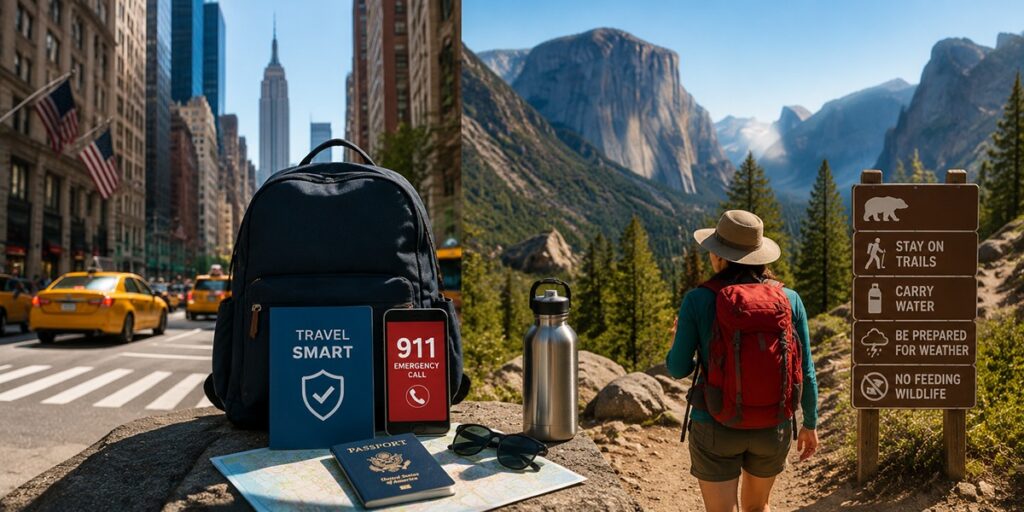
For most travelers, the US is a safe place to visit as long as you apply the same street sense you'd use in any big city. Research neighborhoods before you book, keep an eye on your belongings in crowded tourist areas, and remember that 911 is the number for any emergency. Out in the national parks, the real risks aren't crime they're heat, distance, and weather, so take the wildlife and trail warnings seriously.
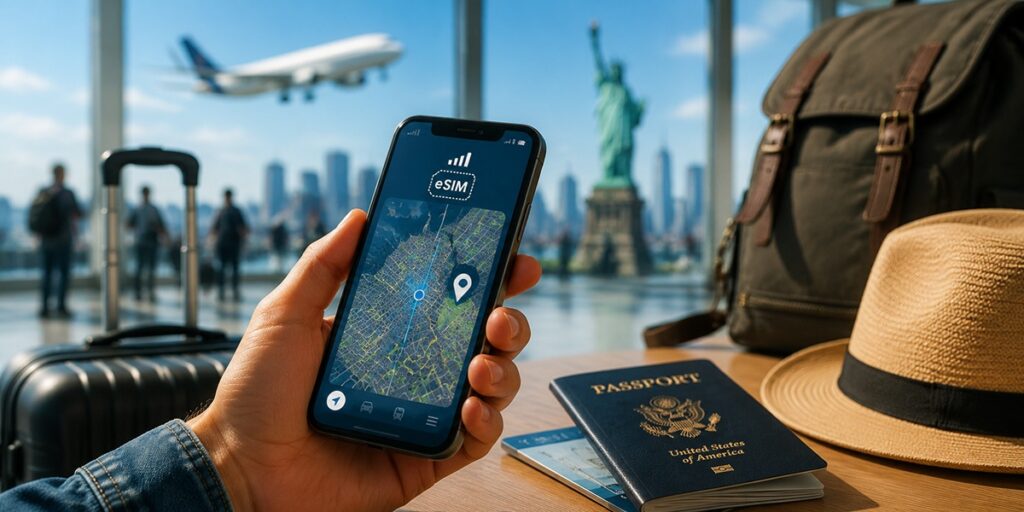
The moment you land, your phone turns into your map, your translator, your ride app, and your booking desk and you'll often want it working in the immigration hall, before you've even cleared customs, to message a host or line up a ride. Landing and then hunting for airport Wi-Fi or a SIM kiosk is a slow, faintly stressful way to start a holiday.
A travel eSIM takes that whole problem off the table before you fly. You buy it online, install it with a QR code in a couple of minutes, and you're connected the second you come off airplane mode on arrival — no fishing a physical SIM out of a tray, no roaming bill waiting for you at home. A USA eSIM plan from Airhub covers your trip's data, and installing it takes just a few minutes. One more tip worth its weight in the West: download offline maps before you go, because cell coverage vanishes fast inside the national parks.
New to the idea? Here are the benefits of using an eSIM for travel, and it's worth running through an international travel checklist before you go.
Pick one region instead of trying to see the whole country. Choose a hub or two say, New York and Washington build in day trips, and keep your travel days to a minimum. A week suits one region; two weeks lets you pair two.
For a first trip, New York, Washington, D.C., San Francisco, and Chicago each show you a different side of the country — big-city energy, history, West Coast scenery, and Midwest charm. For a season-specific shortlist, see our best places to visit in December in USA guide.
It comes down to the region. Spring and fall are the sweet spots for most cities and parks mild weather, thinner crowds while summer is peak season and winter is for skiing or warm-weather escapes like Florida and Hawaii.
Most tourists need either a visa or, if they're from a Visa Waiver Program country, an approved ESTA for stays of up to 90 days. Check your eligibility and apply early through the official U.S. government sites esta.cbp.dhs.gov for ESTA and travel.state.gov for visas.
It swings widely with region, season, and travel style, but as a rough per-person daily guide (excluding international flights): around $120–$150 for budget travel, $250–$350 for mid-range, and $500–$900+ for a higher-end trip. Don't forget that sales tax and tipping land on top of the listed price.
It's a prepaid mobile-data package you install digitally, with no physical SIM involved. You buy the data (and sometimes minutes) for your trip, scan a QR code to install it, and you've got local service in the US for the days or data you paid for no contract.
Get your Airhub eSIM in minutes and travel without roaming surprises.
Download the Airhub app to purchase, manage and top up your eSIMs anytime, anywhere!