Here's the uncomfortable truth about planning a trip abroad: the excitement is exactly what gets people into trouble. You're picturing the food and the views, and meanwhile the passport quietly ticks past its validity window, the visa deadline slides by, and your bank is getting ready to freeze your card the second it sees a charge from another continent. Almost every airport horror story traces back to something dull that could have been handled at a kitchen table weeks earlier.
A good international travel checklist fixes that. Not by telling you to pack more by getting the right things done in the right order, so nothing ambushes you at the gate. So we've split this into the two jobs that actually matter: the tasks to sort before you go, and the things to pack. Run through it once while you're planning, once a few days out, and you'll leave home genuinely ready connectivity and all.
Before you go: essential tasks
Most packing lists skip straight to the suitcase. That's a mistake, because this is the part that actually saves trips. Some of these take days or weeks to sort, so start them the moment your dates are booked.
Check your passport's expiry — properly. A surprising number of countries, much of Europe included, won't let you in unless your passport is valid for at least six months beyond your return date, and a few also want blank pages. Cutting it close? Renew now, because processing rarely moves fast. The U.S. State Department's traveler's checklist is the reference worth trusting here.
Sort your visa or entry authorization early. Some destinations need a full visa, others an electronic authorization, and the processing time swings from minutes to weeks. Confirm what your passport needs on the destination's official embassy or immigration site — this is the one item where guessing, or trusting a random blog, genuinely costs you the trip.
Buy travel insurance. Medical care, cancellations, lost bags — it's the classic "hope you never use it" purchase, right up until the day you do. Save the policy number and emergency line somewhere you can open without a signal.
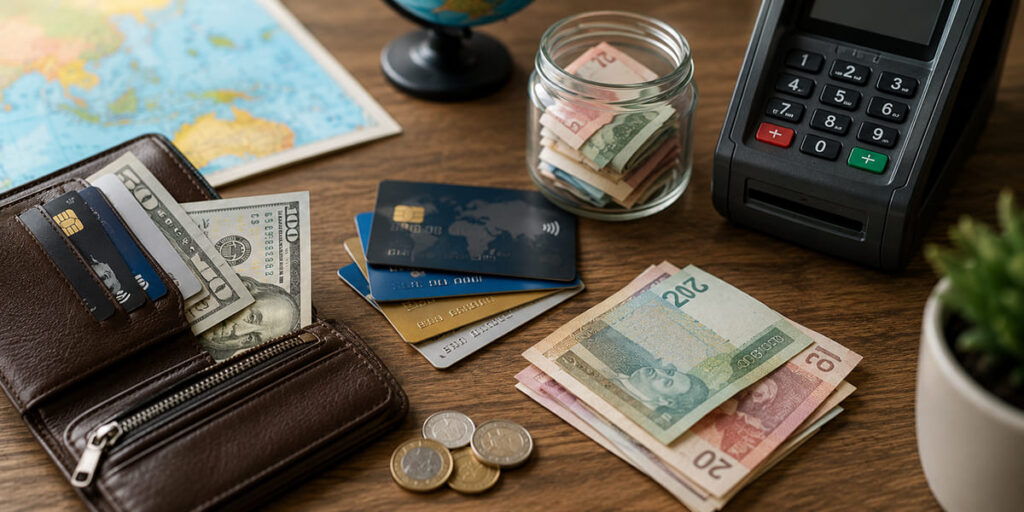
Tell your bank, and pack a backup card. A single foreign charge is enough to trip a fraud freeze on a card that hasn't been flagged for travel. Give your bank your dates and destinations, then carry a second card on a different network as insurance.
Copy everything. Photograph your passport, visa, insurance, and tickets, and stash a printed set separate from the originals. If the real thing goes missing, those copies turn a nightmare into a phone call.
Get your home trip-ready. Pause deliveries and subscriptions, clear any bills due while you're gone, and line up someone to mind pets, plants, and mail. On longer trips, timed lights and held packages keep an empty house from advertising the fact.
Health and medications
Track down a specific medication in a foreign pharmacy, in a language you don't speak, and you'll wish you'd handled it at home. The trick is sorting the time-sensitive stuff early and carrying the rest.
Prescription medications in their original, labeled packaging — enough for the whole trip, plus a few days' buffer. Bring a copy of the prescription too; some countries ask for it at customs, and a handful restrict certain drugs outright.
A small over-the-counter kit — pain relief, antihistamines, something for motion sickness and an unhappy stomach. Unfamiliar food and long travel days tend to find the gaps.
Vaccines, where they're needed. Some destinations require or recommend specific shots, and several need multiple doses or time to kick in. Check theCDC's destination pages and book a travel clinic weeks ahead, not the day before.
A compact first-aid kit for the blisters, scrapes, and headaches that come with any real trip.
Money and finances abroad
Getting stranded because your only card stopped working is a rookie mistake, and an avoidable one. A few habits keep your money moving:
Spread your options. A main card, a backup on a different network, and a little local cash for the taxi, the tip, or the cash-only counter by arrivals.
Know your ATM math. Check your bank's foreign-withdrawal fees and any overseas partner networks. One quiet gotcha: plenty of international ATMs only accept four-digit PINs, so change yours before you fly if it's longer.
Grab a bit of local currency in advance — just enough to land on your feet. You'll usually beat the airport exchange rate once you're in-country.
Pay in the local currency, not your home one, whenever a card terminal offers the choice. "Pay in USD" abroad almost always costs a worse rate.
What to pack: carry on essentials
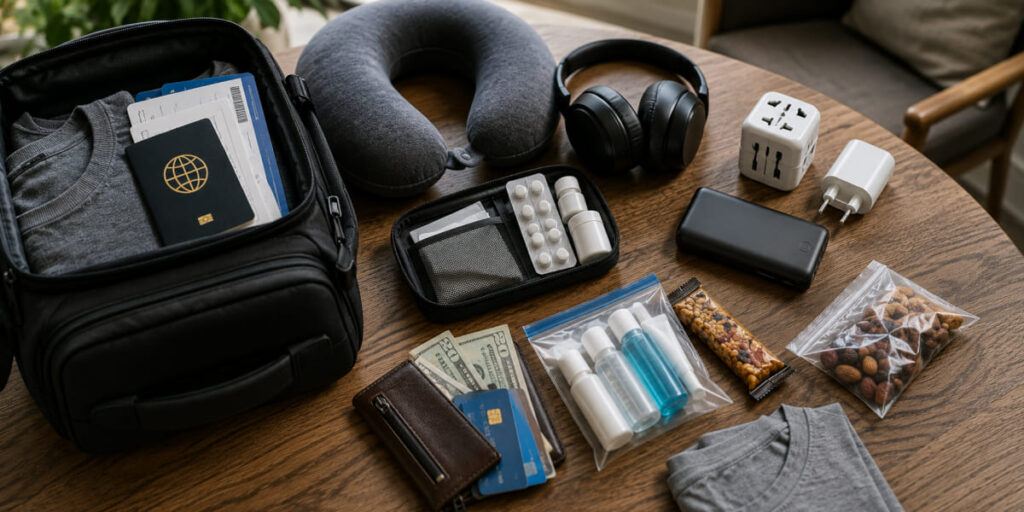
Pack your carry-on as if your checked bag might vanish — because sometimes it does. Everything you genuinely can't replace, or can't get through a day without, rides with you.
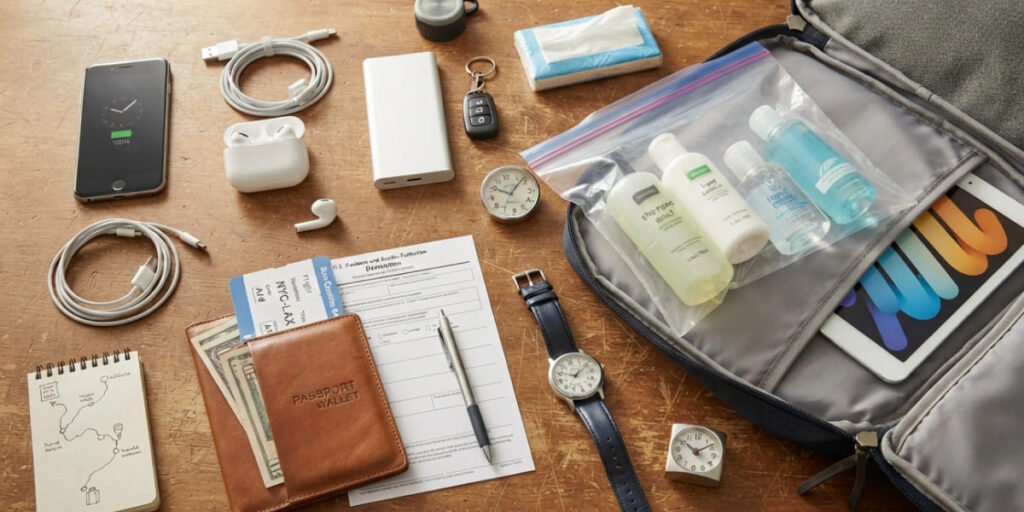
Every key document — passport or ID, visa, tickets, hotel confirmations with your copies in a separate pocket.
Wallet, cards, and a little local cash, secure but within reach.
Medications and a basic first-aid kit (as above).
Phone, charger, travel adapter, and a power bank. Outlets get scarce on long travel days, and lithium power banks almost always have to fly in the cabin rather than the hold.
Headphones and something downloaded — a film, a playlist, a podcast for the moment the seatback screen gives up.
A few snacks. Airport and airline food is expensive and unpredictable.
A change of clothes and travel-size toiletries. For carry-on liquids, the 3-1-1 rule still applies: containers of 3.4 oz / 100 ml or less, in one clear quart-size bag, one bag per traveler.
A neck pillow and a layer or two. Cabins lurch from arctic to stuffy with no warning.
Anything valuable or breakable — laptop, camera, jewelry stays with you, never in the hold.
What to pack: checked bag (optional)
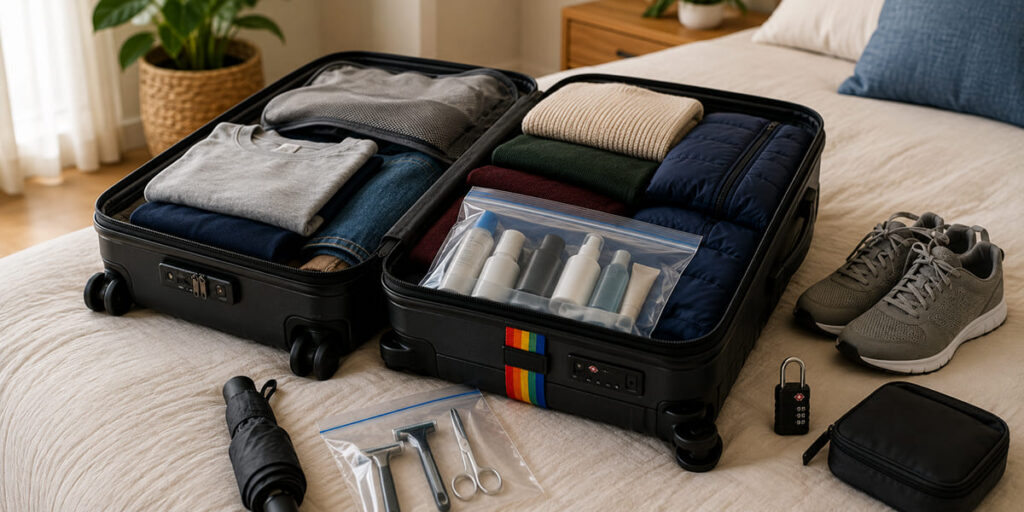
Plenty of trips don't need a checked bag at all. It earns its spot on longer stays, family travel, or when you're hauling something bulky. If you're checking one, a little care saves money and headaches:
Weigh it at home so the scale at check-in isn't a surprise.
Use a TSA-approved lock for anything touching the US, so security can inspect it without snapping it off.
Make it findable. A bright strap or tag ends the "wait, is that mine?" carousel standoff between five identical black cases.
Pack sharp items here, wrapped — razors, scissors, tweezers and confirm none are outright banned first.
Bag the spill-prone stuff in resealable pouches, because one leaking bottle can wreck everything around it.
What NOT to pack
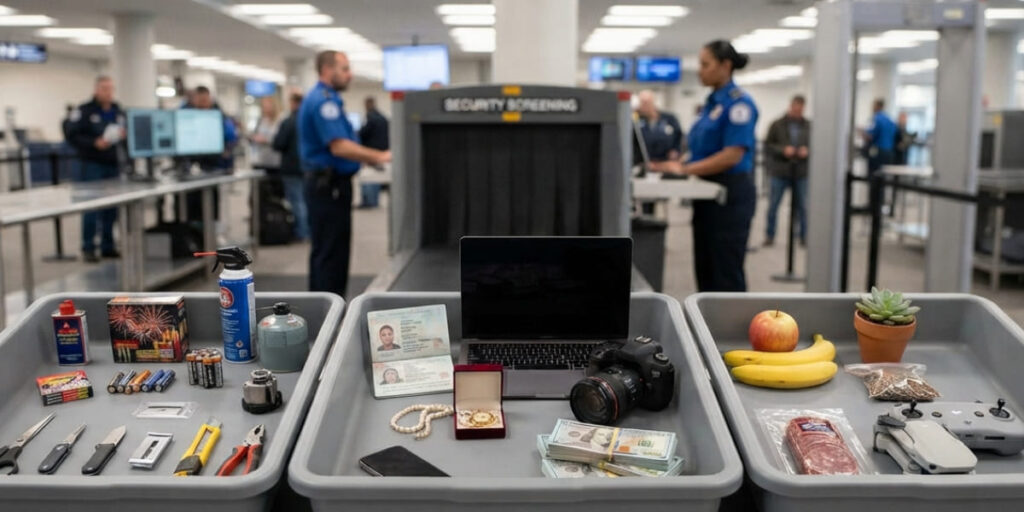
Some of this is common sense. A few of these genuinely catch people out, and the penalty ranges from a binned item to a fine to a very long conversation at the border.
Hazardous items — flammable liquids, fireworks, loose lithium batteries, most aerosols. Your airline's prohibited list is the final word.
Sharp objects in the carry-on. They go in checked luggage, safely wrapped.
Valuables in checked bags. Passports, electronics, jewelry keep them on you.
Big stacks of cash. Theft aside, most countries make you declare amounts over a set threshold.
Country-restricted goods. Australia clamps down on fresh food and plant or animal products; Egypt tightly controls drones. When you're unsure, the destination's customs rules settle it.
Departure day checklist
The final few hours are where small slips turn into real stress. One last pass before you head out the door:
Charge everything — phone, headphones, power bank.
Reconfirm the details, since departure time, terminal, and gate love to change at the last minute.
Keep liquids and electronics reachable so security isn't a full unpacking exercise.
Give yourself roughly two hours for an international flight enough to absorb check-in, security, and whatever goes sideways.
Have any customs or arrival forms ready if your destination still uses them.
Staying connected abroad
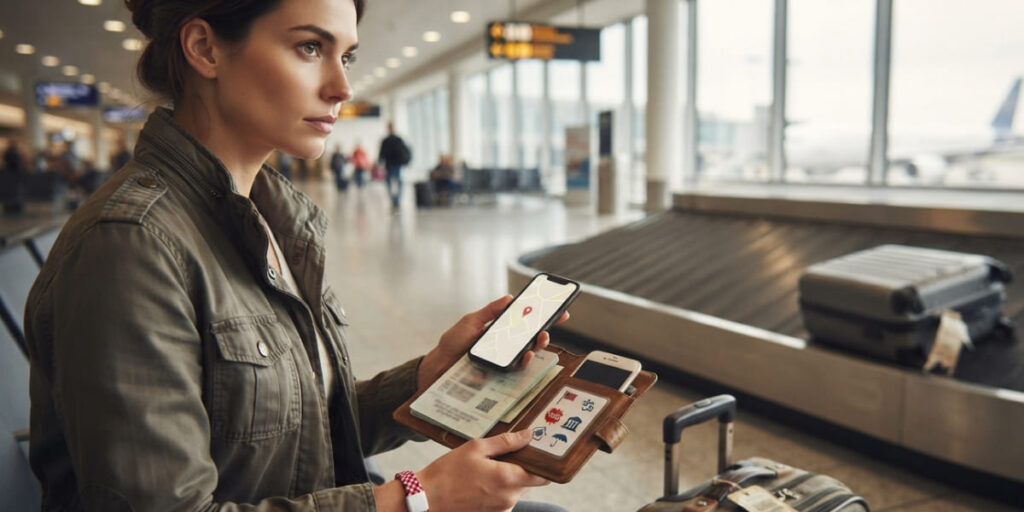
Stepping off a plane with no way to get online is its own small panic no map, no ride, no way to tell anyone you landed. You've got four realistic ways to fix that, and they're nowhere near equal:
Option
Upsides
Downsides
Public Wi-Fi
Free
Patchy, not always there, and a security risk without a VPN
International roaming
Zero setup
Almost always the priciest by a wide margin
Local prepaid SIM
Cheap local rates
Find a shop, show ID, swap out your home SIM
Travel eSIM
Set up before you fly, no shop, keeps your home number live
Needs an [eSIM-compatible device]
For most travelers, the eSIM is the obvious winner. You buy and install it before you leave, then land already connected no kiosk hunt at arrivals, no fiddling with a tiny plastic chip, and your usual number stays reachable on your other line. Never used one? Here's a plain-English take on what an eSIM is.
The question everyone asks next is how much data do I need? Rough rule of thumb: maps, messaging, and mobile boarding passes barely register, while video streaming and video calls drain a plan fast. For a week or two of ordinary use navigation, chat, a bit of scrolling a mid size plan usually does the job, and you can top up if you cut it fine.
You can't prevent every mishap, but a little groundwork turns a crisis into a mere inconvenience.
Keep your key contacts offline: your embassy or consulate at the destination, the local emergency number, your bank's international line, and your insurer's claims line.
If a card or phone disappears, freeze the cards from your banking app straight away, and use Find My iPhone or Find My Device to locate or wipe the handset.
If your luggage doesn't show, report it to the airline before you leave the airport and ask for a Property Irregularity Report (PIR) you'll need it to trace the bag and support any insurance claim. Hang on to receipts for anything essential you buy in the meantime.
Traveling solo with a medical condition? Carry a note, ideally in the local language, explaining the condition and any medication you take.
FAQ
1. What should be at the top of my international travel checklist?
The true non-negotiables: a valid passport (mind the six-month rule for your destination), any visa or entry authorization you need, travel insurance, and a reliable way to stay connected ideally a travel eSIM you've set up before you fly.
2. How early should I start preparing before my trip?
Kick off the slow moving tasks passport renewal, visas, vaccines several weeks out, since each can drag. The packing itself is easiest 3–5 days before you leave, which still leaves time to replace anything you're missing.
3. Do I need a visa or travel authorization for my destination?
That depends on your passport and where you're headed some places want a full visa, others an electronic authorization, some nothing at all. Check the destination's official embassy or immigration site well ahead, because processing times vary a lot.
4. Should I tell my bank before traveling abroad?
Worth doing. Flagging your dates and destinations helps stop a foreign charge from triggering a fraud freeze, and a backup card on a different network covers you if one still gets blocked.
5. What should I NOT pack for international travel?
Keep valuables and electronics out of checked bags, sharp objects out of your carry-on, and hazardous items flammables, loose lithium batteries, most aerosols out of both. Then check your destination's rules on food, drones, and large amounts of cash.
6. How do I stay connected abroad without huge roaming bills?
Skip the pricey roaming and the flaky Wi-Fi lottery by setting up a travel eSIM before you go. You land already online, keep your home number active on your other line, and never have to track down a SIM shop on arrival.