










Ready to try eSIMs and change the way you stay connected?
Download the Airhub app to purchase, manage and top up your eSIMs anytime, anywhere!
App exclusive5% off at checkout
Discover the best cheap travel destinations worldwide. Find budget-friendly highlights, insider tips, and learn how to stay connected on your adventure.
Most "cheap travel" lists have a habit of aging badly. A country gets famous, prices climb, and the article never gets updated so you land expecting $20 a day and end up spending twice that.
This one is different in a boring but useful way: it puts an actual number next to every destination. Real daily budgets. The months when prices genuinely dip. One honest save-more tip per place that you can use the day you arrive.
Here's the short version. Your money still stretches furthest across Southeast Asia and the Himalayas. A couple of countries on Europe's eastern edge remain almost suspiciously good value. And Latin America hasn't priced out budget travelers the way people assume. None of these places ask you to rough it they just give you more trip per dollar.
One caveat before the list. Every budget below is a realistic range for someone traveling smart, not a survival minimum and not a splurge. What you actually spend depends on the season, the city, and your own habits. Treat these as a starting point, not a promise.
How these budgets work: Each figure is per person, per day, on the ground. It assumes budget-style travel dorms or simple guesthouses, mostly local food, public transport. Flights, insurance, and the occasional big splurge (a multi-day tour, a diving course, a guided trek) live outside the number. If your spending looks different, season and neighborhood usually explain why.
| Destination | Approx. Daily Budget | Best Time to Visit | Why Visit |
| Vietnam | $25–35 | Feb–Apr, Sep–Nov | World-class street food and huge north-to-south variety |
| Thailand | $30–45 | Nov–Feb | Islands, temples, and budget heaven up north |
| Cambodia | $25–40 | Nov–Feb | Angkor's temples and easygoing river towns |
| Laos | $25–35 | Oct–Apr | Slow travel, waterfalls, and quiet mountains |
| Indonesia | $25–40 | Apr–Oct | Beaches and volcanoes far beyond Bali |
| Nepal | $20–35 | Oct–Nov, Mar–Apr | Himalayan trekking at shoestring prices |
| Sri Lanka | $25–40 | Dec–Mar / May–Sep* | Beaches, tea country, and wildlife safaris |
| Georgia | $25–40 | May–Jun, Sep–Oct | Ancient wine culture and warm mountain hospitality |
| Albania | $30–45 | May–Jun, Sep | Riviera beaches at Balkan prices |
| Bulgaria | $35–50 | May–Sep | Old towns, monasteries, and a cheap Black Sea coast |
| Bolivia | $25–35 | May–Oct | Salt flats and high-Andes adventure |
| Mexico | $40–60 | Oct–Apr | Food, culture, and coastline beyond the resort strips |
| Morocco | $35–50 | Mar–May, Sep–Nov | Medinas, desert nights, and mountains close to Europe |
Sri Lanka has two monsoons, so the ideal window depends on which coast you're visiting (more on that below). Every budget here is approximate and moves with season and travel style.
If you've never done a genuinely cheap trip before, start here. Food is excellent and costs next to nothing, a dorm bed runs a few dollars, and buses and ferries stitch the whole region together. Honestly, the flight over is usually the priciest part of the entire trip.
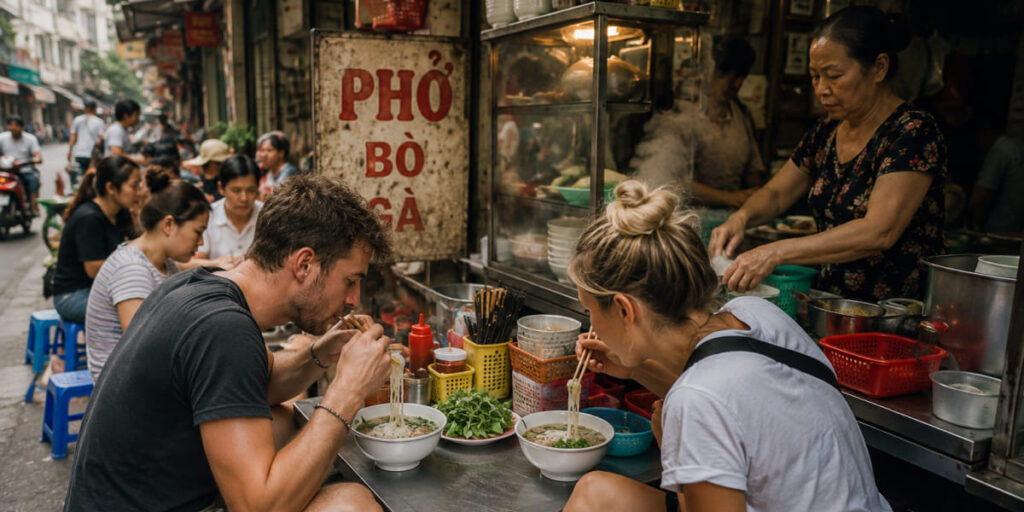
Vietnam keeps topping these lists, and once you've eaten a $1.50 bowl of pho at a curbside stall, you stop asking why. A clean guesthouse room sits around $10–20. Most travelers land somewhere in the $25–35 a day range while still ticking off Ha Long Bay, the rice terraces around Sapa, and the lantern-lit alleys of Hoi An.
What surprises first-timers is the variety. The country is long and skinny, so the misty, chilly north feels like a different place entirely from the tropical south. You're effectively getting several trips in one.
The move that saves the most money is also the one that improves the food: eat where the tiny plastic stools are. Those street kitchens serve the best meals in the country, and they cost a couple of dollars. Coverage is strong in cities and along the tourist trail, thinning out only in the remote mountains, so set up a Vietnam eSIM before you fly and your maps and ride-hailing apps work the second you clear immigration.
Quick take: ~$25–35/day · best value Feb–Apr and Sep–Nov · ideal for first-timers, food lovers, and long overland routes.
Thailand is the region's smoothest introduction to budget travel friendly, easy to navigate, and built for every kind of wallet. The catch is that the famous islands can drift toward Western prices in high season. The fix is to head north.
Around Chiang Mai, you're back in bargain country: dorm beds for a few dollars, night-market dinners for the price of a flat white, temples on every corner. Budget roughly $30–45 a day and you'll have comfortable rooms, endless pad thai, and enough left over for the occasional island boat trip.
Time it for the cool, dry stretch between November and February, or shoulder the crowds by going just before or after peak. Data is fast and everywhere here, so grab a Thailand eSIM to book Grab rides and last-minute ferries without hunting for Wi-Fi.
Snapshot: ~$30–45/day · best Nov–Feb · great for solo travelers and anyone who wants comfort without the cost.

Let's deal with the one real expense up front. A single-day Angkor pass costs about $37, which stings on a tight budget until you notice the three-day pass slashes the per-day cost, and nearly every other temple in the country is cheap or free. Past that ticket gate, Cambodia is one of the most affordable places in Asia.
Dorms in Siem Reap and Phnom Penh start near $5, meals run $1–3, and long-distance buses rarely crack $10. The days fill themselves for almost nothing: cycling past rice paddies, drifting through markets, watching the light change over the temples. That's how $25–40 a day ends up feeling generous rather than tight.
Buy the multi-day Angkor pass and split a tuk-tuk driver with a couple of people from your hostel, and the marquee attraction gets cheaper by the hour. City data is reliable, and a Cambodia eSIM keeps translation and offline maps within reach as you navigate the sprawl.
The gist: ~$25–40/day · peak Nov–Feb, quieter and cheaper in Apr–May and Nov · a natural add-on to Vietnam or Thailand.

Laos is Cambodia with the volume turned down. Slower, greener, just as gentle on your wallet. In riverside Luang Prabang, temples, waterfalls, and night markets fill your days on $25–35 dorms at $5–10, a bowl of noodle soup for a dollar or two.
The whole appeal is doing less. Kayak a stretch of river, hike the surrounding hills, and you've spent almost nothing while having the best day of the trip. This is a place that rewards travelers who resist the urge to rush.
Arrive at the night markets hungry and dinner costs a couple of dollars. Signal is solid in towns and patchier once you're in the hills, and since local SIM kiosks aren't always convenient here, sorting a Laos eSIM before you land saves a hassle.
Bottom line: ~$25–35/day · most comfortable Oct–Apr · made for slow travel and nature.

Indonesia comes with a quiet irony: the most expensive place in the country is the one everyone flies into. Bali and Jakarta sit well above the national average. Step past them and the rest of the archipelago Yogyakarta, Lombok, Sumatra, Sulawesi hands you the same beaches, volcanoes, and temples for a fraction of the price.
Expect nasi goreng for a dollar or two, homestays from $8–12, and days that run $25–40. Ferries and domestic flights are cheap and frequent, which is exactly what makes island-hopping realistic on a small budget instead of a fantasy.
Base yourself anywhere but Bali and the same beach-and-temple trip costs noticeably less. Coverage is dependable on the busier islands and thinner on the remote ones, so an Indonesia eSIM spares you the airport SIM queue and the passport paperwork.
In short: ~$25–40/day · dry season roughly Apr–Oct (it shifts by island) · best for beach seekers and longer trips.
For anyone flying from India or nearby, this region is almost unfair. The flights are short, and once you're on the ground, a trip here can genuinely cost less than a holiday back home.
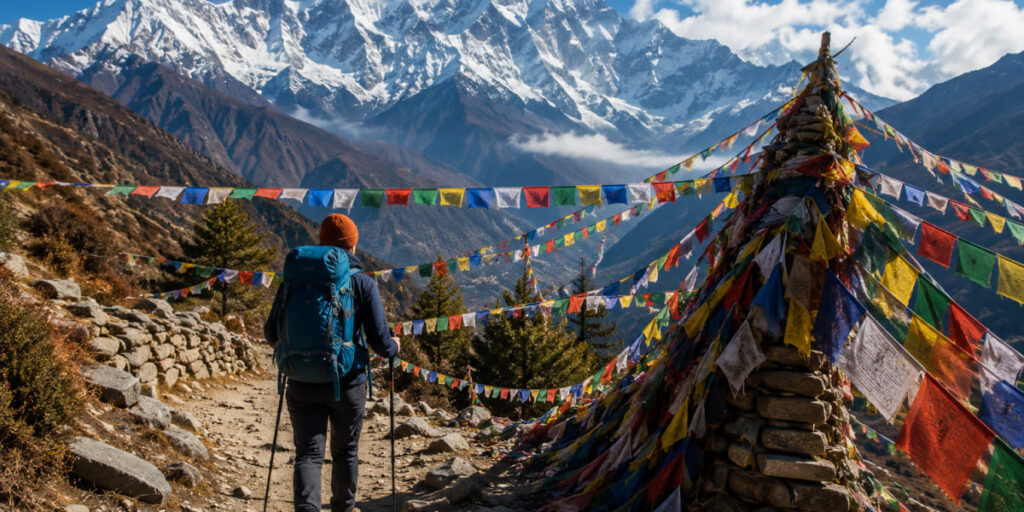
Nepal turns the usual equation upside down. The scenery is priceless; everything around it is dirt cheap. Daily spending hovers around $20–35, and the top of that range mostly reflects guided treks. Simple hostels go for under $10, and a plate of dal bhat costs a few dollars.
The real budget hack is structural. On the big trails the walk toward Everest Base Camp, the Annapurna Circuit tea houses often charge next to nothing for the bed, provided you eat your meals where you sleep. It's a fair trade, and it's why a Himalayan trek can undercut a beach week in half of Europe.
Kathmandu and Pokhara have solid 4G, but the signal falls away as you gain altitude. Download your maps offline and set up a Nepal eSIM so you stay reachable between villages.
Quick take: ~$20–35/day (guided treks push the top end) · trekking peaks Oct–Nov and Mar–Apr · unbeatable for mountains.
Few countries pack this much into a two-week loop: surf beaches, tea-terraced hills, ancient rock forts, leopard safaris. A recently weaker rupee has made it even better value, with guesthouses often $15–25 and a plate of rice and curry costing pocket change. Plan on roughly $25–40 a day.
Here's the one thing that trips people up. Sri Lanka runs on two monsoons. The west and south coasts are at their best from December to March, while the east coast peaks from May to September. Pick your route to match the season and you'll dodge the rain that catches out travelers who assume one "best time" covers the island.
Skip the private drivers where you can the hill-country train to Ella is one of the world's great rail journeys and costs almost nothing. Coverage is good island-wide, and a Sri Lanka eSIM makes tuk-tuk apps and train schedules painless.
Snapshot: ~$25–40/day · timing depends on the coast · great for couples, first-timers, and wildlife fans.
Cheap travel and Europe aren't a contradiction you just have to know where to look. Drift east and southeast and prices drop hard, while the history, food, and landscapes more than hold their own against their pricier neighbors.

Georgia is the place budget travelers recommend almost under their breath, as if saying it too loudly might spoil the deal. Frugal visitors report $25–40 a day, with hostel beds around $10–15, cheese-laden khachapuri and slow-cooked stews for a few dollars, and plenty of churches and national parks that cost nothing to enter.
But the numbers only tell half the story. Guesthouses here are usually family affairs, where hospitality is treated as a point of national pride, and the local wine tradition is one of the oldest on earth. You come for the low prices and remember the welcome.
Book a guesthouse that throws in a home-cooked dinner and you'll eat better than any restaurant while saving a meal out. Tbilisi and the main towns have strong data; the mountain valleys less so, so a Georgia eSIM is worth sorting before you head for the Caucasus.
The essentials: ~$25–40/day · best May–Jun and Sep–Oct · ideal for wine lovers, hikers, and digital nomads.
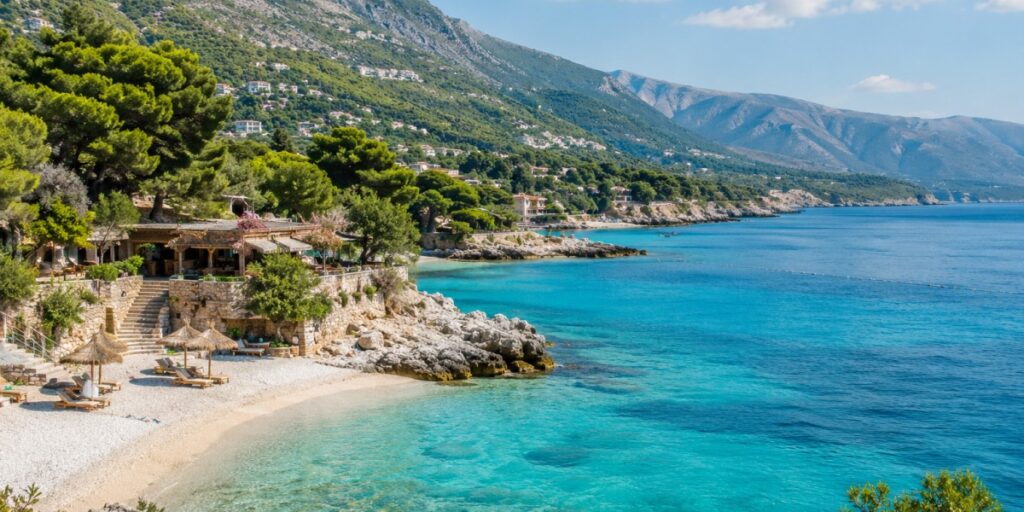
Albania keeps getting compared to Greece, and on price that comparison is unfair to Greece. Guesthouses run $10–20 a night, byrek from a street window costs a dollar or two, and a filling plate of grilled meat lands around $5–8. Budget on $30–45 a day.
The Riviera has been discovered, no question. Ksamil in August is nobody's secret anymore. But shift your trip a few weeks either side of peak and room rates can fall by half while the sea stays just as warm. And the coast is only the opening act inland you'll find Ottoman-era towns, wild rivers, and empty mountains that most visitors never reach.
The single best move is timing: travel the Riviera just outside July and August and you'll often pay half the peak rate. Coverage is reliable along the coast and in the cities, and an Albania eSIM keeps your navigation honest on those winding coastal roads.
Bottom line: ~$30–45/day · shoulder months (May–Jun, Sep) are the sweet spot · made for beach lovers and road-trippers.
Bulgaria stays off most people's radar, which is precisely why it's such a bargain. Beyond the Black Sea beaches you'll find Plovdiv one of the oldest continuously inhabited cities in Europe plus mountain monasteries and serious hiking, usually for $35–50 a day. Meals often come in under $8, and simple rooms sit in the $30s.
There's a winter angle too: Bulgarian ski resorts are among the cheapest on the continent, which makes this a rare year-round budget pick.
Head into the interior Plovdiv, Veliko Tarnovo, the Rila region and prices slip below what you'll pay on the coast. As an EU member, Bulgaria has fast, widespread coverage, so a Bulgaria eSIM keeps you online between towns without a roaming bill.
The gist: ~$35–50/day · May–Sep for cities and coast, winter for cheap skiing · great for culture seekers and hikers.
The flights cost more to get here, and there's no pretending otherwise. But once you've landed, daily spending in parts of Latin America goes toe-to-toe with Southeast Asia.

Bolivia is the counterargument to anyone insisting South America has gotten expensive. Around $25–35 a day still holds: dorms at $5–10, local meals for $3–7, buses grinding across the Altiplano for pocket change. Better still, the headline sights are the landscape itself salt flats, high desert, jungle so most of the wonder is free.
There's genuine news here worth flagging. As of December 1, 2025, Bolivia dropped its tourist visa requirement, and the old ~$160 fee, for citizens of the United States and several other countries, allowing visa-free stays of up to 90 days. Every visitor now completes a free online SIGEMIG pre-registration before arrival. Because the change was made by government decree the kind of thing that can be reversed it's worth confirming the current rule with an official Bolivian source before you book.
Overnight buses between cities double as a night's accommodation, which quietly shaves a chunk off your budget. Data is fine in the cities and spotty on the Altiplano, so a Bolivia eSIM plus offline maps keeps you oriented on those long, empty drives.
In short: ~$25–35/day · dry season May–Oct (Uyuni is busiest Jun–Aug) · for adventurous travelers and photographers.
Mexico rewards anyone willing to look past the resort strip. Cancún and Tulum are priced squarely for tourists, but head inland to Mexico City, Oaxaca, or Puebla, or south to Bacalar and Mérida, and your money suddenly goes a lot further. Street tacos cost a dollar or two, and comfortable guesthouses stay well within reach.
It isn't the cheapest country on this list plan on $40–60 a day but the combination of short flights from North America and near-limitless food and culture makes it a value pick on its own terms. This is where "cheap" and "world-class" overlap.
Trade the Caribbean resort towns for inland cities and prices drop while the culture deepens; it's the best swap you can make here. Coverage is strong across cities and tourist zones, so a Mexico eSIM makes rideshares and restaurant hunts effortless.
Snapshot: ~$40–60/day · best Oct–Apr · perfect for food lovers and short-haul trips from the US or Canada.
A short hop from Europe, Morocco delivers pure sensory overload labyrinthine medinas, Atlas Mountain villages, Sahara nights under a sky thick with stars without the price tag you'd expect. Budget around $35–50 a day, and those atmospheric riad stays are surprisingly affordable as long as you're not shopping the souks every afternoon.
The budget trap here isn't accommodation or food. It's the hard sell. A firm, friendly "no thank you" and a little patience with haggling will save you more than any coupon.
Eat where locals eat, and decide on a daily shopping limit before you step into the souks that's the discipline that keeps Morocco cheap. City coverage is good, though the desert is another matter, so a Morocco eSIM keeps your translation apps working in the markets and taxis.
Quick take: ~$35–50/day · spring (Mar–May) and autumn (Sep–Nov) dodge the heat · great for culture seekers and photographers.
Didn't see your route here? A handful of other countries offer strong value right now and deserve a spot on your shortlist: Turkey, Romania, the Philippines, Guatemala, Colombia, and Egypt.
There's one cost that never makes it into the plan until it's already hurting: staying connected. And it matters more than people expect, because a modern trip runs on your phone. In a single day you'll likely reach for it to:
Now the part that catches people out. Flip on roaming with your home carrier and you're often looking at $10–15 a day. Glance back at the budget table in several of these countries, that's more than you're paying for your bed.
You have three real choices, and only one is both cheap and painless. Roaming is effortless and expensive. A local SIM from an airport kiosk is cheap but comes with a queue, a passport check, and a second phone number to babysit. A travel eSIM loads onto your phone before you leave and switches on the moment you land nothing to swap, nothing to line up for.
Most phones from the last five or six years handle eSIM, though it's worth checking yours before you count on it. Airhub is one option, with plans for every country above, so you can lock in affordable data ahead of time and skip the roaming bill entirely. Whatever provider you land on, sorting this out before departure is one of the simplest ways to travel on a budget full stop.
Cheap travel isn't one big decision. It's a handful of small ones, repeated. These are the moves that move the needle.
It depends on where you go, but the math is friendlier than most people fear. For the majority of cheap international destinations, a budget traveler can plan on roughly $25–50 a day on the ground. Break that down and it looks something like this:
So two weeks somewhere like Vietnam or Nepal might run $400–600 on the ground, before flights and insurance. Pricier picks such as Mexico or Bulgaria sit higher; go ultra-lean in Nepal outside guided treks and you can drop below it.
Here's the part worth sitting with: the biggest variable isn't the country you choose. It's how you travel once you're there. Dorms and street food versus private rooms and restaurants can double your daily spend in the exact same place.
With this many affordable countries in play, the "best" one is really just the best fit for you. Run through these quickly and the field narrows fast:
Work through those and, more often than not, one or two destinations rise to the top without much agonizing.
Cheap travel was never about going without. It's about squeezing the most culture, food, and scenery out of every dollar and the people who do it best make it look easy because they've sorted the boring parts in advance.
So stay flexible on dates, eat where the locals line up, and handle the unglamorous essentials beds, buses, and data before you're wheels-up. Do that consistently and something shifts: the big trips stop feeling like splurges and start feeling like a habit. Pick a destination from the list above, block out your dates, and the rest tends to fall into place.
Southeast Asia and South Asia lead the pack. Vietnam, Cambodia, Laos, Indonesia, and Thailand run roughly $25–45 a day, and Nepal can cost even less outside guided treks. Over in Europe, Georgia and Albania deliver similar value, while Bolivia holds the line in Latin America.
The winners are usually close to home, since flights and daily costs are both low. Nepal and Sri Lanka top the list, with short hops and rock-bottom on-the-ground prices. Thailand, Vietnam, and Indonesia are also budget-friendly and well-connected to Indian cities. Check current visa or e-visa rules before you book.
There's no single answer it comes down to your style. Vietnam is the all-rounder for first-timers, Nepal is unmatched for mountains, Georgia wins on culture and wine, and Mexico is the pick if you want a short-haul trip with enormous variety.
For most affordable destinations, plan on $25–50 a day on the ground, plus flights and insurance. Two weeks in a cheaper country often lands near $400–600 before airfare though, again, your travel style can swing that number hard in either direction.
Nepal is among the very cheapest, especially for independent travelers, with Cambodia, Laos, Vietnam, and Indonesia close behind. Sri Lanka is an excellent value too, helped by a weaker currency. Most of these sit comfortably in the $20–40 a day range.
Book flights early, travel in shoulder season, stick to guesthouses or dorms, eat local, and use public transport. Set up a prepaid eSIM before you fly to dodge roaming charges, and keep an eye out for free museum days and city travel passes at each stop.
In most cases, yes. Carrier roaming often runs around $10–15 a day, while a travel eSIM typically works out to a fraction of that over a trip. It also connects the moment you land no airport SIM queue, no new number to juggle.
Shoulder season the weeks just before or after a destination's peak usually brings the lowest prices with weather that's barely different. One caveat: December and the major holidays spike almost everywhere, and "off-season" in the tropics can mean monsoon, so always check the local calendar.
Get your Airhub eSIM in minutes and travel without roaming surprises.
Download the Airhub app to purchase, manage and top up your eSIMs anytime, anywhere!