










Ready to try eSIMs and change the way you stay connected?
Download the Airhub app to purchase, manage and top up your eSIMs anytime, anywhere!
App exclusive5% off at checkout
Learn how unlimited eSIM plans with 1GB emergency data work, compare them with local SIMs and Wi-Fi, and explore tips for travelers.
Imagine landing in a new country and instantly tapping into unlimited data overseas without hunting for a local SIM or paying surprise roaming fees. Today’s travelers can do just that with unlimited data esim plans, many of which even include a free 1GB “emergency” data backup each month. These plans act like a digital passport, no swapping SIM cards, and a constant internet safety net in case you unexpectedly burn through your main data allowance. In this guide we’ll explain what these plans are, why they’re popular, and how to choose one. Let’s dive in!

Unlimited eSIM plans deliver virtually unlimited global connectivity without roaming charges or SIM swaps. Instead of juggling multiple local cards on a multi-country trip, you buy one eSIM and it works worldwide. Providers market them as “truly unlimited data”, for example, SimLocal advertises “Unlimited eSIM Plans…stay connected with truly Unlimited Data, no roaming charges, no SIM swapping”. For heavy data users like streamers, remote workers or families on the move, this means Netflix, maps and video calls all flow freely abroad.
Travelers also appreciate the conveniece and cost savings. A fixed monthly unlimited plan can beat expensive day passes or roaming fees. One comparison found that instead of paying 10–15 per day in roaming fees, a nomad could pay a single ~$65/month for unlimited data in 160+ countries. And no more losing small SIM cards, eSIMs install via app or QR code, so you’re online the moment you land.
On the technical side, unlimited eSIM plans often ride on major 4G/5G networks around the world, giving fast speeds in cities and even rural areas. Airhub, for example, covers 190+ countries with 4G/5G service. In short, unlimited eSIMs give wanderers freedom and peace of mind: you can roam everywhere (even remote spots) and stream to your heart’s content.
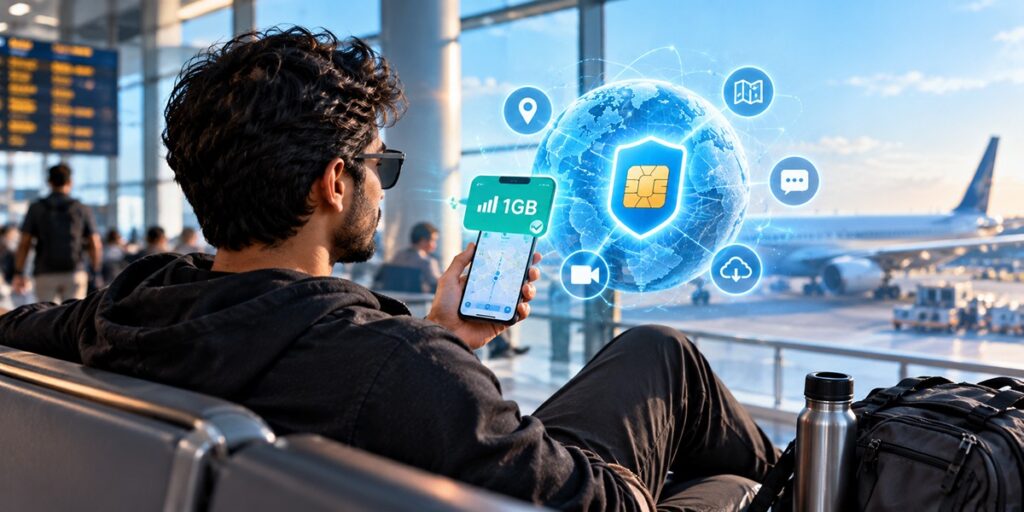
All the benefits that emergency data gives users are listed below:
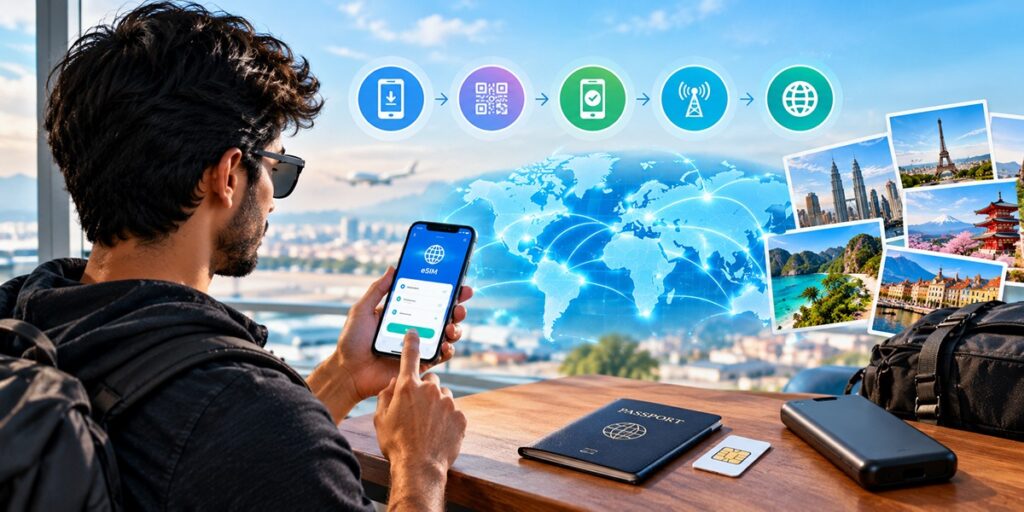
Understanding how this eSIM unlimited data plan works is crucial before buying one. Here is all you need to know from installation to wide network.
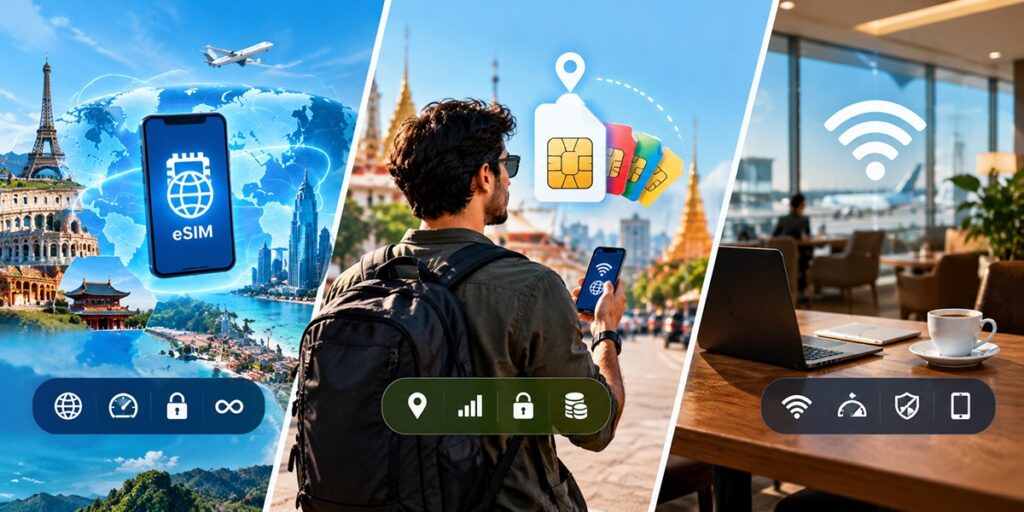
The key difference between these three will give a clearer picture to users.
| Feature | Unlimited eSIM (Global) | Local SIM Card | Public/Hotel Wi-Fi |
| Coverage | Anywhere with network coverage in covered countries – truly global (190+ countries). | Only in one country (or region) per SIM; you must swap SIMs when crossing borders. | Only where a network exists (hotel, cafe, airport); not on the go. |
| Portability | Always on wherever there’s signal – your own data anywhere. | Tied to local network; no data abroad without costly roaming. | Fixed to router’s location; connection cuts out as soon as you move away. |
| Speed & Reliability | Uses 4G/5G cell networks – usually high-speed and consistent in cities. | Local networks also 4G/5G – similarly fast (often up to 5G). | Can be hit-or-miss: sometimes fast (hotel fiber) but often slow or congested. |
| Security | Encrypted cellular network – very secure for banking or work. | Also encrypted via cellular – secure. | Often unencrypted/public – risky for sensitive data. |
| Cost & Limits | Fixed plan price (unlimited or large data cap). Some plans throttle after a high-use limit (e.g. 5–10 GB/day). | Generally cheap local rates; unlimited plans or data bundles common. But buying multiple SIMs can add up. | Usually free or included. Unlimited within hotspot, but may require login and often limited to one device. |
| Setup & Use | Buy online/app before travel, activate with QR code. No physical SIM needed. | Must buy/inventory SIM card locally or before trip (store or kiosk); manual installation. | Connect instantly (no signup) – but you’re stuck to that spot and may have to re-login frequently. |
In practice, a travel eSIM (especially an unlimited one) is the “always-on” solution, you use it for everything while you’re out and about, and then switch to Wi-Fi for big uploads/downloads when safely back at your hotel. Wi-Fi alone is handy at fixed locations, but once you step outside, you lose it. Mobile data (via eSIM or SIM) works anywhere there’s a signal, making it a true safety net: you won’t get stranded looking up directions or contacting family.

Things that are important to know for selecting the best e sim unlimited data – 590.
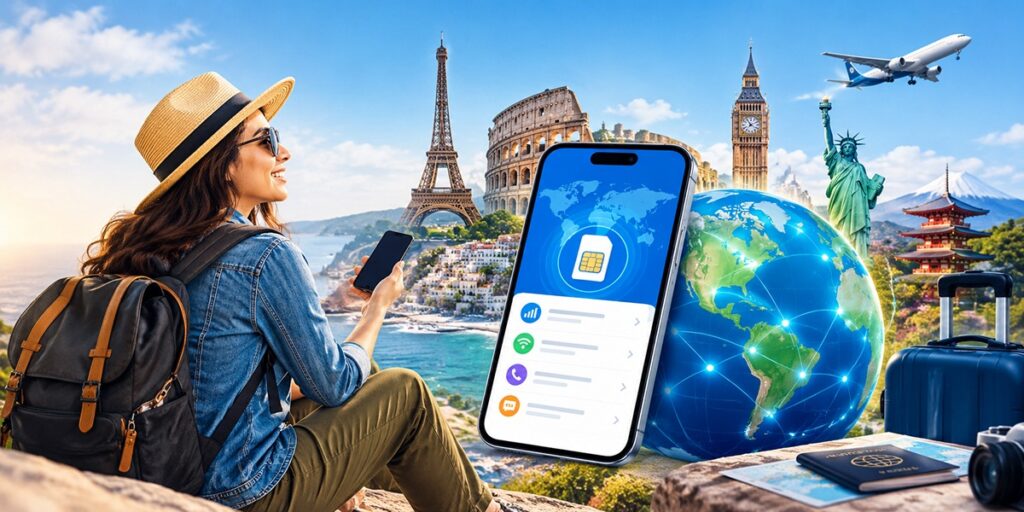
Airhub offers one of these all-in-one eSIM solutions. Their app covers 190+ countries and lets you browse unlimited Global eSIM plans and pay-as-you-go data easily. Simply download the Airhub app (available on iOS and Android), select your destination and plan, and you’ll receive a QR code to activate the eSIM immediately. Plans can include 4G/5G data, hotspot use, voice and SMS – all for one upfront price. With 24/7 support and no hidden roaming fees, Airhub lets you travel worry-free with unlimited data. Give it a try on your next trip and say goodbye to connectivity hassles!
Unlimited data eSIM plans with 1GB emergency mobile data are a game-changer for travelers. They provide nonstop global internet (often with solid 4G/5G speeds) and a built-in safety net if you ever run out of data. Compared to juggling local SIM cards or hunting Wi-Fi, an unlimited data eSIM offers unmatched convenience and security. Just be sure to review each plan’s coverage, caps, and features before buying. In the end, a well-chosen unlimited eSIM lets you roam the world freely, stay connected for work or fun, and always have a lifeline if your data dips low. Safe travels and happy streaming!
Usually they do. Many so-called unlimited plans include a daily high-speed quota (often 5–10 GB per day) and then slow down speeds. After the high-speed cap, you can often still use data at reduced speed. Always check the provider’s fair-use policy.
It depends on your trip. An unlimited eSIM offers global coverage and ease (no SIM swapping), while a local SIM often has cheaper local rates and a local number. For multi-country travel, an eSIM is usually more convenient, but a local SIM can be cost-effective if you stay in one country for a long time.
Yes. It’s ideal for remote work on the go. You get a constant, secure connection (important for sensitive data) without relying on unsafe public Wi-Fi. Digital nomads use unlimited eSIMs so they can access cloud services and handle tasks anywhere.
In most cases, yes. Many unlimited plans include hotspot/tethering at no extra cost. For example, Airhub’s unlimited USA plan explicitly allows hotspot use. Always confirm that the plan permits tethering, as a few budget plans might restrict it.
Often it’s limited by fair-use rules. The term “unlimited” usually means no fixed cap, but providers may throttle speed after a threshold. For instance, many plans slow down after daily high-speed bundles. Check the fine print: some providers (like SimLocal) advertise no throttling after 3 GB, but that may refer to older policies or specific plans.
Yes, if the plan includes it. Providers like Holafly call it “Always On”: you automatically get 1 GB of backup data every month at no extra cost. This emergency data kicks in after your primary plan ends, giving you a few gigs to bridge gaps.
Get your Airhub eSIM in minutes and travel without roaming surprises.
Download the Airhub app to purchase, manage and top up your eSIMs anytime, anywhere!