






Ready to try eSIMs and change the way you stay connected?
Download the Airhub app to purchase, manage and top up your eSIMs anytime, anywhere!
App exclusive5% off at checkout
oktoberfest-2025-complete-guide
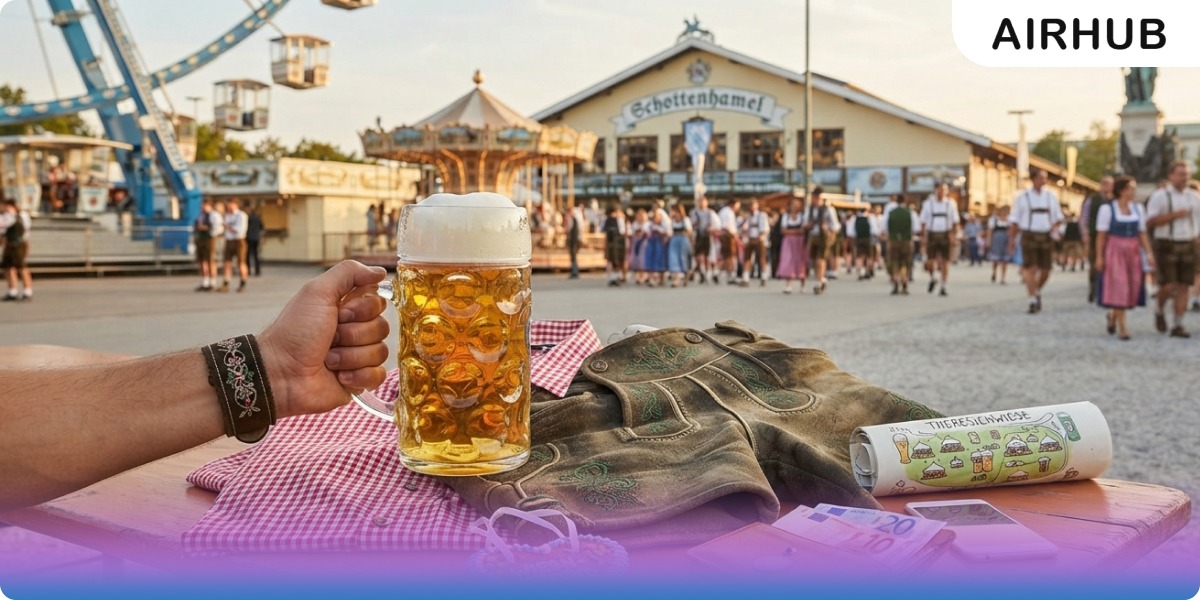
Once a year, a single field in Munich turns into the biggest party on earth. Six to seven million people pour into the Theresienwiese to drink beer by the litre, wear leather shorts entirely without irony, and belt out a song whose only real instruction is to lift your glass. Oktoberfest is the world's largest folk festival and if 2026 is your first, it helps to know how the machine actually works before you're standing in the crowd.
This guide covers the lot: when it runs, what to expect, how the beer tents and reservations really work, what to wear, what it costs, and how to keep your phone alive in a crowd the size of a small country. Whether you typed "what is Oktoberfest" or you're already knee deep in planning Oktoberfest 2026, start here.
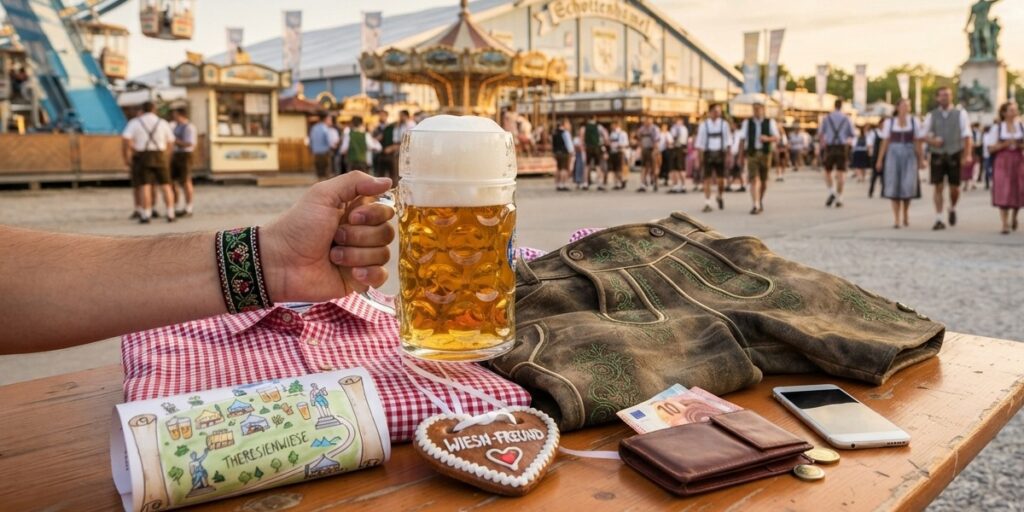
Oktoberfest 2026 runs from Saturday, September 19 to Sunday, October 4, 2026 the 191st edition on the Theresienwiese in Munich, the meadow locals just call the "Wiesn."
And yes, the name is a bit of a trap: despite the "-fest," most of it happens in September. The festival always opens on a Saturday in mid-to-late September and closes on the first Sunday of October or October 3, Germany's national holiday, whenever that lands later. If you're plotting future trips:
| Year | Date |
| 2026 | Sept 19 – Oct 4 |
| 2027 | Sept 18 – Oct 3 |
| 2028 | Sept 16 – Oct 3 |
Strip away the reputation and Oktoberfest is a 16 to 18 day beer festival and funfair rolled into one and it began, of all things, as a wedding reception. In 1810, Crown Prince Ludwig of Bavaria married Princess Therese, and Munich's citizens were invited to celebrate on the fields outside the city walls, capped off with a horse race. It went well enough that they did it again the next year. And the next. Two centuries later, here we are.
The beer is the whole point, and it's tightly controlled: only the six Munich breweries Augustiner, Hacker-Pschorr, Hofbräu, Löwenbräu, Paulaner, and Spaten are allowed to pour, and each brews a special, stronger Oktoberfest lager just for the festival.
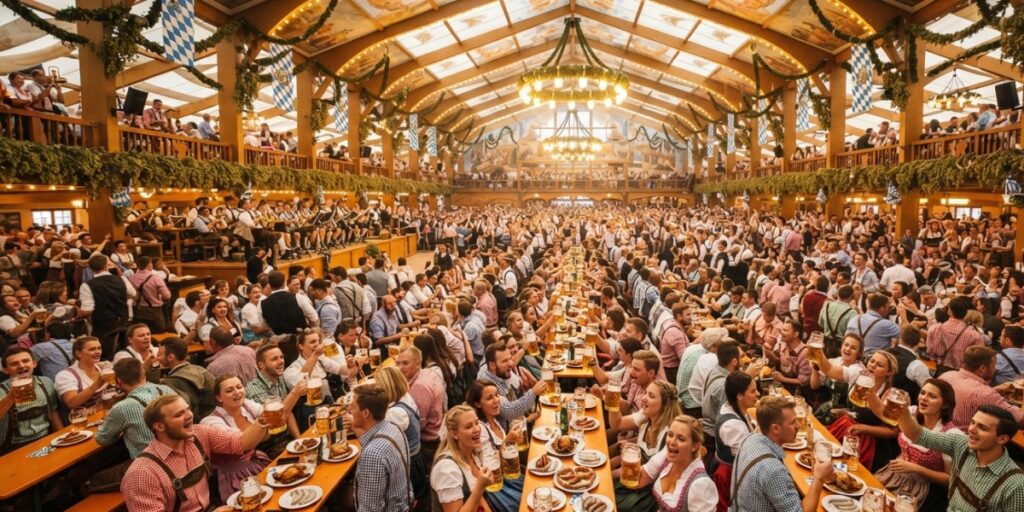
As for what actually happens: it kicks off at noon on opening day, when Munich's mayor taps the first keg in the Schottenhamel tent and shouts "O'zapft is!" "It's tapped!" and not a drop is served until he does. Inside the tents you'll find brass bands, long communal benches, mountains of Bavarian food, and the entire hall standing to sing Ein Prosit every few minutes. Outside, it's a proper carnival of rides, games, and stalls. Nearly everyone's in traditional dress, and the mood sits somewhere between a wedding, a music festival, and a very large family dinner.
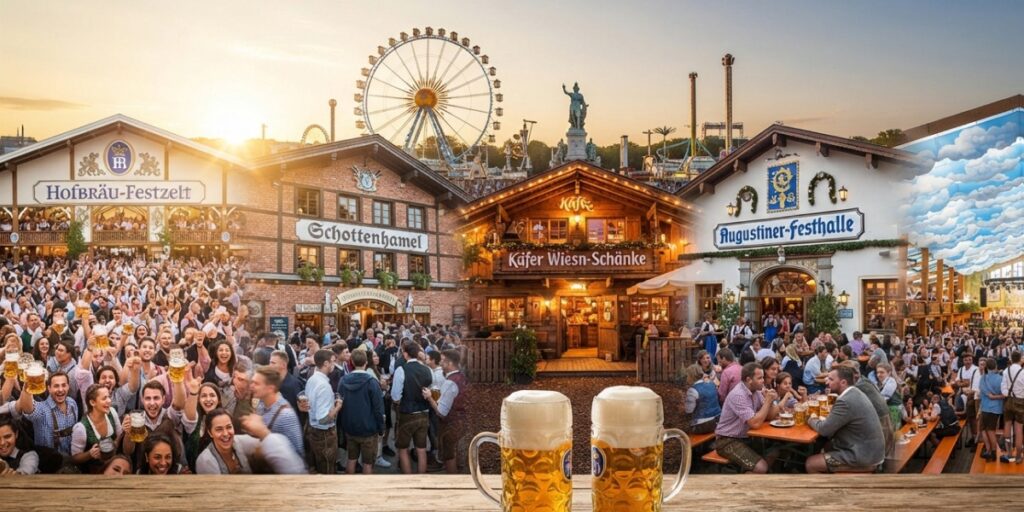
There are 14 large tents, plus a couple of dozen smaller ones, and each has a distinct character so the one you pick genuinely shapes your day. A quick tour of the big names:
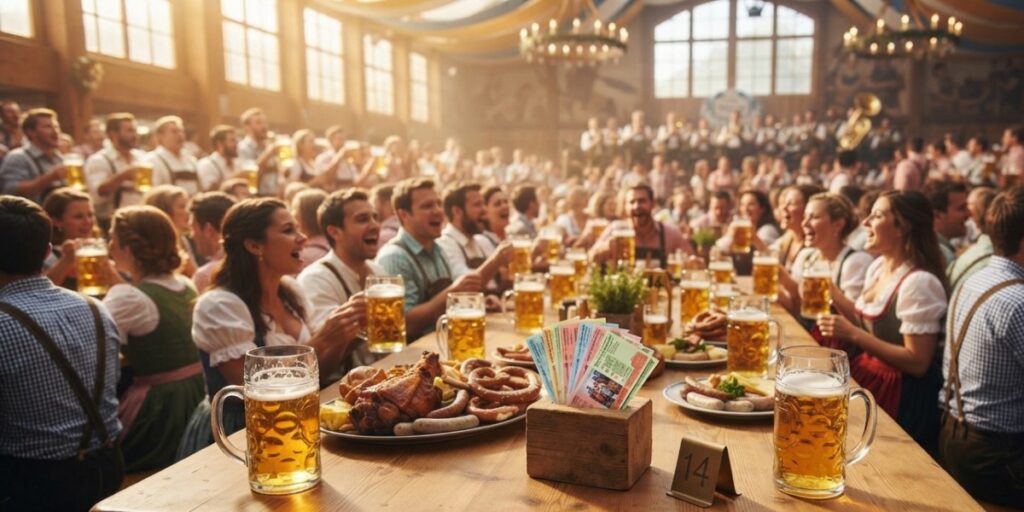
Here's the thing that catches most first-timers off guard. You don't need a ticket to get into Oktoberfest but if you want a guaranteed table, especially in the evenings or at the weekend, you need a reservation, and the good ones vanish fast.
The rule of thumb: a big group set on a specific evening should reserve early. A pair or a solo traveler can happily wing it.
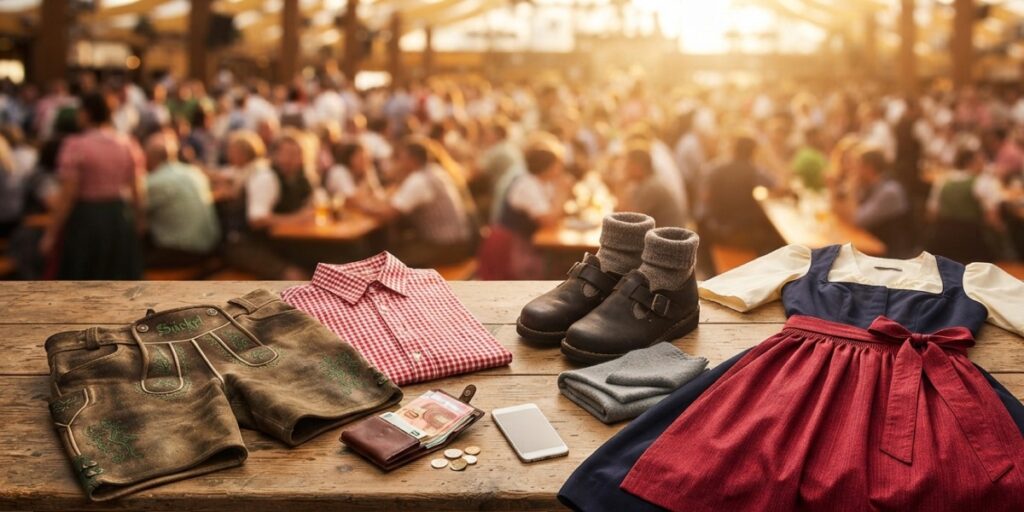
You're not required to dress up but nearly everyone does, and skipping it means missing half the fun. The traditional Bavarian kit is lederhosen (leather shorts) for men and a dirndl (a fitted dress with an apron) for women.
Whatever you choose, pack layers and comfortable shoes. Late September Munich swings from warm afternoons to genuinely cold nights, and you'll be on your feet for hours.
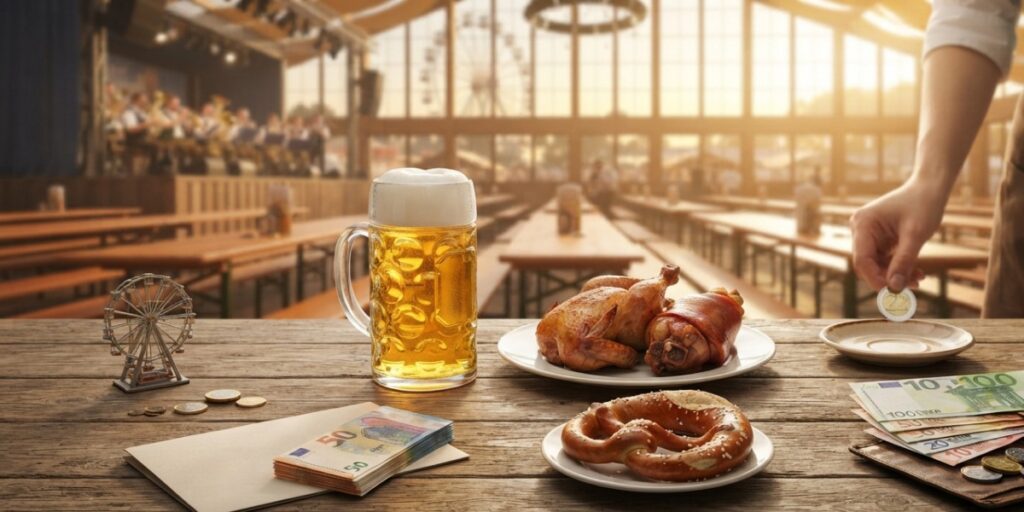
Getting in is free. Everything after the entrance is emphatically not Oktoberfest is one of those events that's simply hard to do on the cheap, so it pays to walk in with realistic numbers:
| Item | Rough cost |
| A litre of beer (a Maß) | ~€15+ |
| Half a roast chicken / pork knuckle | €15–25 |
| Giant pretzel | a few euros |
| Ferris wheel / carnival ride | ~€5–13 per go |
| Table reservation (per person) | ~€50 |
| Lederhosen / dirndl | €100–300 |
Tip your server a euro or two per round it's expected here, and it has a funny way of making your next beer arrive faster. One more thing that surprises people: the festival is largely cash-only, so bring more than you think you'll need.
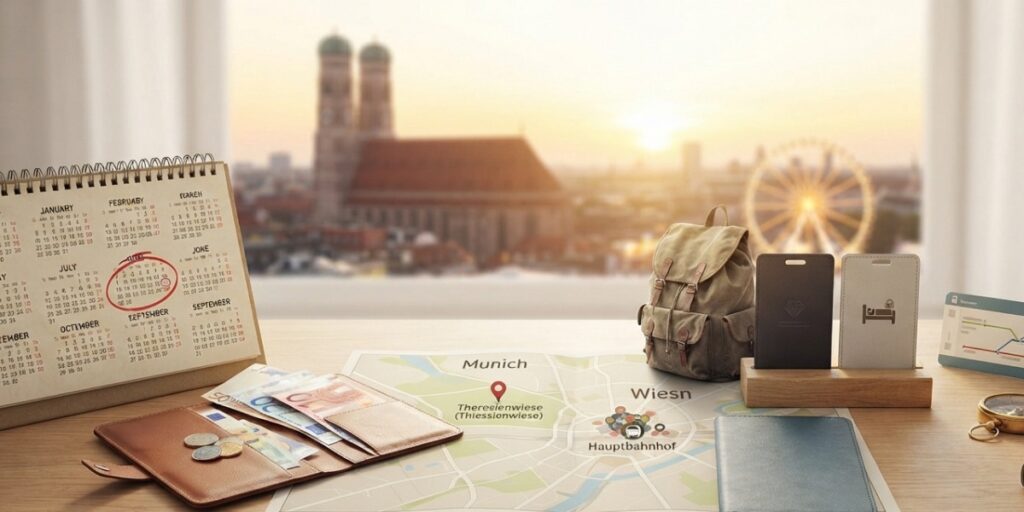
Accommodation is both your biggest expense and your earliest decision. Munich hotels crank their rates for Oktoberfest, and beds anywhere near the Theresienwiese sell out months ahead, sometimes close to a year in advance. The single best money-saving move is simply booking early.
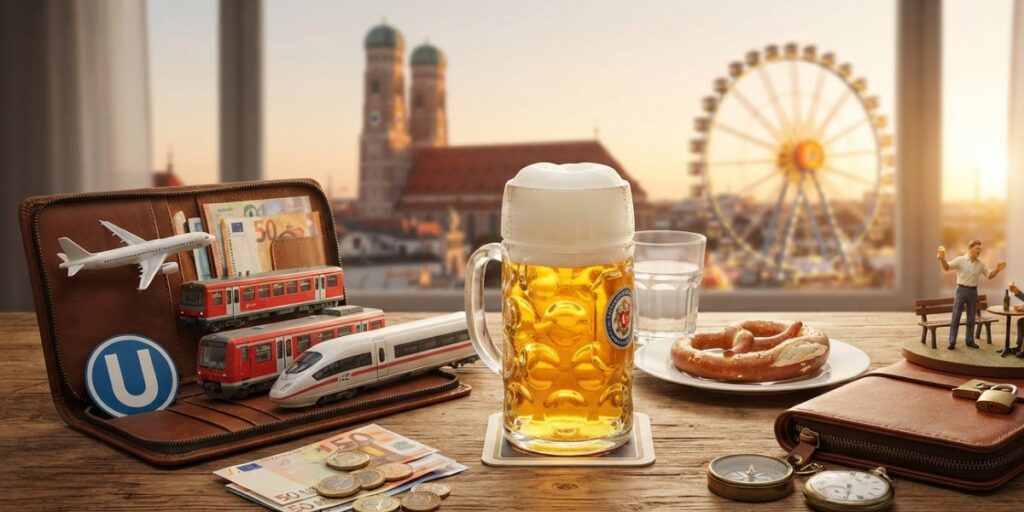
Getting to Munich is easy, and finding the festival once you're there is easier still:
A handful of things that separate a great day from a rough one:
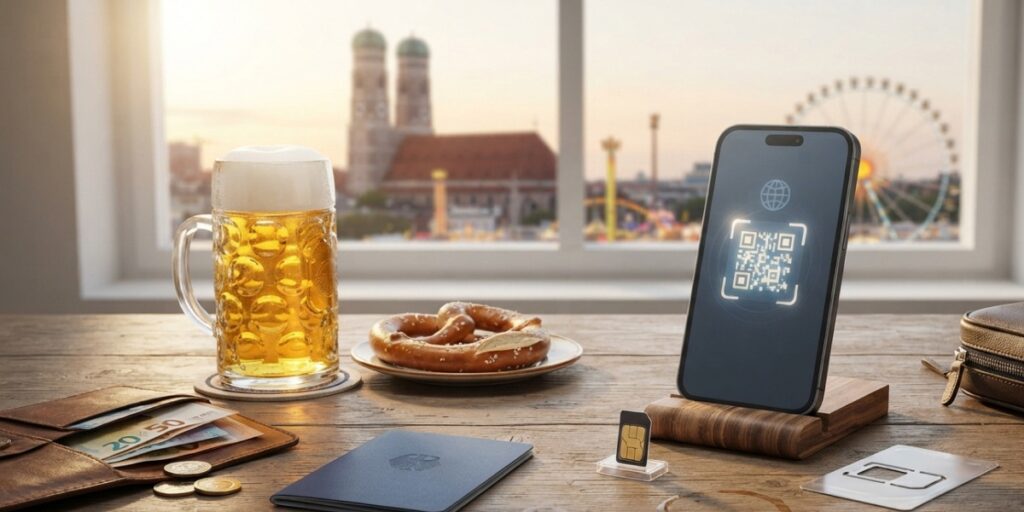
With millions of people crammed onto the Wiesn, your phone stops being a convenience and becomes an essential kit. You'll need it to find your group after you inevitably lose them across a tent, to map the nearest cash machine (remember, this is a cash festival), to translate a menu, or to grab a live clip of the band mid-Ein Prosit.
If you're flying in from abroad, sorting your data before you land, hunting for a SIM shop in an unfamiliar city, or eating a roaming bill, is the last thing you want on day one. An eSIM Germany plan from Airhub installs in minutes: scan a QR code and you touch down already connected to a local network. And if you'll be leaning on maps, messaging, and video all day you will have an eSIM with unlimited data plan means you're not rationing megabytes at the bar.
There's a quiet bonus here, too: unlike a plastic SIM, an eSIM can't be pickpocketed or dropped into someone's beer; it lives inside your phone. New to the idea? Here's the straight comparison of eSIM vs a physical SIM, and you can confirm your phone supports eSIM before you count on it.
So: mark the dates (September 19 – October 4), book your bed as early as you can stand to, reserve a table if you're rolling with a group, pack a costume and shoes you can survive a marathon in, and carry cash. Sort your data before you fly, keep your people close, and respect the litres get those right and you'll walk away with one of the great travel experiences behind you. Prost, and safe travels.
Oktoberfest is the world's largest folk festival, a 16 to 18-day beer festival and funfair held every year in Munich, Germany, on the Theresienwiese. It traces back to a royal wedding celebration in 1810 and now draws roughly six to seven million visitors a year for Bavarian beer, food, music, and traditional dress.
Oktoberfest 2026 runs from Saturday, September 19 to Sunday, October 4, 2026, in Munich. The name misleads it's mostly a September festival, always starting in mid-to-late September and ending on the first Sunday of October.
No. Entry to Oktoberfest and its tents is free, and you pay only for what you eat and drink. If you want a guaranteed table especially in the evenings or at weekends you'll need a reservation, booked through each tent directly and usually earlier in the year.
A litre (a Maß) runs around €15 or more in 2026, with food like half a roast chicken or a pork knuckle at roughly €15–25. Budget generously, and bring cash the festival is largely cash-only.
Traditional Bavarian dress lederhosen for men, a dirndl for women is worn by most attendees and is genuinely half the fun. You can buy an outfit (roughly €100–300) or rent one for a day or two, and either way bring layers and comfortable shoes for the cold evenings.
As early as you possibly can. Accommodation near Munich sells out months, sometimes almost a year ahead, and prices spike during the festival. Tent reservations open early in the year and fill quickly too, so lock in your bed and any table booking well in advance.
For an international visitor, it's the easiest way to stay connected. An eSIM germany plan activates in minutes via QR code, so you land already online for maps, translation, and finding your group in the crush with no SIM-shop hunt and no roaming bill. Just check if your phone supports eSIM first.
Get your Airhub eSIM in minutes and travel without roaming surprises.
Download the Airhub app to purchase, manage and top up your eSIMs anytime, anywhere!