









Ready to try eSIMs and change the way you stay connected?
Download the Airhub app to purchase, manage and top up your eSIMs anytime, anywhere!
App exclusive5% off at checkout
Pack smart for Europe with essential travel tips, clothing, tech gear, and eSIM solutions for a smooth, stress-free adventure.
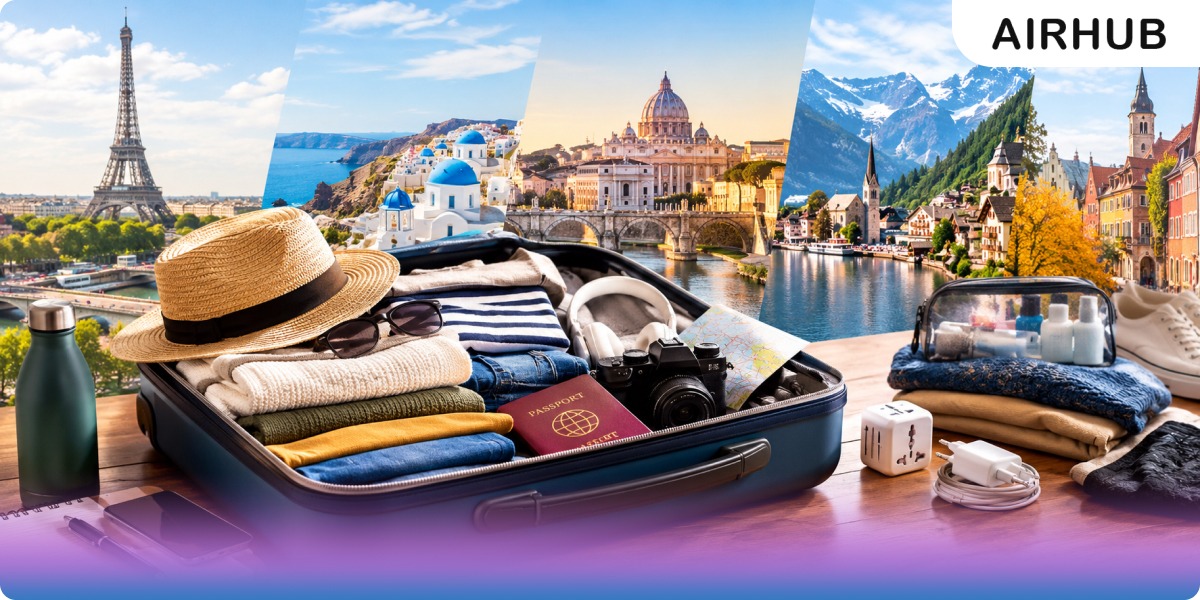
Nobody tells you the real problem with packing for Europe: it isn't one place. A July run through Andalucía and a January weekend in Vienna call for almost opposite suitcases, so any "ultimate list" that treats the continent as a single climate is quietly setting you up to sweat or shiver. That's the flaw in most packing guides they hand you a fixed inventory and ignore the two things that actually decide what goes in the bag.
This one works the other way round. It starts with your trip the season, the region, how long you're gone and only then moves through what to bring, category by category, right down to the digital essentials most lists forget. Long weekend in Paris or a month backpacking Lisbon to Budapest, treat it as a menu and take what fits. There's a free printable checklist at the end to carry with you.
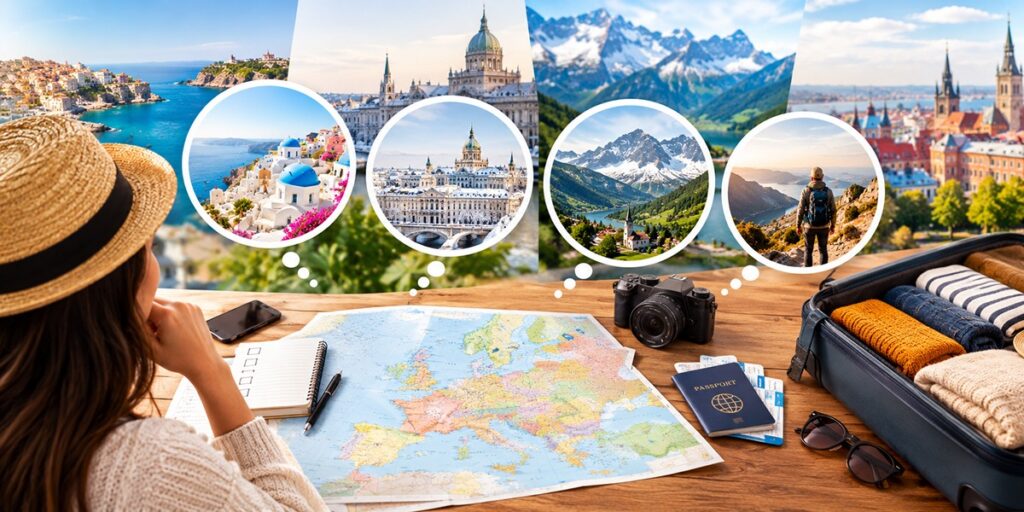
Two minutes of thinking here saves you a heavy, half-useless bag later. Before anything goes in the case, get honest about four things:
Answer those and the rest of this becomes a menu rather than a mandate. Take what fits, leave the rest.

Same continent, very different suitcases. Here's what actually changes:
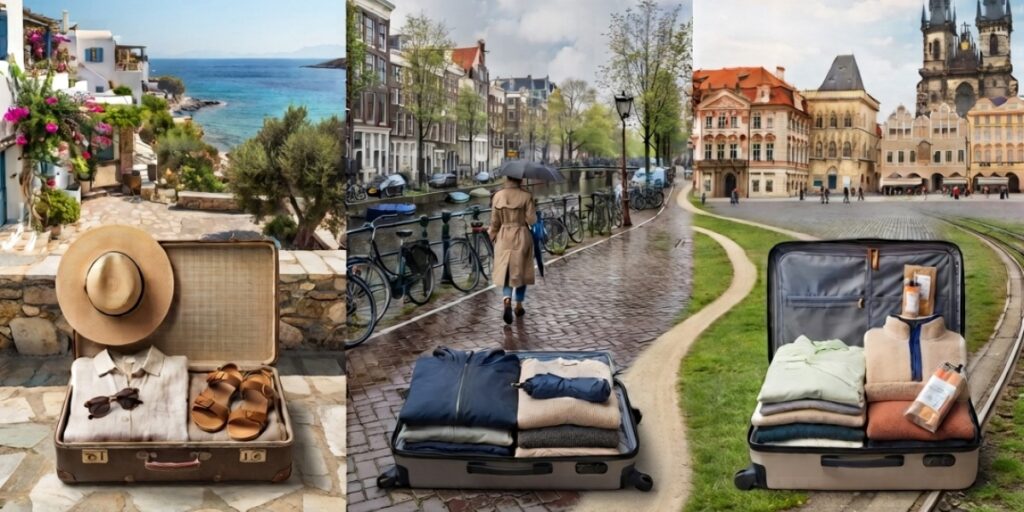
Europe's weather splits roughly four ways. Match your route to the row and pack the extras:
| Region | Typical weather | Pack extra |
| Mediterranean (Spain, Italy, Greece, southern France) | Hot, dry summers; mild, damp winters | Sun protection, breathable fabrics, sandals |
| Western & Central (France, Germany, Netherlands, Austria) | Mild but changeable; frequent rain | Layers, a waterproof jacket, an umbrella |
| Northern & Nordic (UK, Ireland, Scandinavia) | Cool, wet, windy; cold winters | Warm waterproofs, sturdy shoes, a proper coat |
| Eastern (Poland, Czechia, Hungary, the Balkans) | Hot summers, cold snowy winters | Season-dependent layers in summer, thermals in winter |
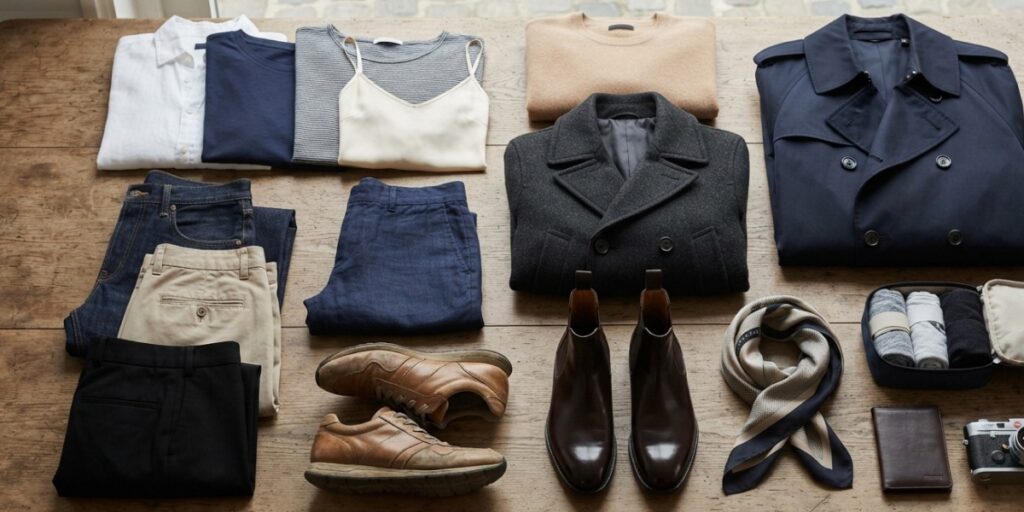
The trick isn't packing everything it's a small capsule wardrobe of neutral, mix-and-match pieces that all talk to each other. There's a side benefit, too: Europeans tend to dress simply and well, so leaving the athleisure and loud logos at home helps you blend in (which, as you'll see below, is partly a safety thing). A solid base for most trips:
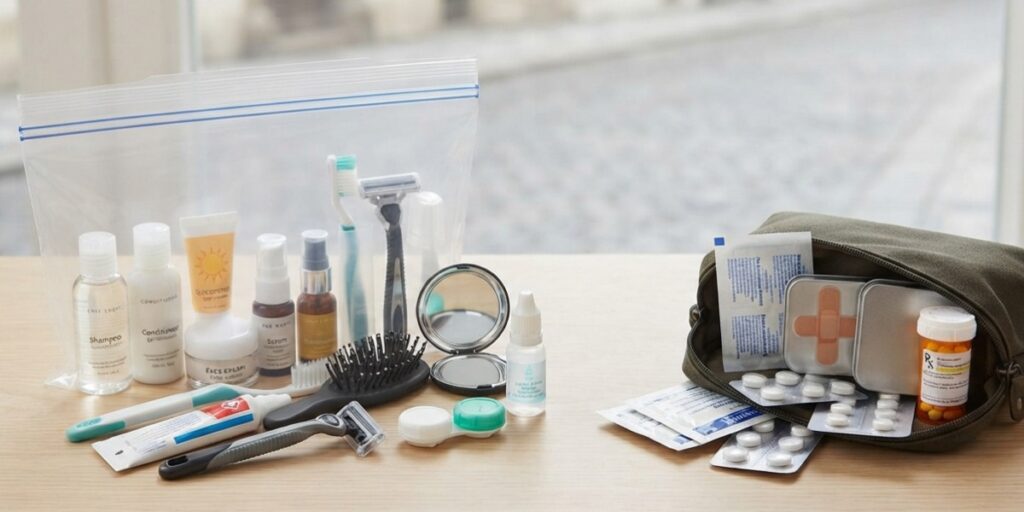
Keep it small and airport-friendly: liquids in your carry-on have to be 100ml (3.4oz) or less, tucked into a clear resealable bag. (Verify the current airport liquids rules before publishing some airports are rolling out new scanners and adjusting the limits.)
Toiletry bag: toothbrush and paste, deodorant, travel-size shampoo and conditioner (hotels often supply it), sunscreen, skincare, any makeup, a razor, contacts and glasses, and a hairbrush. Refillable travel bottles earn their space.
Mini first-aid kit: pain relief, plasters and trust me blister plasters, because you'll walk far more than you plan to. Add any prescription meds in their labelled packaging, allergy tablets, motion-sickness pills, and a few rehydration sachets.
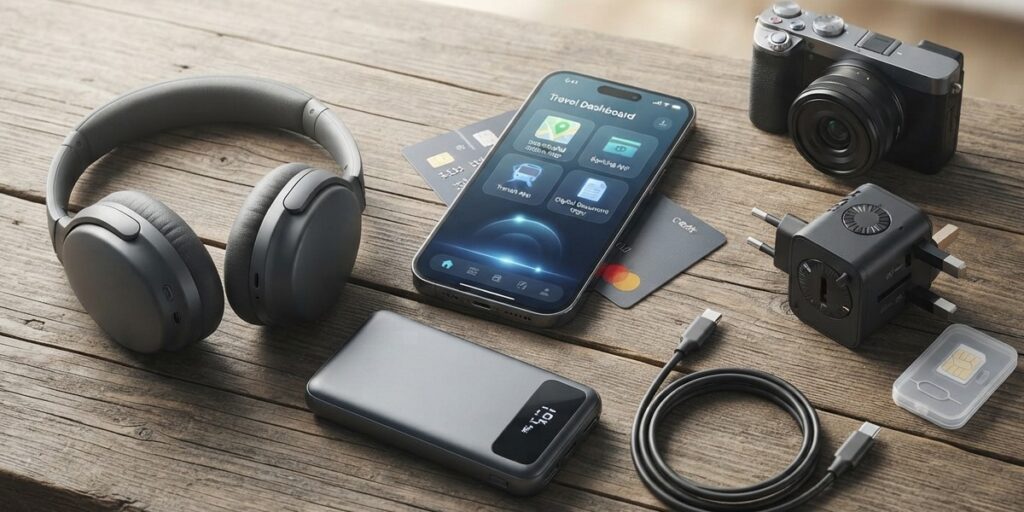
This is the section most packing lists breeze past, and it's exactly where a modern trip lives or dies. What actually earns a place:
Wondering will my phone work in Europe? It comes down to your handset and whether you're on roaming, a local SIM, or an eSIM. The short version is a little further down.
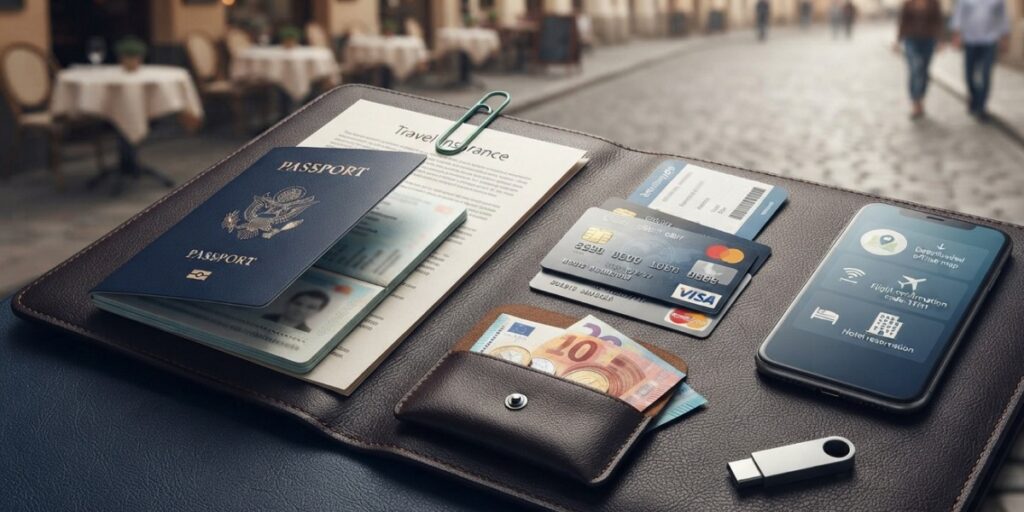
This is the stuff that's a real headache to replace, so it's worth a moment:
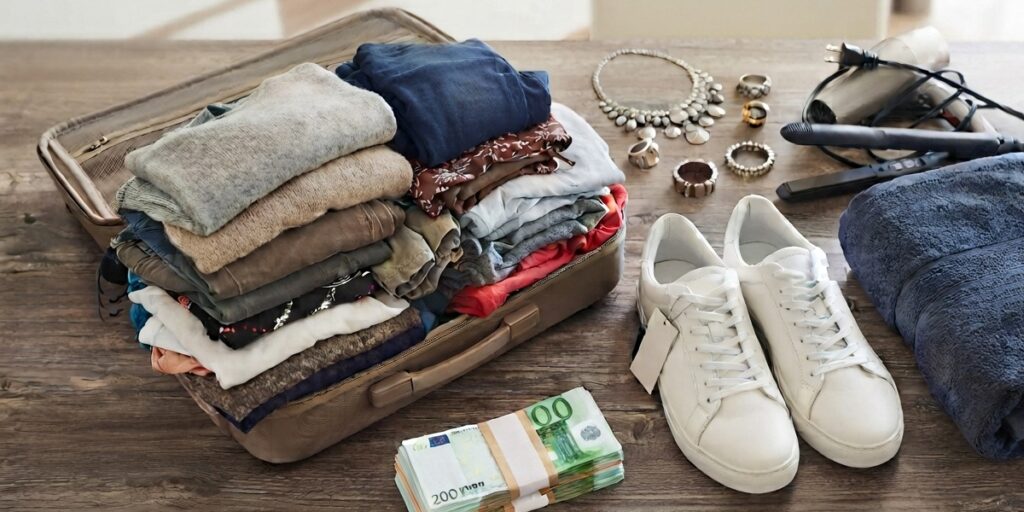
Packing well is half about what you leave behind. The usual suspects:
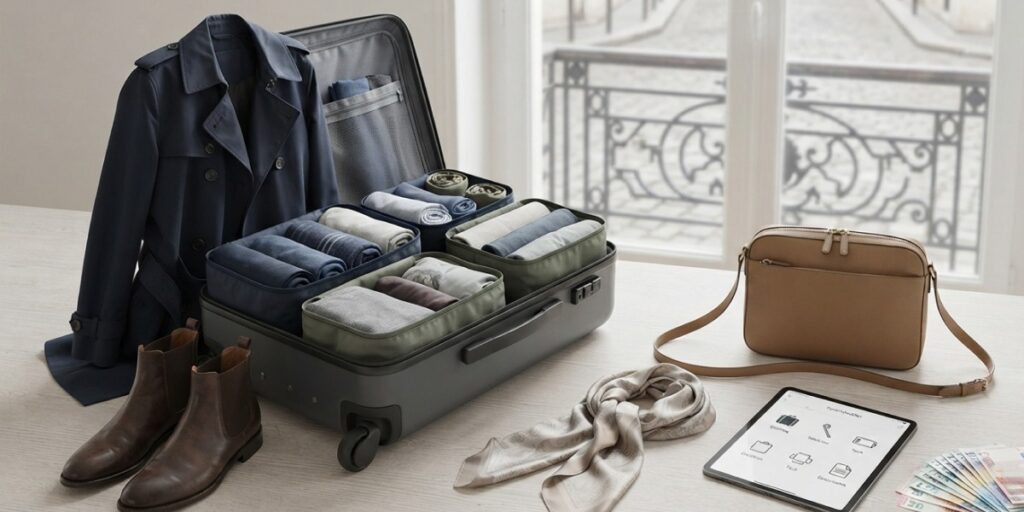
A handful of things that quietly make the whole trip smoother:
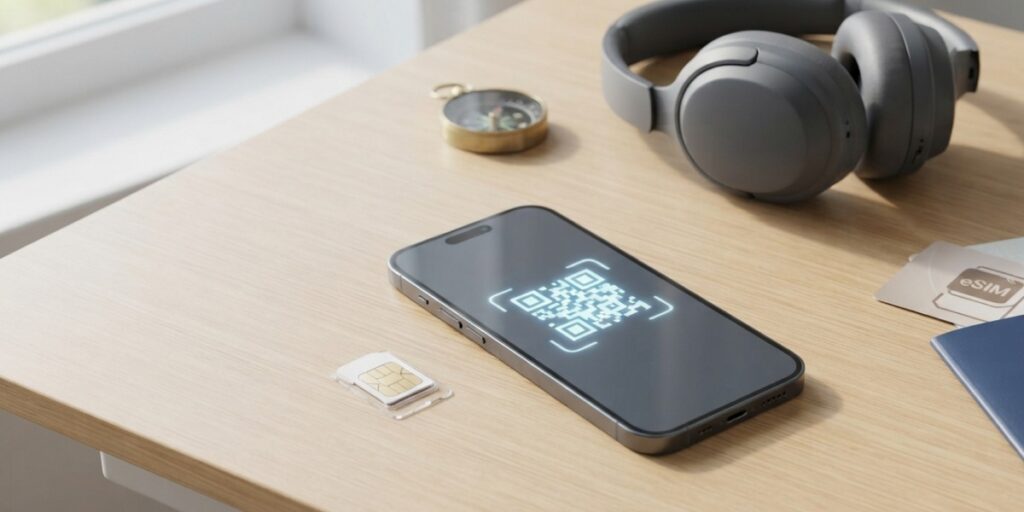
One digital essential deserves its own moment: your data. You'll lean on your phone constantly over there maps through winding old towns, train and bus apps, restaurant bookings, on-the-fly translation and the two worst ways to handle it are a surprise roaming bill and a queue at an airport SIM kiosk.
An eSIM sidesteps both. You buy it before you fly, scan a QR code, and land already connected no card to swap, no shop to hunt down. An eSIM europe plan from Airhub covers you across borders on a single setup, so a Lisbon to Budapest route doesn't mean a fresh SIM at every frontier. There are eSIM data plans for everything from a short city break to a long haul, with unlimited-data options if you're online all day.
Not sure how it stacks up against a physical card? Here's the plain rundown of eSIM vs a physical SIM. Most recent iPhones and Android phones support eSIM just check the compatibility list before you count on it.
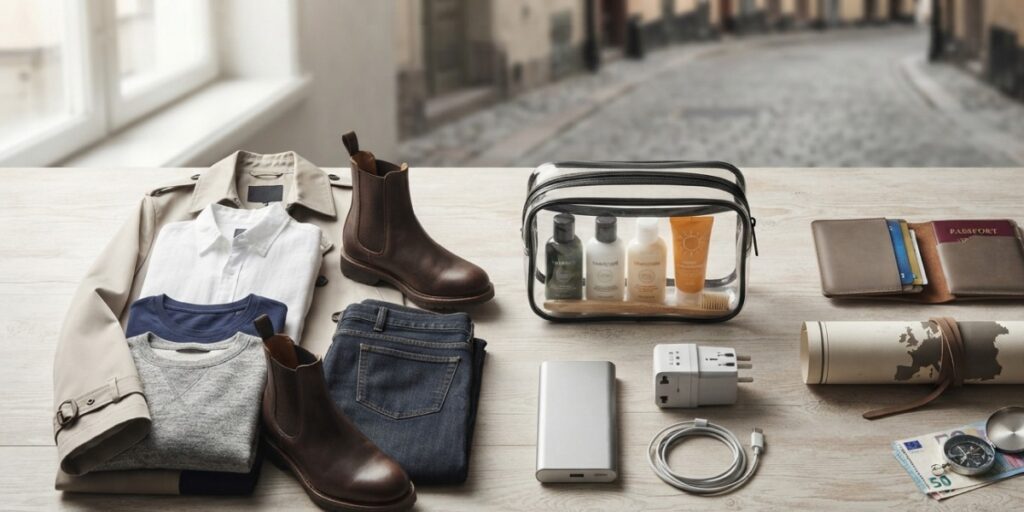
The best Europe packing list is the one you bother to tailor. Start from your season and region, build a small mix-and-match wardrobe around one pair of properly comfortable shoes, keep the toiletries and tech lean, and leave a little room for whatever you fall in love with along the way. Sort your documents and your data before you go, grab the printable, and you'll be ready for whatever the continent throws at you sun, rain, cobbles, and all.
About a week's worth of mix-and-match clothes (you'll do laundry), two pairs of shoes one comfortable for walking, one smarter a season-appropriate layer or coat, a small toiletry and first-aid kit, your tech and adapter, and your documents. Here's the useful part: pack for two weeks and pack for a month and the bag looks almost identical, as long as you're washing clothes.
Layer. A T-shirt, a jumper, and a light waterproof cover a huge range of conditions and pack down to nothing. Check the forecast for each stop a few days out, and build around neutral pieces that all coordinate rather than a separate heavy item for every climate.
Beyond the clothes: your passport and any visa, travel insurance, digital copies of every document, a card plus some cash, the right adapter (Type C/F for most of Europe, Type G for the UK and Ireland), and a data plan sorted before you fly. And comfortable walking shoes will matter more than anything fashionable you own.
Aim for carry-on only, build a capsule wardrobe of mix-and-match neutrals, use packing cubes, and plan to do laundry mid trip. The real shift is mental: re-wearing outfits is normal, and nobody around you is keeping score.
Leave the new shoes, the hair dryer and straightener (voltage issues, and hotels have them), bulky towels, a pile of "just in case" outfits, valuable jewellery, and large amounts of cash. If nothing formal is on the itinerary, the heels and the duplicate outfits can stay home too.
It depends on your plan. Home roaming can be expensive, and buying a fresh local SIM in every country is a hassle. An eSIM europe plan is usually the path of least resistance you land already connected across borders. Just check if your phone supports eSIM first.
Get your Airhub eSIM in minutes and travel without roaming surprises.
Download the Airhub app to purchase, manage and top up your eSIMs anytime, anywhere!