











Ready to try eSIMs and change the way you stay connected?
Download the Airhub app to purchase, manage and top up your eSIMs anytime, anywhere!
App exclusive5% off at checkout
Planning a Bora Bora vacation? Get real 2026 trip costs, the best time to go, where to stay, and a day-by-day travel guide inside.
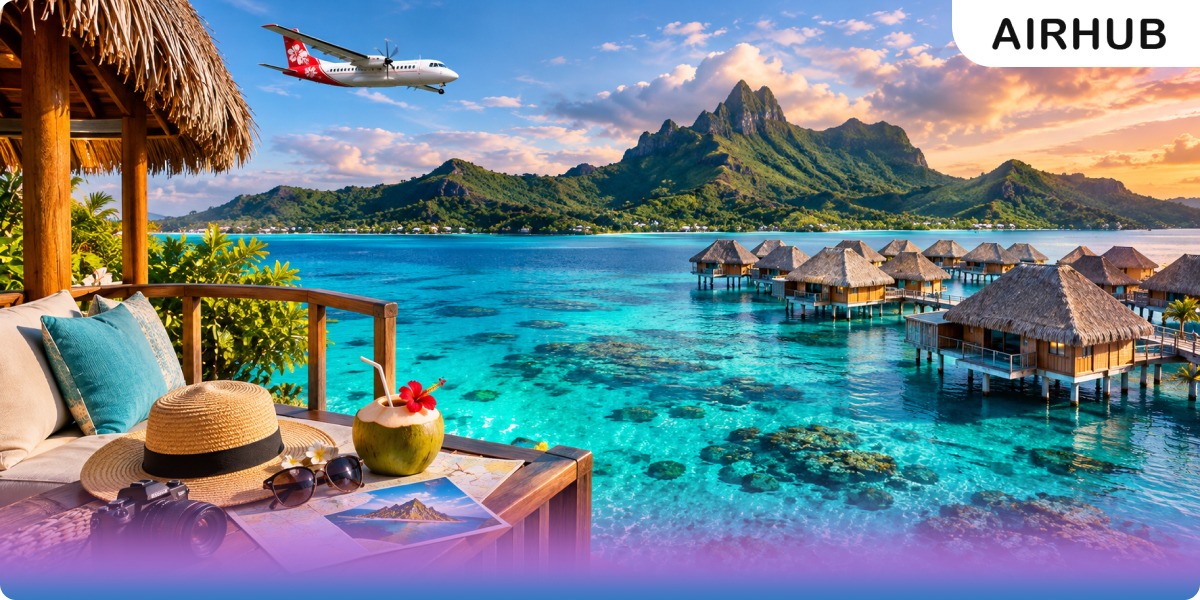
There's a particular moment that happens on almost every first trip to Bora Bora. It's usually somewhere over the lagoon, on the tiny propeller plane connecting Papeete to the island, when the water below shifts from ordinary blue to something that looks almost artificially turquoise. That moment is why people save for years to plan a Bora Bora vacation in the first place and it's also why so many of them arrive with wildly inaccurate expectations about what the trip will actually cost and involve.
Most guides on this topic fall into one of two traps. Either they treat Bora Bora as an unreachable luxury fantasy reserved for honeymooners with unlimited budgets, or they oversimplify the numbers so much that travelers end up blindsided by transfer fees, resort surcharges, and the domestic flight nobody warned them about. This guide takes a different approach. Below, you'll find an honest, itemized look at Bora Bora trip cost across three travel styles, a season-by-season planning breakdown, a sample itinerary you can actually copy, and something most competing guides skip entirely, the solution to stay connected on an island where Wi-Fi is notoriously unreliable, so you're not troubleshooting a hotel router when you should be watching the sunset over Mount Otemanu. Keep reading, because the section on hidden costs alone could save you several hundred dollars before you even land.

Bora Bora is a nine-mile-long volcanic island in French Polynesia, ringed by a coral reef and a lagoon that shifts through roughly a dozen shades of blue depending on the light. It's home to two dramatic peaks, Mount Pahia and Mount Otemanu, and the world's most photographed overwater bungalows, a concept the island's resorts more or less invented in the 1960s.
What doesn't come through in the postcards is how small and self-contained the place actually is. There's one main road that circles the island, a handful of villages, and a local population of around 10,000 people who share their home with a steady flow of honeymooners, anniversary travelers, and increasingly, remote workers looking for a change of scenery. That mix matters when you're planning a trip, because it shapes everything from restaurant reservations to how early you should book your resort.
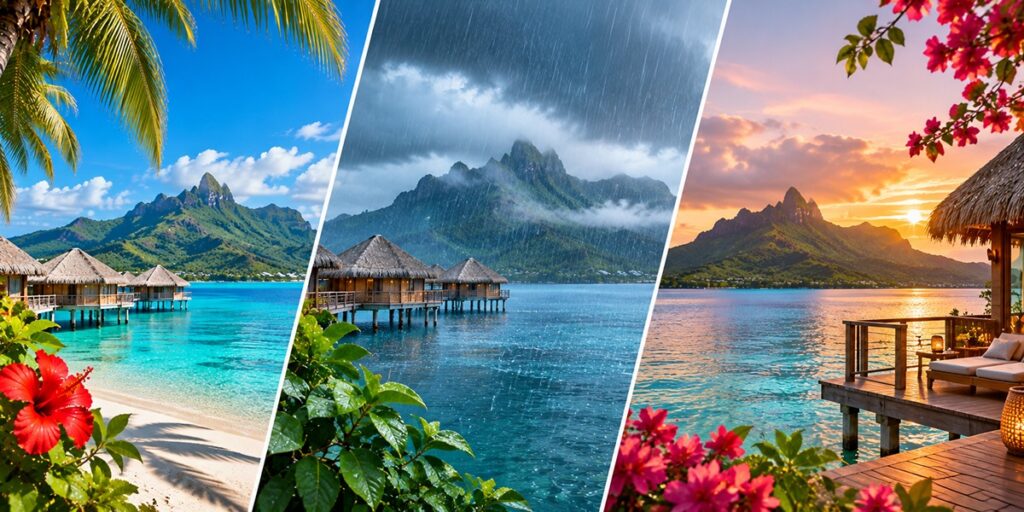
Timing has more influence over your total spend than almost any other decision you'll make.
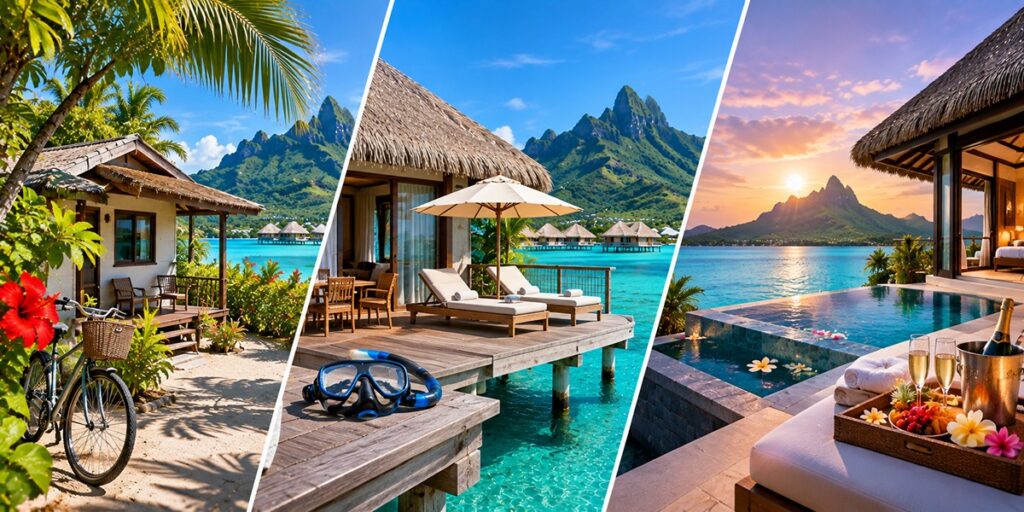
This is the question most people are actually here for, so let's be direct about it. There is no single "average" figure, because the range between a bare-bones trip and a five-star honeymoon is enormous. What follows is a realistic breakdown by travel style, based on a 7-night trip for two people, excluding international airfare into Papeete (which varies too much by origin city to generalize).
This tier means staying in a guesthouse rather than an overwater bungalow, eating a mix of grocery-store meals and casual local restaurants, and picking one or two paid excursions instead of a full activity calendar. It's a completely legitimate way to experience Bora Bora, and one that far fewer articles are honest about, as here the perception of the country is received from a first person view.
This covers a beach bungalow or entry-level overwater room at a mid-tier resort, a half-inclusive meal plan, and a handful of tours like a lagoon snorkeling trip or a 4x4 island safari. Most couples celebrating an anniversary land in this bracket.
Premium overwater villas at resorts like the Four Seasons, St. Regis, or Conrad Bora Bora Nui fall here, often with private plunge pools, all-inclusive dining, and add-ons like private motu picnics or spa packages. At the very top end including extravagant expenses like private-island buyouts the costs can climb well past $30,000 for a week.

A few line items catch travelers off guard more than any other:
None of this means Bora Bora is off-limits on a modest budget, instead it means the real cost lives in the details competing guides tend to gloss over, not just the headline resort rate.
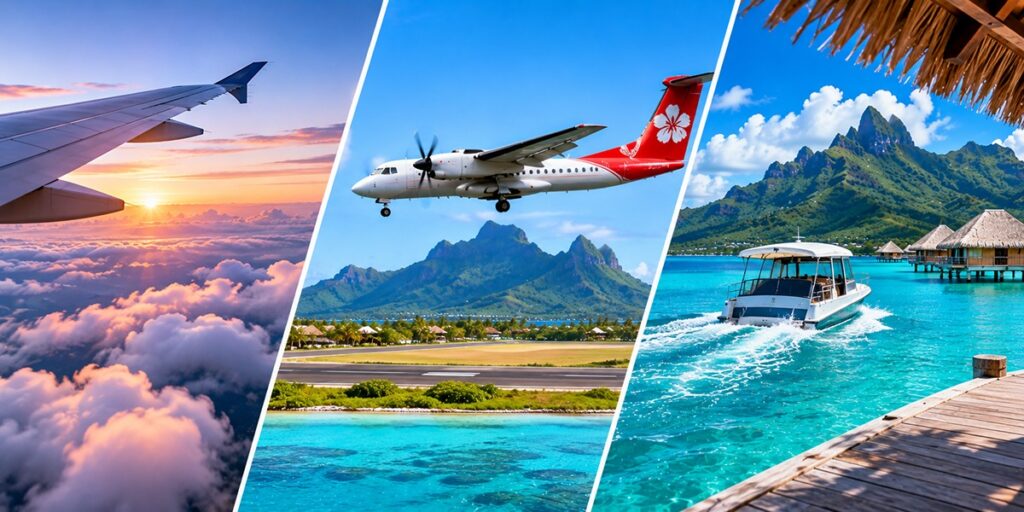
Reaching Bora Bora is a two-flight journey no matter where you're departing from. You'll fly internationally into Papeete's Fa'a'ā International Airport, then connect on a short domestic flight to Bora Bora's Motu Mute airport, which is itself a small island you'll cross by boat to reach the main island. Build in at least a 2–3 hour buffer between flights in Papeete, since domestic check-in and security run on their own schedule, and delays on the inter-island leg aren't unusual during wet season.


Bora Bora rewards travelers who balance structured excursions with unscheduled time. A few standouts worth building your days around:
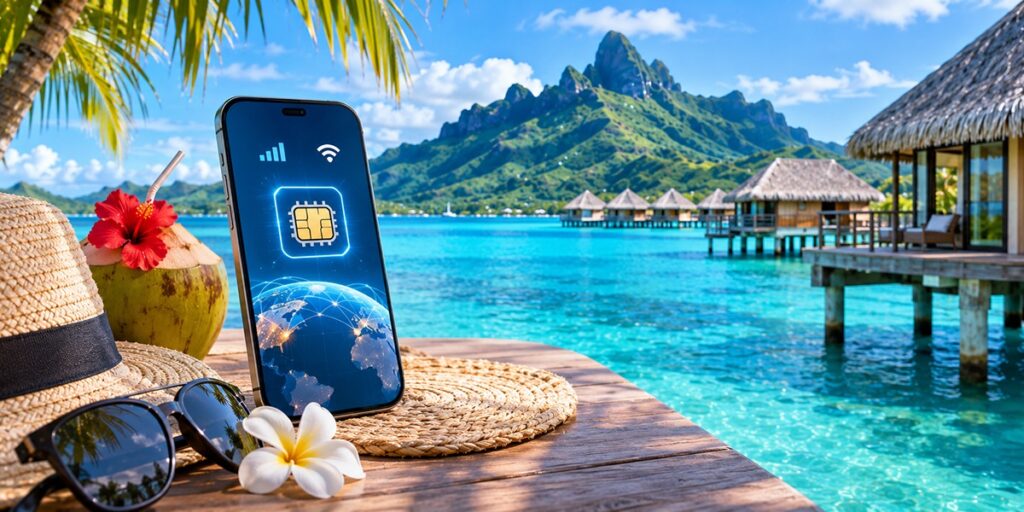
Here's a gap in almost every Bora Bora guide currently ranking: connectivity gets a single throwaway line, if it's mentioned at all , yet it's one of the most practical planning issues travelers actually run into. Bora Bora's telecom market is thin. Vini is the only provider with strong coverage across the whole island, including the remote motus where many overwater resorts sit; other local networks fade out fast once you're off the main strip near Vaitape.
Resort Wi-Fi, meanwhile, has a reputation problem for good reason. It's frequently limited to lobby areas, throttled during peak hours, and can drop out completely on the far end of a bungalow pontoon, precisely where you'll want it for video calls home or uploading that lagoon photo. Local SIM cards exist, but here's the catch competing articles rarely mention: Bora Bora itself has no dedicated SIM shop for tourists. You'd need to buy one in Papeete before your connecting flight, or track down the small Vodafone counter in Vaitape after a ferry ride which is not exactly a relaxing start to a vacation.
This is where setting up a Global eSIM before you fly actually solves a logistics problem rather than just adding convenience. It works on landing, doesn't depend on finding a shop that may or may not exist on a remote island, and keeps you off shared, semi-public resort networks, a small but real security upside if you're handling boarding passes, hotel confirmations, or banking apps on the go. For a destination this remote, having your own reliable mobile data isn't a luxury add-on; it's closer to travel insurance for your itinerary , useful for navigating rental scooters around the island's one coastal road, confirming boat transfer times with your resort, or simply checking the weather before committing to a snorkeling excursion.
If you're finalizing your Bora Bora island travel guide checklist, this is one line item worth handling before departure rather than scrambling for on the ground.

Most cost guides stop at numbers and never show how those numbers translate into an actual week. Here's a realistic mid-range framework:
Adjust the pacing based on your travel style while budget travelers may swap one paid excursion for a self-guided beach day, while luxury travelers often add a private spa afternoon or a second motu outing.
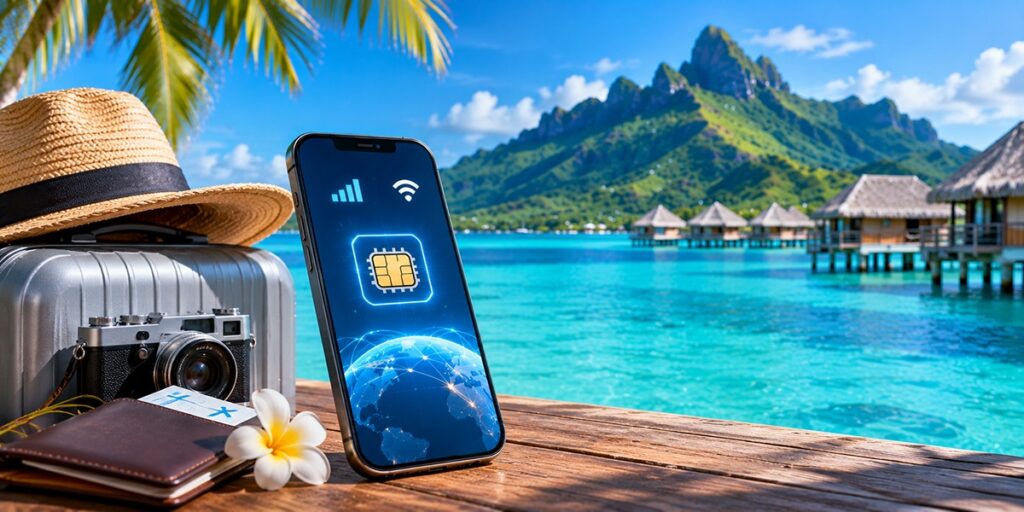
Between coordinating flights, resort transfers, and an activity list this long, connectivity is usually the last thing travelers think about, right up until they're standing at Papeete airport wondering where to find a SIM shop. Airhub's eSIM plans are built for exactly this kind of remote, multi-leg itinerary: instant activation before you even leave home, coverage that doesn't rely on patchy resort Wi-Fi, and data plans sized for everything from GPS navigation on the island's one main road to uploading lagoon photos in real time. It removes one variable from a trip that already has plenty of moving parts, and it means your first hour in French Polynesia is spent looking at the view, not searching for a network. When you're ready to lock in your plan, you can buy eSIM coverage in a few minutes and have it active before your flight even takes off.
A Bora Bora vacation doesn't have to mean either an unattainable luxury fantasy or a stripped-down compromise, it means matching your travel style honestly to your budget, understanding the real costs behind the headline resort rate, and handling the small logistics, like mobile connectivity, before you land rather than after. Do that, and the moment the plane descends over that impossibly blue lagoon, you'll actually be ready to enjoy it instead of mentally recalculating your budget.
Not necessarily. While overwater bungalows at five-star resorts dominate the marketing, pensions, guesthouses, and beach bungalows make a 7-night trip achievable for around $3,500–$5,500 for two people, excluding international airfare.
Most travelers find 5 to 7 nights strikes the right balance — enough time for a few excursions and unstructured beach days without over-scheduling a destination that rewards slowing down.
Yes. Every international flight lands in Papeete, Tahiti, and Bora Bora is reached via a separate 50-minute domestic Air Tahiti flight, so both legs need to be booked and timed with a buffer in between.
An eSIM set up before departure is generally the most reliable option, since resort Wi-Fi can be slow or restricted and Bora Bora itself has no dedicated tourist SIM card shop on the island.
Get your Airhub eSIM in minutes and travel without roaming surprises.
Download the Airhub app to purchase, manage and top up your eSIMs anytime, anywhere!