











Ready to try eSIMs and change the way you stay connected?
Download the Airhub app to purchase, manage and top up your eSIMs anytime, anywhere!
App exclusive5% off at checkout
Go beyond gondolas & canals & know the best things to do in Venice. Find top Venice attractions & stay connected throughout the trip.
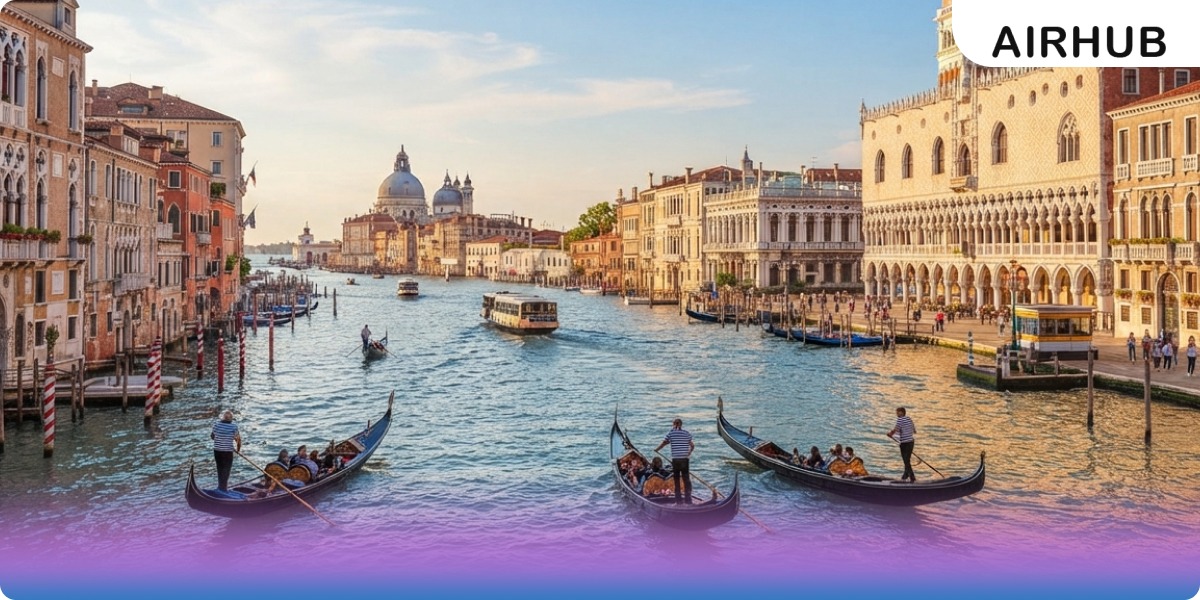
Venice shouldn't work. It's a hundred-odd islands lashed together by some 400 bridges, built on wooden pilings sunk into a lagoon because, a thousand years ago, the locals decided open water was safer than the mainland raiders. And yet it not only works it's one of the most beautiful cities on earth. The catch nobody warns you about is that Venice is also a maze with no cars, no straight lines, and no real way to see it without getting lost at least once. That's not a flaw. That's the point.
So this is a first-timer's guide that treats Venice the way it actually plays out: the essential sights you came for, the experiences you'll still be talking about a year later (the gondola ride included, cliché and all), the lagoon islands worth a day trip, and the practical calls that trip people up when to go, how many days you need, what a vaporetto costs, and how to stay online in a city practically engineered to disorient you.
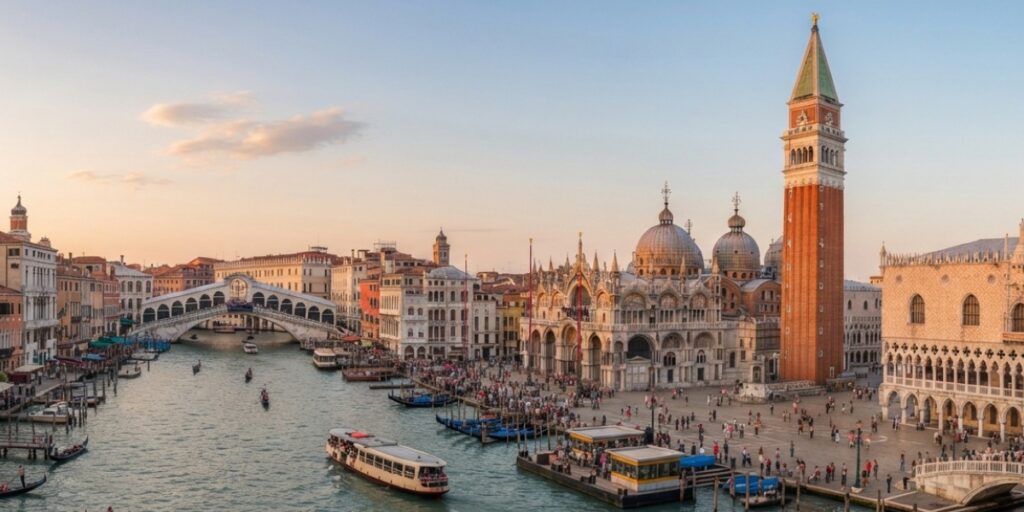
Start with the landmarks that earned Venice its reputation. Yes, they're crowded but they're crowded for a reason, and the fix is almost always timing.
Piazza San Marco is the beating heart of the city and, in the middle of the day, its most jammed corner which is exactly why you go early or late. Napoleon is said to have called it "the drawing room of Europe," and standing under the golden mosaics of St. Mark's Basilica with the buskers tuning up and the pigeons wheeling overhead, you get it. Climb the Campanile for the finest rooftop view in Venice, then blow an absurd amount of money on a coffee at Caffè Florian open since 1720, and worth it exactly once, purely for the setting.
The Doge's Palace (Palazzo Ducale) is Venetian Gothic showing off gilded council chambers, wall-sized history paintings, the nerve centre of the old Venetian Republic. The detail everyone remembers is the enclosed Bridge of Sighs, which once ferried condemned prisoners from the interrogation rooms to the cells. The name comes from their last sight of the lagoon through those little stone windows. Take a guided tour if you can; the intrigue is half the point.
Venice's main street is made of water. The Grand Canal curves through the city in a long S, its banks stacked with palazzos, and the best seat in the house is the deck of a vaporetto take line 1, the slow scenic route, and let the whole city drift past. At the canal's midpoint sits the Rialto Bridge, the oldest of the four crossings, standing since 1591. Time it for the morning Rialto Market, when the fish and produce stalls are loud and alive, then slip into a canal-side osteria for cicchetti and a spritz.
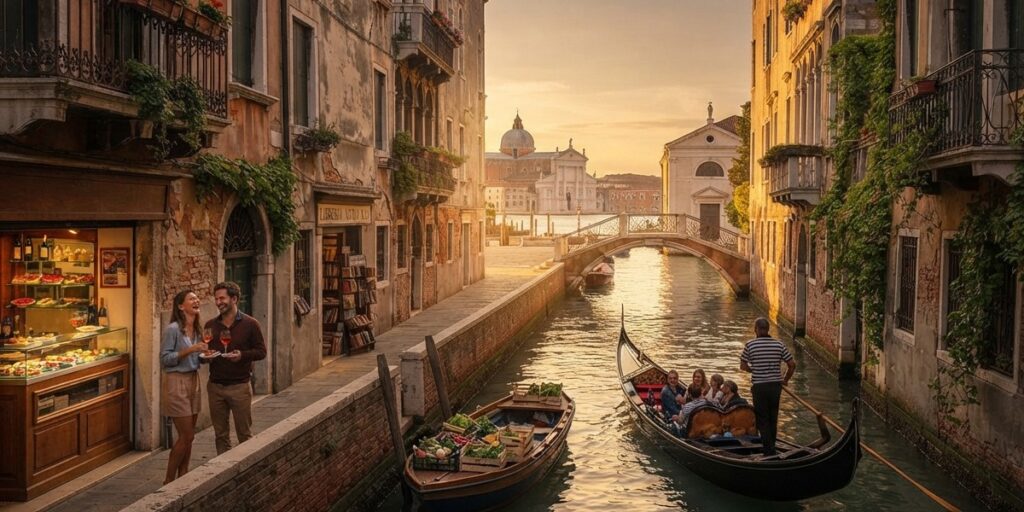
The sights are the postcards. These are the parts you'll actually remember.
Cliché? Utterly. Is it worth it? Also yes. Drifting through the narrow back canals the tight ones the vaporetti can't reach gives you a version of Venice you simply can't see any other way. The rates are fixed and posted around the city: roughly €90 for 30 minutes per day, climbing to about €110–120 in the evening, and that's per boat, not per person, so gather five or six and split it. (Verify the current gondola rates before publishing.) Go at golden hour, settle the route before you step in, and steer your gondolier toward the quiet side canals rather than the busy Grand Canal.
Venice's answer to tapas is cicchetti small plates of whipped salt cod, fried seafood, or loaded crostini served at old-school wine bars called bàcari. Order an ombra (a small glass of wine) or a spritz, eat standing up, then move to the next bar and do it again. It's cheaper than a restaurant, far more local, and honestly more fun. The lanes threading off the Rialto Market are the classic hunting ground.
Two small spots outperform their size. Libreria Acqua Alta is a gloriously chaotic bookshop that keeps its stock in bathtubs and a full-size gondola to ride out the floods more photo opportunity than functioning library, but unforgettable. And the Peggy Guggenheim Collection, set in her never-finished palazzo on the Grand Canal, packs a world class modern art hoard Pollock, Ernst, Picasso into one of the calmest rooms in the city.
Put the phone away for an hour. Venice is compact and car-free, and it's almost impossible to get genuinely lost here every wrong turn just spits you out at a quiet campo, a lace shop, or a canal begging to be photographed. This is the moment the city stops being a checklist and starts being Venice. When you want the payoff view, take the vaporetto over to San Giorgio Maggiore and ride the lift up its campanile: the same skyline as the St. Mark's tower, minus most of the queue.
Set aside at least half a day for the islands. They're a short vaporetto hop and a total change of pace from the crowds of the centre.
One tip: the island vaporetti (line 12 from Fondamente Nove) clog up around midday, so go early.
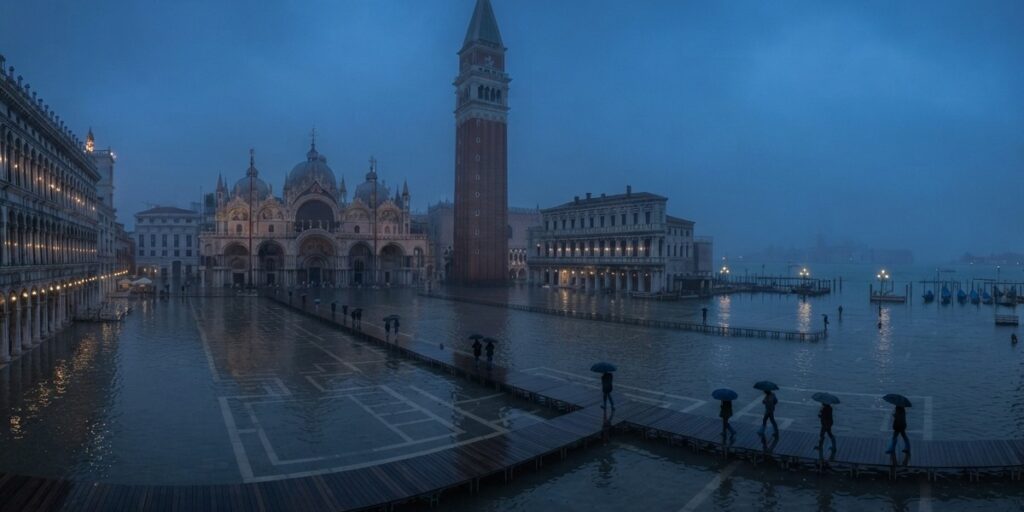
Summer in Venice (June through August) is hot and muggy, which makes the shoulderseason April–May and September–October the sweet spot: mild weather, thinner crowds. Winter is a different animal altogether: quiet, misty, atmospheric, and lit up in February by Carnival and its masks. The one thing to plan around is acqua alta, the seasonal high tides that can briefly flood the low-lying spots like St. Mark's Square, most often from autumn into early spring. It usually drains away within hours, the city rolls out raised walkways when it hits, and a pair of waterproof shoes solves most of the problem if you're travelling in that window.
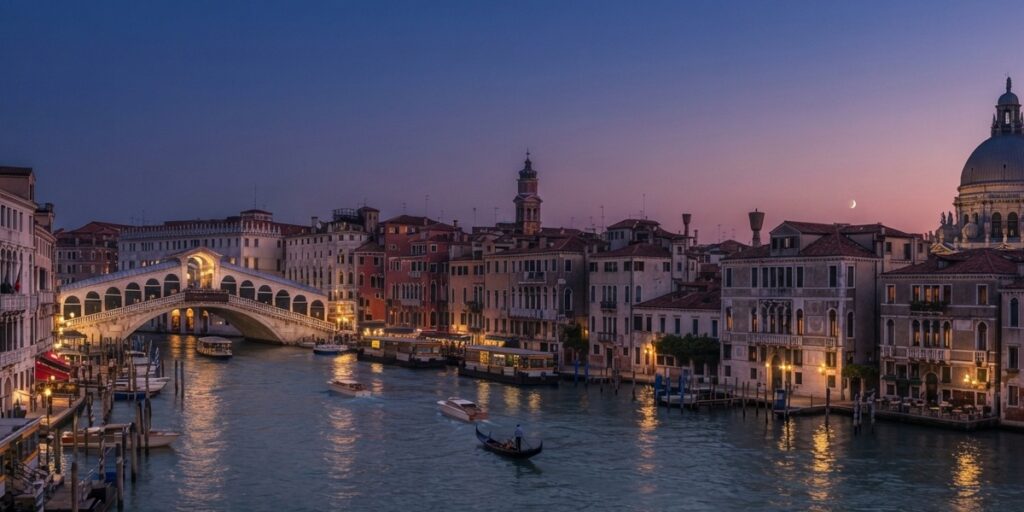
Plenty of people "do" Venice as a day trip. Don't be one of them. The city is at its best at either end of the day early morning and evening once the day-trippers have cleared out and the canals fall quiet.
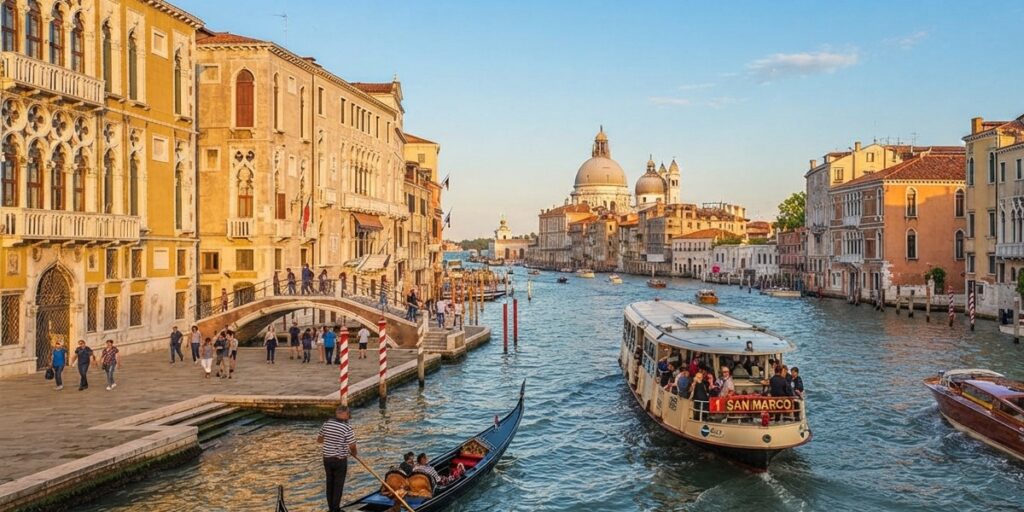
Venice moves on foot and on water there are no cars, taxis, or buses in the historic centre, which throws off a lot of first-timers.
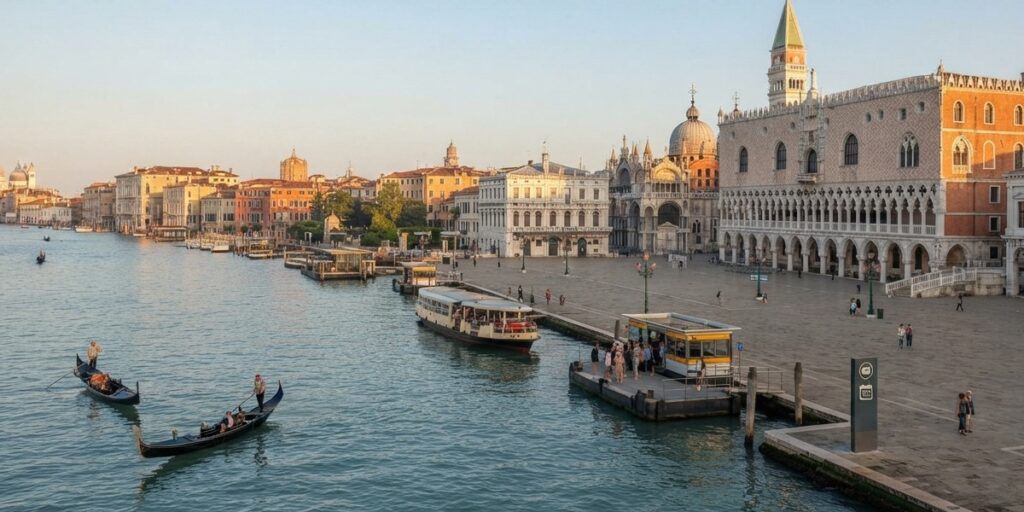
A handful of things worth knowing before you go:
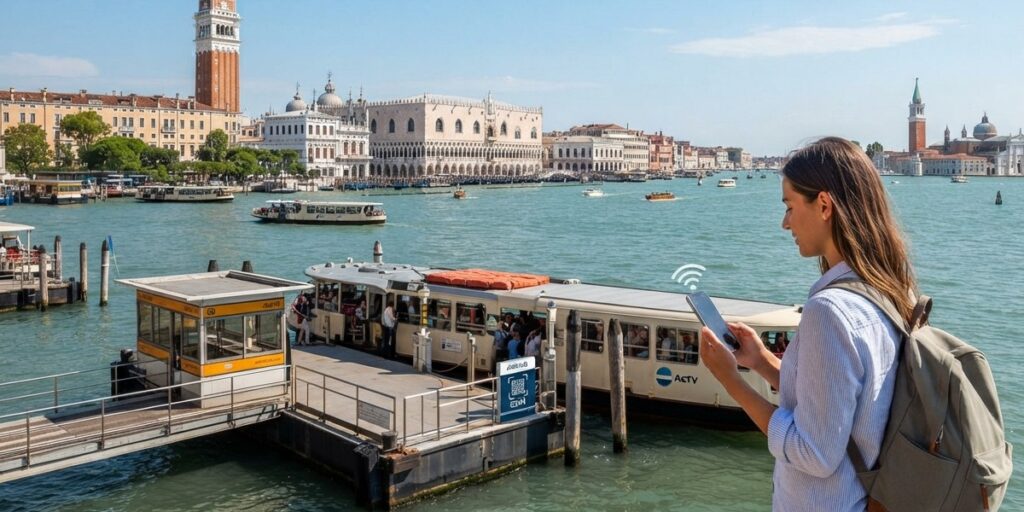
Here's the practical truth most Venice guides skip over: this is a city built to disorient you. The alleys are narrow and barely signed, the addresses make no intuitive sense, and your GPS is what stands between you and that bàcaro you read about right up until you reach somewhere like Torcello, where the signal and the Wi-Fi both start to fade. You'll want data live from the second you land at Marco Polo: for the boat into town, the maps, the restaurant and tour bookings, the ferry times.
That leaves two options. Queue at an airport kiosk for a local Italian SIM (TIM, Vodafone, or WindTree), or set the whole thing up before you fly with an eSIM. The eSIM is the low-friction one buy the plan ahead, scan a QR code, and step off the plane already connected, with no kiosk line and no popping out the little card that holds your home number.
An eSIM Italy plan from Airhub has a Venice trip covered; if you're stringing Italy together with neighbouring countries, an eSIM europe plan keeps you online across the borders on a single setup. Most recent iPhones and Android phones handle eSIM, and many will run your home number alongside a travel plan worth checking the compatibility list first, and if the format's new to you, here's the straight comparison of eSIM vs a physical SIM.
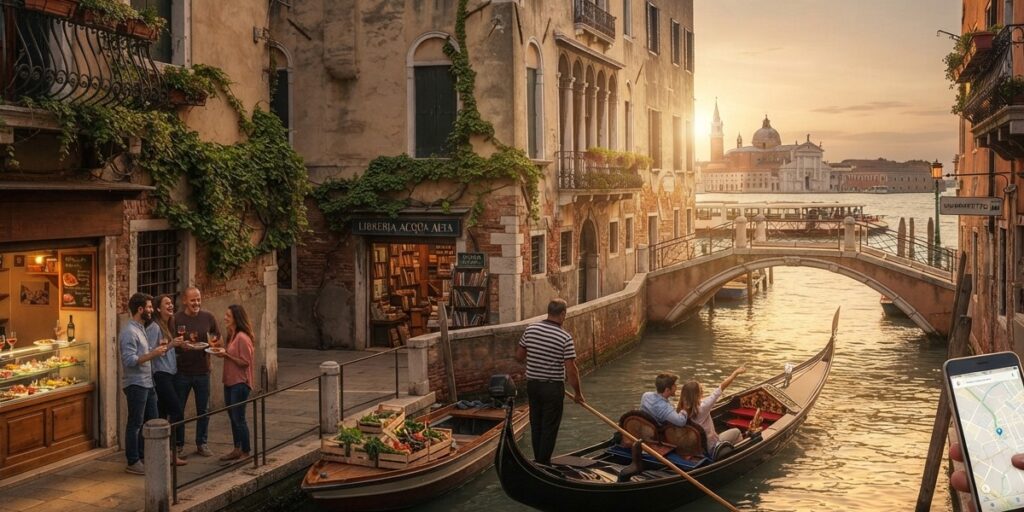
Venice rewards the curious. Hit the big sights early, take the gondola ride even though it's a cliché, eat standing up at a bàcaro, and save an afternoon for the islands and the wrong turns. Match your dates to shoulder season, keep your phone online for the maps and the bookings, and let the city handle the rest because in Venice, getting a little lost was always the whole point.
Begin with St. Mark's Square and Basilica, the Doge's Palace and Bridge of Sighs, and the Rialto Bridge and market. Then add the experiences that make the trip: a gondola ride, a cicchetti crawl at a bàcaro, and a day trip to the candy-coloured island of Burano.
For a first visit, yes. It's touristy and it isn't cheap reckon on fixed rates of about €90 for 30 minutes by day but drifting through the narrow back canals is a view of Venice you can't get any other way. Go at golden hour and split the fare across your group.
Two to three days is the sweet spot: enough for the main sights, a gondola ride, and a lagoon-island day trip. A single day works if you're only passing through, but Venice is at its best early and late, once the day-trippers have gone.
Shoulder season April–May and September–October gives you good weather without the peak-summer crush. Winter is quiet and atmospheric, with Carnival in February, though it's worth watching for acqua alta high tides from autumn into early spring.
On foot and by vaporetto (water bus), which runs €9.50 for a 75-minute single, with multi-day passes available. There are no cars in the historic centre; water taxis are the fast but pricey option, particularly to and from the airport.
Yes. Venice has solid mobile coverage, and an eSIM Italy lets you land already connected instead of queuing for a local SIM — a real help when GPS is the only thing keeping you on course through the alleys. Check that your phone supports eSIM first, and download offline maps for the quieter lagoon islands, where any network can thin out.
Get your Airhub eSIM in minutes and travel without roaming surprises.
Download the Airhub app to purchase, manage and top up your eSIMs anytime, anywhere!