









Ready to try eSIMs and change the way you stay connected?
Download the Airhub app to purchase, manage and top up your eSIMs anytime, anywhere!
App exclusive5% off at checkout
Best places to visit in Malaysia offer unique experiences. Discover top destinations and travel tips for an unforgettable journey.
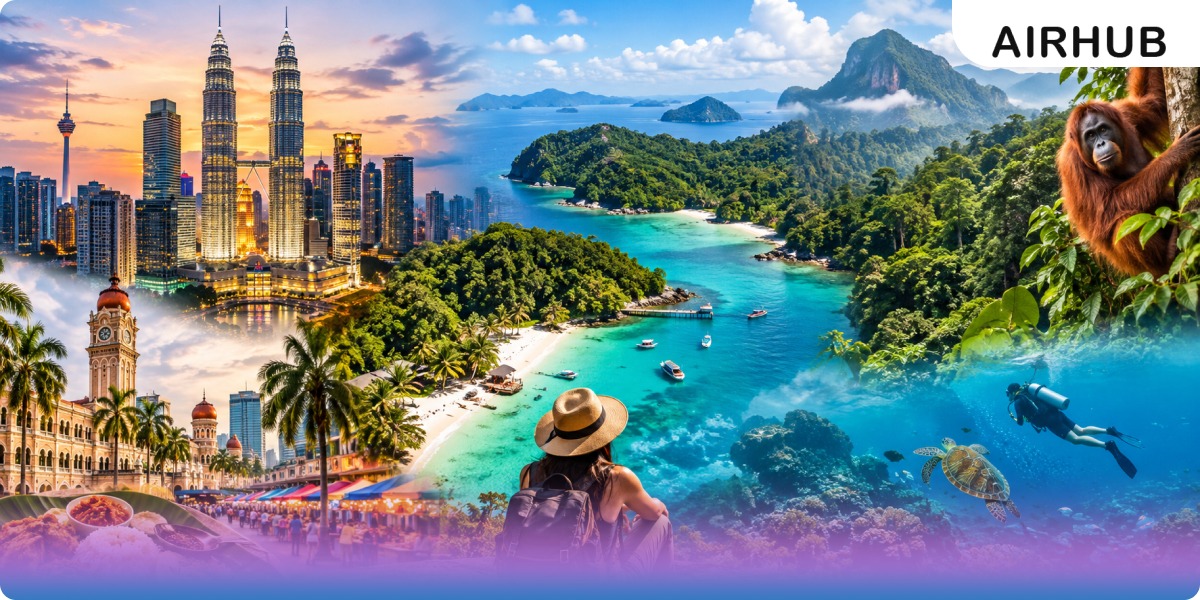

Malaysia is the country everyone pencils in and almost no one gives enough time to. It gets treated as a layover between Thailand and Bali a couple of nights in Kuala Lumpur before the "real" trip starts. Then people arrive, and the return flight quietly becomes negotiable. What throws them is the range: a skyline of glass towers and a 130 million year old rainforest in the same country, world-class diving a short flight from colonial tea plantations, three food cultures elbowing for space on one hawker street.
So this isn't a generic list. It's the best places to visit in Malaysia arranged the way you'd actually string them together down the west coast, out to the islands, then across to wild Borneo with the practical decisions most guides skip bolted on at the end: when to go, how long you really need, what it costs, and where your phone will and won't work. That last one matters more than it sounds.
Most first trips run straight down the peninsula's west coast, and there's a sound reason for it: this is where the food, the heritage cities, and the easy train line all live. You can do this whole stretch without renting a car.
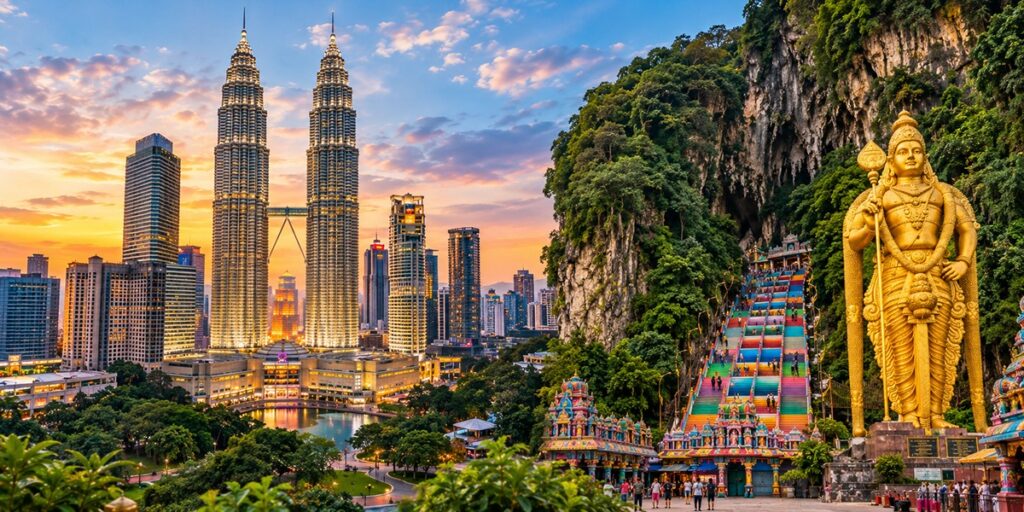
Start in the capital everyone does, and it earns it. KL is where Malay, Chinese, and Indian life share the same few blocks, and where the Petronas Twin Towers still land differently in person than in photos. Ride up to the Skybridge, get lost in Chinatown's Petaling Street for the dim sum and the noise, then eat properly in Brickfields, the Little India district where the banana-leaf curries are the real event.
Give Batu Caves a morning too. It's a Hindu temple set inside a limestone cavern at the top of 272 rainbow-painted steps, presided over by a giant golden statue and a troop of monkeys with zero respect for your snacks. It's a short train ride from the center and one of the most photographed spots in the country get there early, before the heat and the crowds.
Where to stay: base yourself around KLCC or Bukit Bintang and you'll be walking distance from the towers and the night markets. Getting there: Kuala Lumpur International (KLIA) is the arrival point for nearly every Malaysia trip.
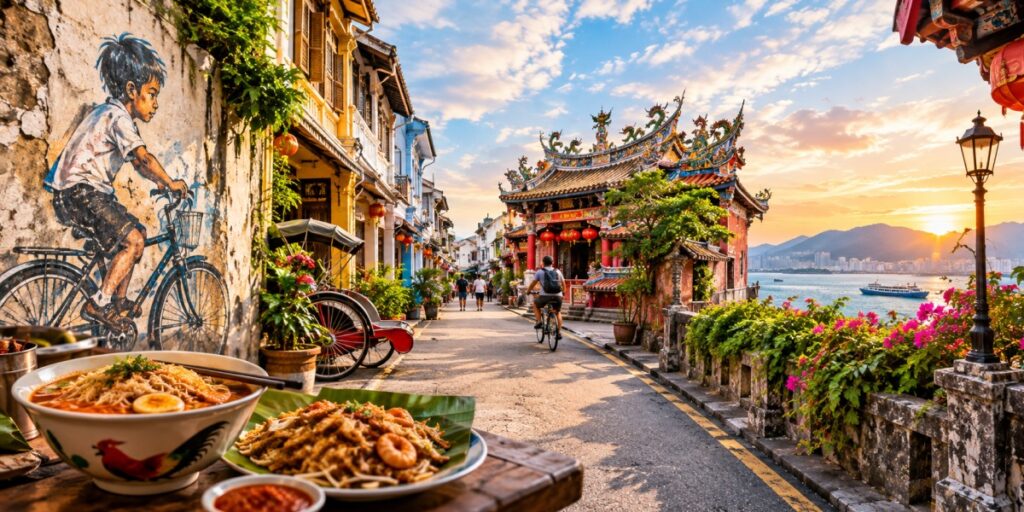
Penang's George Town has been a UNESCO World Heritage city since 2008, and for a lot of travelers it's the food highlight of the entire trip no exaggeration. Mornings are for the street-art murals and the old clan houses; afternoons for the Chinese temples and the Pinang Peranakan Mansion; every meal in between belongs at a hawker stall. Penang laksa and char kway teow aren't menu items here so much as reasons to have come.
Where to stay: the historic Eastern & Oriental Hotel if you're splurging, or a restored heritage shophouse in the old town. Getting there: a fast ETS train from KL, or a quick flight into Penang International.
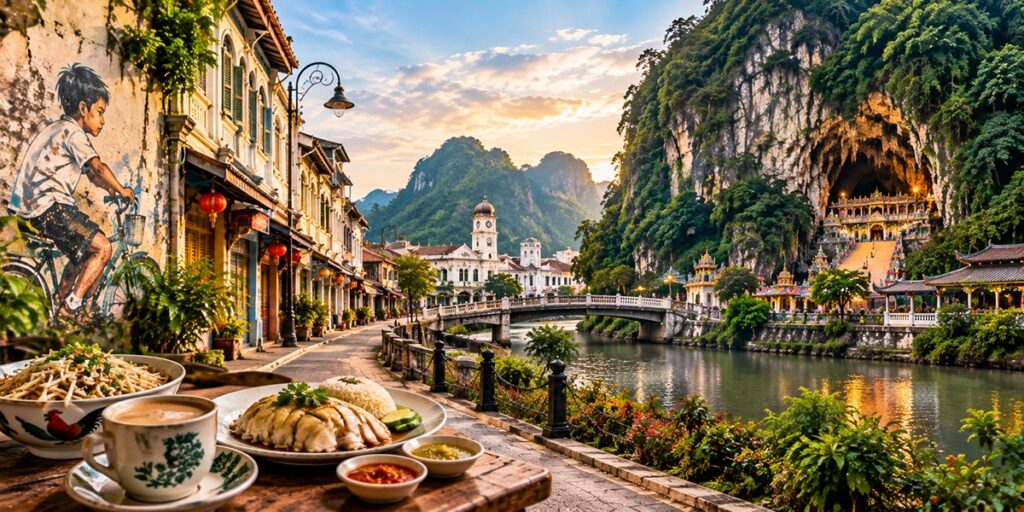
Sitting right between KL and Penang, Ipoh is the stop people skip and then regret skipping. The former tin-mining town has a compact colonial core, mural-strewn lanes like Concubine Lane, and a food reputation that outsizes the place the white coffee and the bean-sprout chicken are worth planning a meal around. Limestone hills ring the town, hiding cave temples like Kek Lok Tong. A day or two here goes a long way.
Getting there: about 2.5 hours by ETS train from KL an easy add on the way north to Penang.
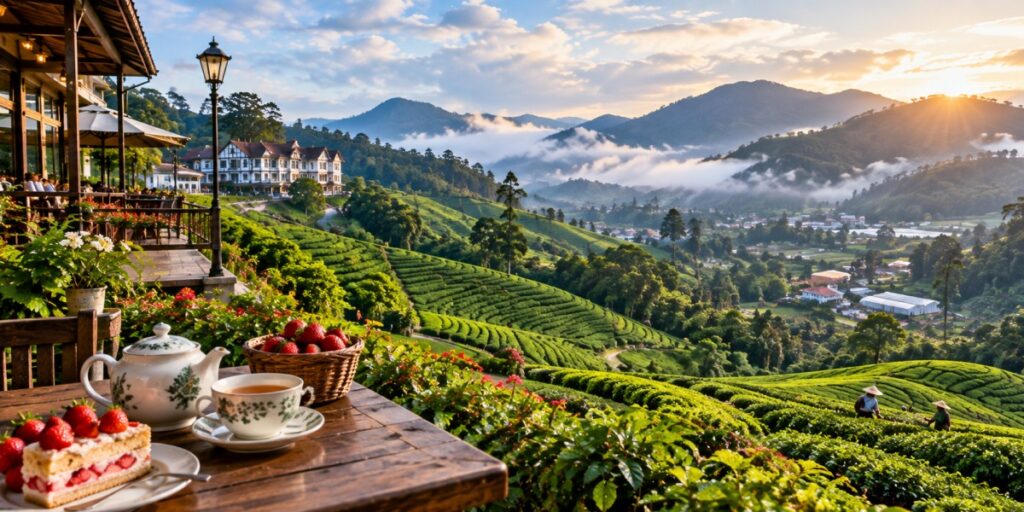
When the coastal humidity starts to win, the Cameron Highlands are the pressure release. At roughly 1,000–1,600 metres, this 1930s hill station trades heat for tea plantations, strawberry farms, and cool, mossy forest. The BOH tea estate is worth it for the view over the terraces alone, and the walking trails are a genuine break for anyone jungle- or city-weary.
Where to stay: the colonial-era Cameron Highlands Resort plays the old-world tea house card to the hilt. Getting there: a winding 3–4 hour drive or bus from KL.
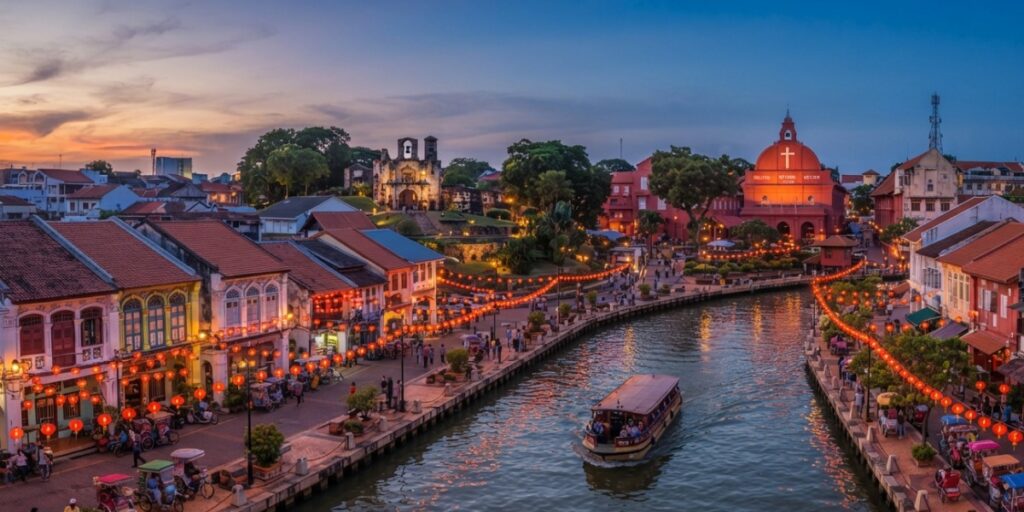
Two hours south of KL, Melaka is the peninsula's history lesson made physical. This was a powerhouse spice port for centuries, and it shows: Dutch-era landmarks like the blood-red Stadthuys and the A Famosa fort ruins sit a few steps from lantern-strung Chinese shophouses. After dark, Jonker Street becomes a proper night market Peranakan food, antiques, and crowds.
Where to stay: the boutique Majestic Malacca drops you into restored heritage surroundings. Getting there: frequent buses from KL, around two hours.
Malaysia has two coastlines with opposite weather, and that quirk decides everything about your beach plans (the timing section spells it out). Two islands are worth building a trip around.
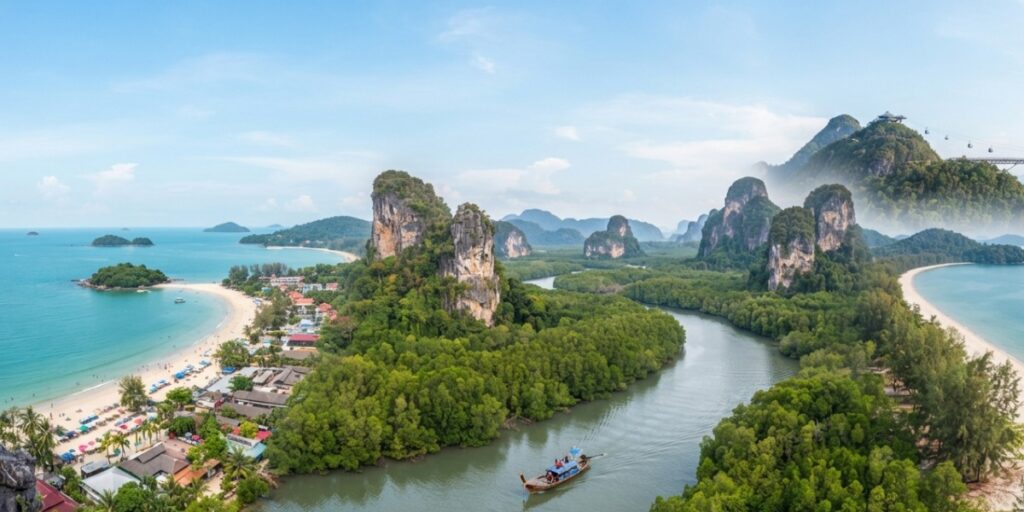
Off the northwest coast, Langkawi is a duty-free archipelago of 99 islands with the kind of beaches that live up to the brochure Pantai Cenang for the buzz, Tanjung Rhu for the quiet. Take the SkyCab up Gunung Machinchang for the panorama, then trade the heights for the water on a mangrove cruise through the Kilim Karst Geopark, a UNESCO Global Geopark of limestone and hidden inlets. Of all the islands here, it's the easiest to reach and the easiest to relax on.
Getting there: direct flights from KL and Penang, or a ferry from the mainland.
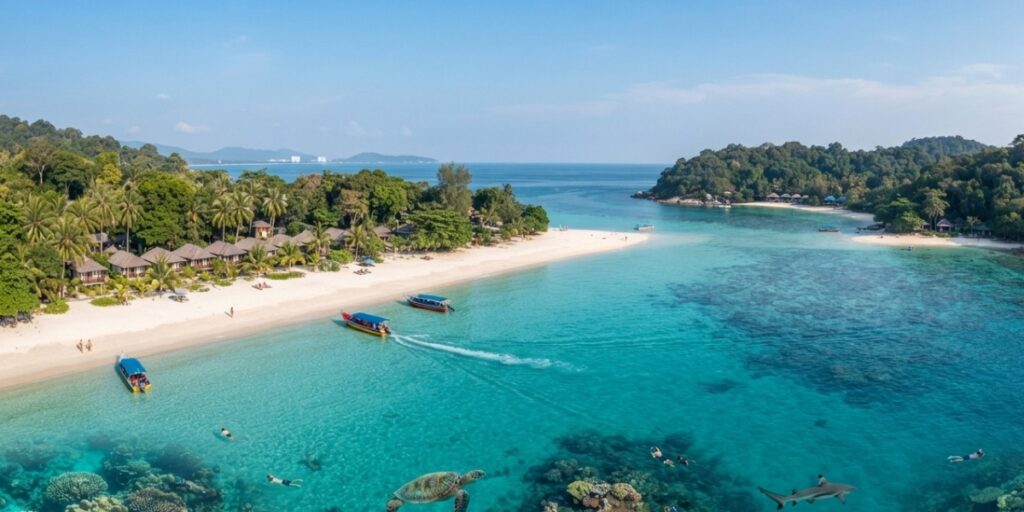
On the opposite coast, in Terengganu, the Perhentians are the barefoot version of paradise. Perhentian Kecil leans backpacker and social; Perhentian Besar is calmer and better for families. The pull is the same on both snorkelling and diving over reefs full of turtles and reef sharks, then doing gloriously little on the sand between swims.
Where to stay: Bubu Resort is a reliable, comfortable base on Kecil's Long Beach. Getting there: reach Kuala Besut by road, then a 30–40 minute speedboat. Watch the calendar, though many resorts shut for the northeast monsoon, roughly November to February.
If the Perhentians are booked solid, Redang and Tioman deliver similar reefs and are worth a look.
Here's where the west-coast itinerary blogs tend to run out of steam and where Malaysia gets genuinely, thrillingly wild.
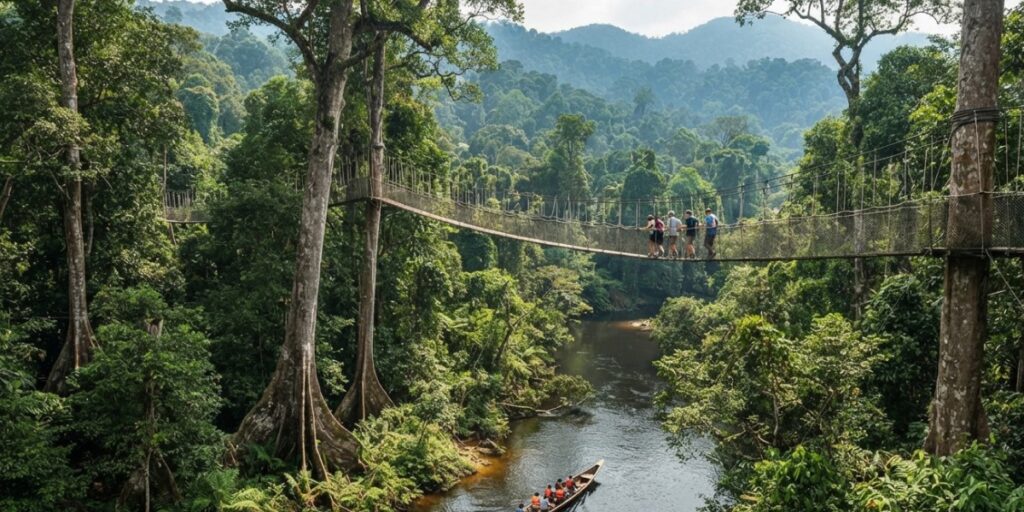
Deep in the peninsula's interior lies Taman Negara, one of the oldest rainforests on the planet at an estimated 130 million years, older than the Amazon by a wide margin. Walk the canopy walkway slung high in the trees, take a night safari when the forest actually wakes up, or ride a longboat upriver. It's hot, it's buggy, and it stays with you.
Getting there: most travellers arrive via Kuala Tahan, a few hours from KL by road and boat.
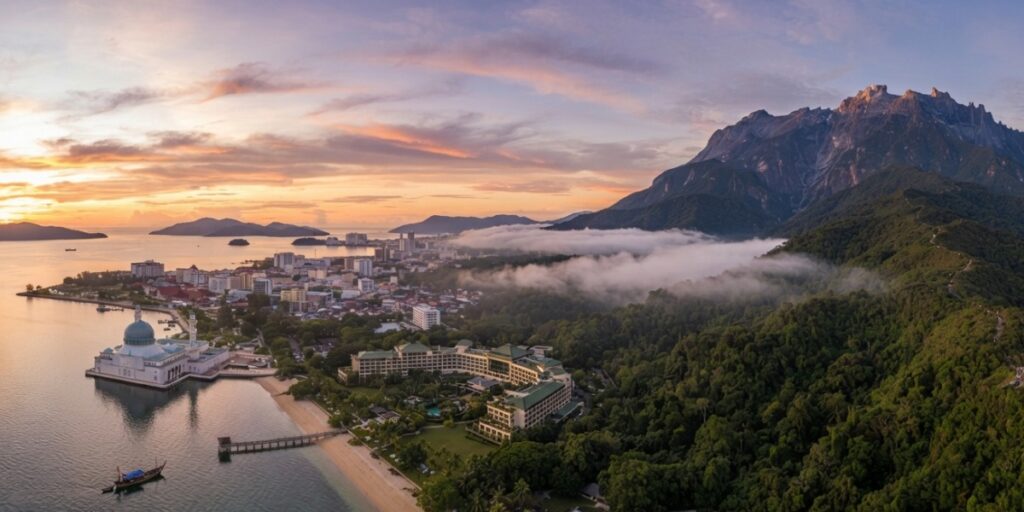
Cross to Borneo and you'll likely land in Kota Kinabalu Sabah's easygoing seaside capital and the jumping-off point for everything else. The city is a gentle start: sunsets at Tanjung Aru, the City Mosque that looks like it's floating, seafood at the night market. But the headline is just inland Mount Kinabalu, at 4,095 metres the highest peak in Malaysia, rising out of UNESCO-listed Kinabalu Park. Climbers take it over two days to stand above the clouds at sunrise.
Where to stay: the beachfront Shangri La Tanjung Aru is a long-running KK favourite. Getting there: fly into Kota Kinabalu International, the main hub for Sabah.
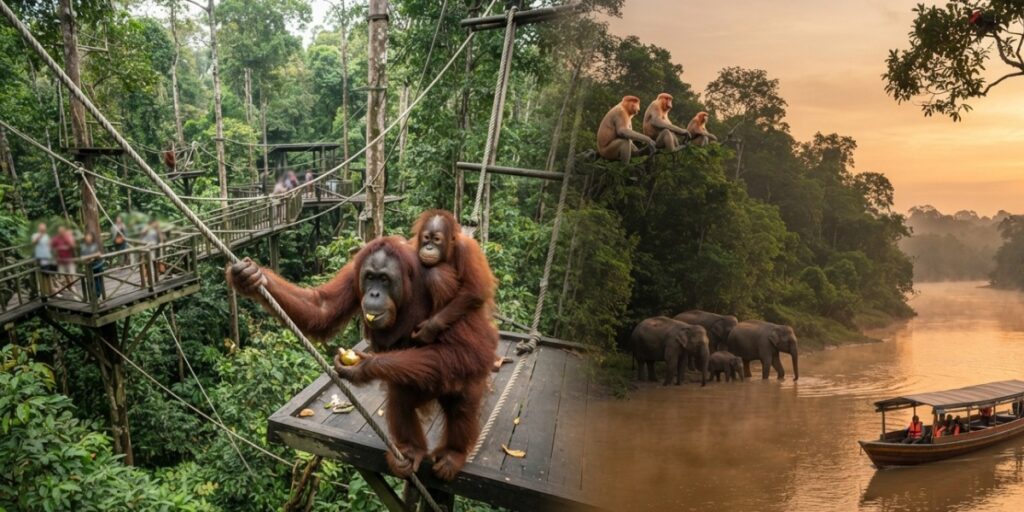
For wildlife, this is the main event. At the Sepilok Orangutan Rehabilitation Centre near Sandakan you can watch rescued orangutans at close range, then move on to the Kinabatangan River for dawn boat cruises where proboscis monkeys, pygmy elephants, and hornbills gather at the banks. Very few places on earth make wild sightings this dependable.
Getting there: fly to Sandakan, then transfer to Sepilok and the river lodges.
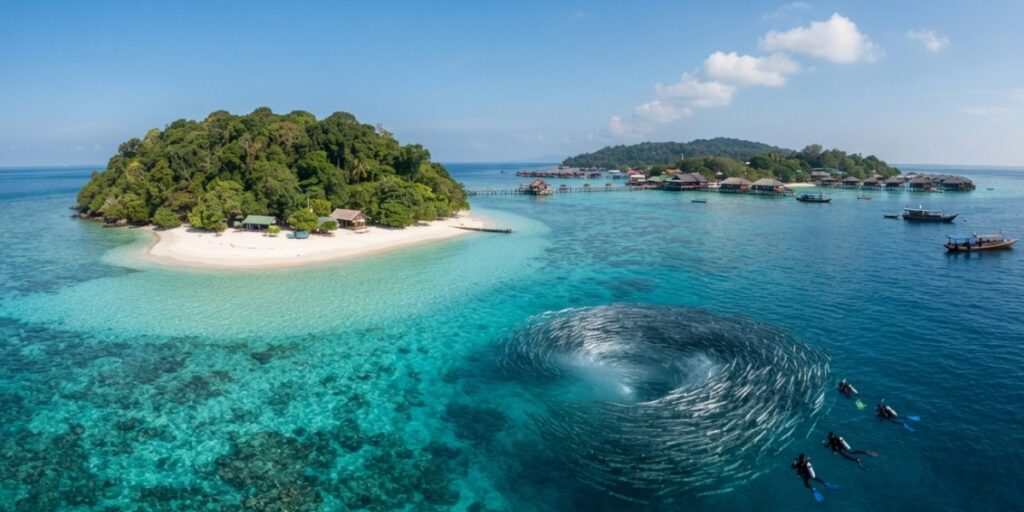
If you dive, this is the reason you came to Borneo. Sipadan lands on nearly every "world's best dive site" list a protected island where daily permits are tightly rationed and, at Barracuda Point, thousands of barracuda spin in slow, silvery tornadoes around you. No one stays on Sipadan itself, so divers base on nearby Mabul or Kapalai.
Getting there: fly to Tawau, drive to Semporna, then boat out. Book permits and dives well in advance they genuinely sell out.
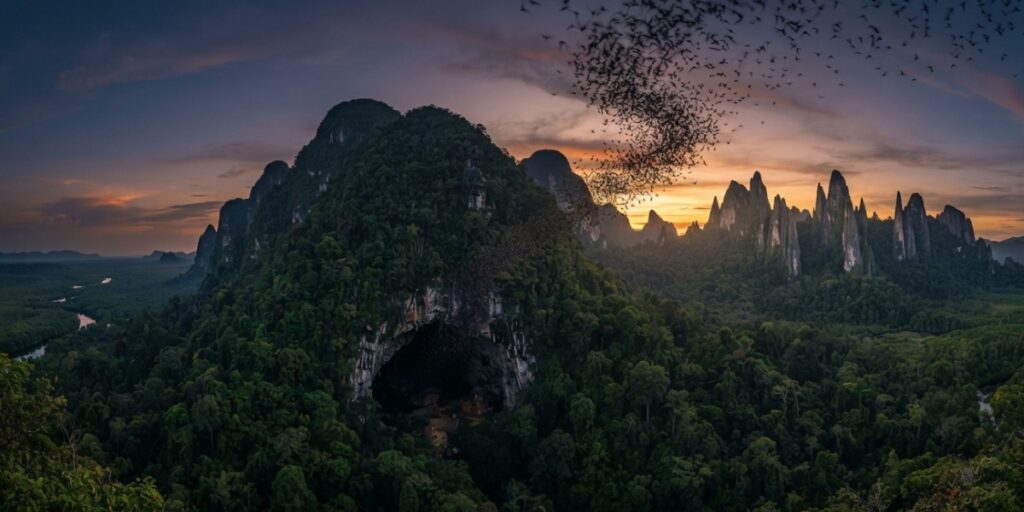
Over in Sarawak sits a UNESCO site that feels almost architectural colossal cave systems, the largest cave chamber on earth, and a skyline of razor-edged limestone pinnacles rising from the jungle. The moment everyone waits for is the evening bat exodus from Deer Cave, when millions of bats pour out in ribbons against the dusk.
Getting there: a small plane from Miri. There's no road in, which is a large part of why it still feels untouched.
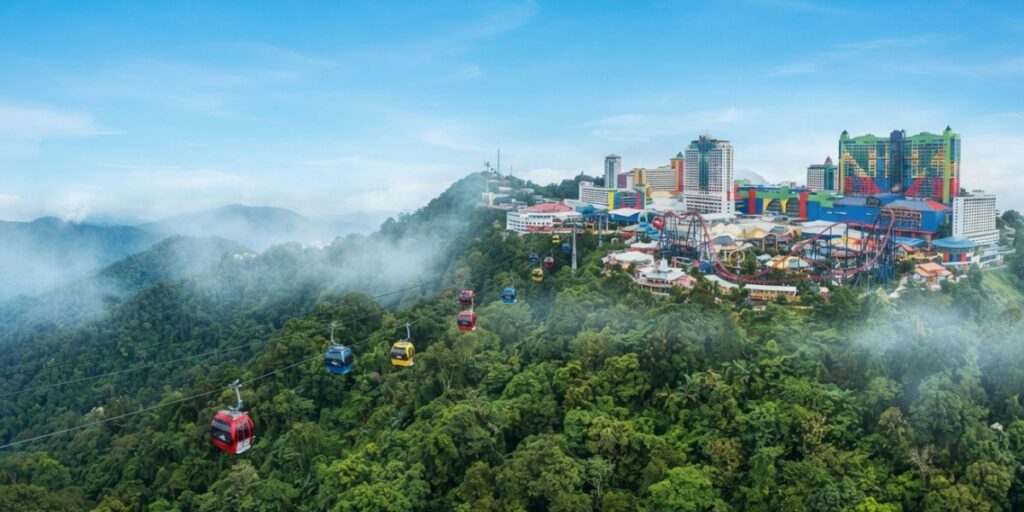
Travelling with kids? Genting Highlands is an easy day trip or overnight from KL. At around 1,800 metres up Mount Ulu Kali, Resorts World Genting packs hotels, theme parks, and casinos into one cool-air complex, with the Awana SkyWay cable car gliding over jungle on the way up. It's unapologetically commercial rollercoasters and buffets, not rainforest but as a crowd-pleaser for families, it delivers exactly what it promises.
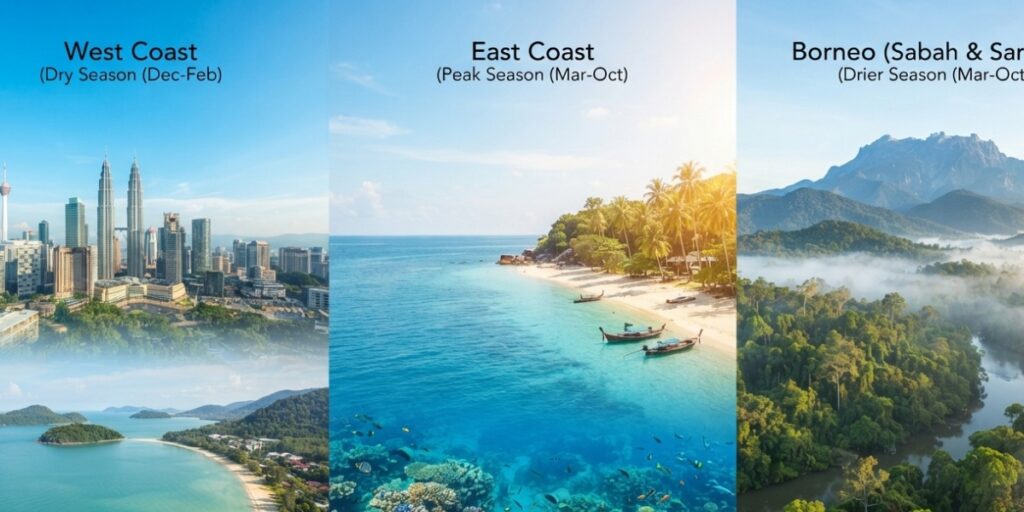
Malaysia is warm all year, but the two coasts run opposite wet seasons which means when you travel should decide where you travel. This is the single detail first-timers most often get wrong.
| Region | Best months | Avoid | Why |
| West coast (KL, Penang, Langkawi, Melaka) | Roughly Dec–Feb (driest) | Occasional showers year-round | Drier, easier city and island days |
| East coast islands (Perhentians, Redang, Tioman) | Roughly Mar–Oct | Nov–Feb monsoon (many resorts close) | Calm, clear water for diving and snorkelling |
| Highlands (Cameron, Genting) | Year-round | — | Cool and mild whenever you go |
| Borneo (Sabah & Sarawak) | Roughly Mar–Oct (drier) | Wettest Nov–Jan | Better for trekking, diving, and wildlife |
Weather patterns shift from year to year check current forecasts and resort opening dates before you commit to an island trip.
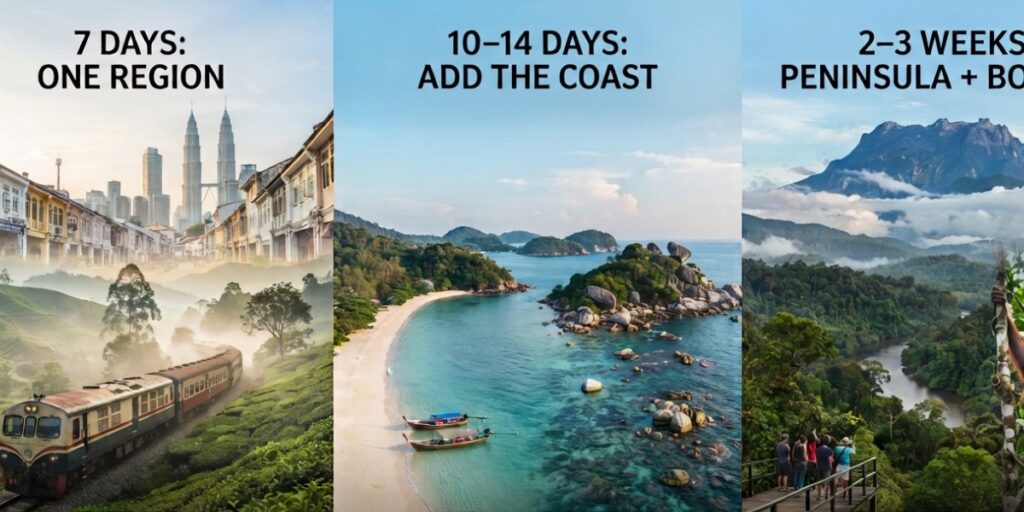
Malaysia is bigger than the map suggests, and the hop between the peninsula and Borneo quietly eats a day at each end. A rough framework:
The one mistake worth flagging: don't try to fit both coasts and Borneo into a single fortnight. You'll see the inside of a lot of airports and not much else. Pick a lane and go deep.

Malaysia is superb value and, honestly, one of the easier countries in the region to travel. A few habits keep the costs down without thinning out the experience:

Here's the part most travel guides gloss over: Malaysia's coverage is excellent in the cities and genuinely patchy in exactly the places you'll travel furthest to reach.
You'll want data live from the second you land: for your first Grab out of KLIA, for the map to Batu Caves, for the ferry and permit confirmations sitting in your inbox. Two ways to get it queue at an airport kiosk for a local SIM (Hotlink, CelcomDigi, or Maxis), or have it all set up before you fly with an eSIM.
The eSIM is the low-friction option. With an eSIM Malaysia from Airhub, you buy the plan ahead, scan a QR code, and step off the plane already on a local network no kiosk queue, no popping out the tiny card that holds your home number. If Malaysia is one leg of a wider Southeast Asia trip, an eSIM asia plan keeps you connected across borders on a single setup.
Most recent iPhones and Android phones handle eSIM, and many will run your home number alongside a travel plan worth checking the compatibility list first. If the whole idea is new, here's the straight comparison of eSIM vs a physical SIM.
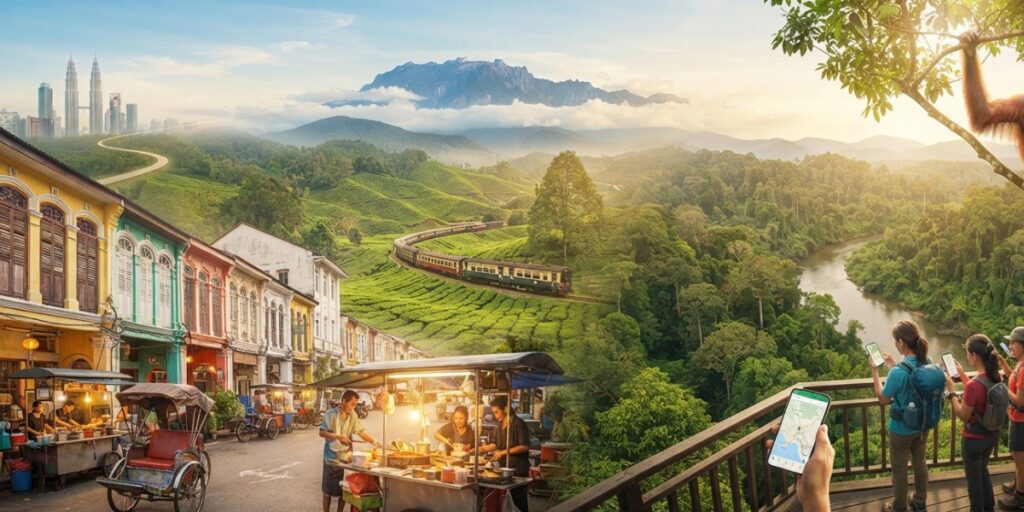
From the hawker stalls of George Town to the orangutans of Borneo, the best places to visit in Malaysia tend to reward the effort of actually getting to them. Choose the region that pulls at you, line your dates up with the right coast, keep your phone online for the Grabs and the maps, and leave room for the rest to surprise you because in Malaysia, it almost always does.
It comes down to the coast. The west coast (KL, Penang, Langkawi, Melaka) is driest around December to February, while the east-coast islands like the Perhentians shine from March to October avoid November to February there, when the monsoon closes many resorts. Borneo is generally the best March to October.
The classic first trip pairs Kuala Lumpur (with Batu Caves) and George Town in Penang for the food and heritage, plus either the Cameron Highlands or an island like Langkawi. Within two weeks or more, add Borneo for the orangutans and Mount Kinabalu.
Seven days is enough for one region; 10–14 days lets you combine cities, highlands, and an island; and 2–3 weeks adds Borneo without a rush. Just don't try to cram both coasts and Borneo into a single fortnight.
In Borneo. The Sepilok Orangutan Rehabilitation Centre near Sandakan, in Sabah, is the most reliable spot, and it pairs naturally with a wildlife cruise on the nearby Kinabatangan River.
It's excellent value. Eating at hawker centres, taking trains and buses between cities, and using Grab for short trips keeps a trip affordable generally cheaper than Europe and in line with its Southeast Asian neighbours.
Yes. Cities have strong 4G and 5G, and aneSIM Malaysia lets you land already connected instead of queuing for a local SIM. Check that yourphone supports eSIM first, and download offline maps for the remote islands and jungle, where any network can thin out.
Both, ideally but if you have to choose: the peninsula is easier and built around food and culture (perfect for a first visit), while Borneo is the one for wildlife, diving, and serious jungle. They're a short flight apart but genuinely different trips.
Get your Airhub eSIM in minutes and travel without roaming surprises.
Download the Airhub app to purchase, manage and top up your eSIMs anytime, anywhere!