There's an unprecedented thrill in visiting a country that most people would find difficult to point on a map. Kosovo, one of the youngest nations on earth, having declared independence as recently as 2008, sits tucked into the Balkans between Albania, North Macedonia, Montenegro, and Serbia. Its uniquely endearing features remain one of the last corners of Europe where wandering through a UNESCO monastery, hiking a limestone canyon, and sipping a regional macchiato could occur simultaneously in complete serenity. If you're weighing up places to visit in Kosovo, you're essentially choosing between two versions of the same trip: the well-worn Balkan trail through Albania and Montenegro or the quieter, stranger, more rewarding detour that most travellers still overlook entirely.
This guide walks through the twelve places that consistently earn their spot on a Kosovo itinerary, along with the practical groundwork such as when to go, how long to stay, what it costs, and a few local quirks worth knowing before you land. Reading this will come in clutch, because the details in this article are the ones that actually ensure that your trip goes smoothly.
Adolescently Independent Kosovo
Kosovo's recent history has witnessed plenty of turmoil; the 1998–99 war and the years of tension that preceded it left visible scars, particularly in cities like Mitrovica. However, the two decades since independence have told a rugged story of rebuilding, reinvention, and a genuinely warm welcome extended to the relatively few travellers who make the trip, to this unexplored gem of the Balkan Peninsula.
The Fulcrum for the Young Balkan:
Independence Declared
February 17, 2008
Capital
Pristina
Population
Around 1.6 million, with one of the youngest median ages in Europe
Official languages
Albanian and Serbian
Currency
Euro, used unofficially despite no EU membership
Why Kosovo Feels Different From the Rest of the Balkans
Initially one of the factors that can acknowledge this feeling of unseen familiarity is the hospitality of the people, despite their fairly recent freedom struggle. Some intricacies that make Kosovo worth the detour are discussed below:
The youngest population in Europe: The country has a median age hovering around 30, giving Pristina a genuine youthful energy rather than a sleepy-capital feel.
A landscape shaped by its diaspora: For decades Kosovars working in Germany and Switzerland have funnelled money home, the culmination of which is visible in unusually large family homes in small villages and a real local obsession with German cars.
Multilingual by necessity: Alongside Albanian, it's common to meet locals who speak fluent German thanks to diaspora ties, plus growing English fluency among younger residents.
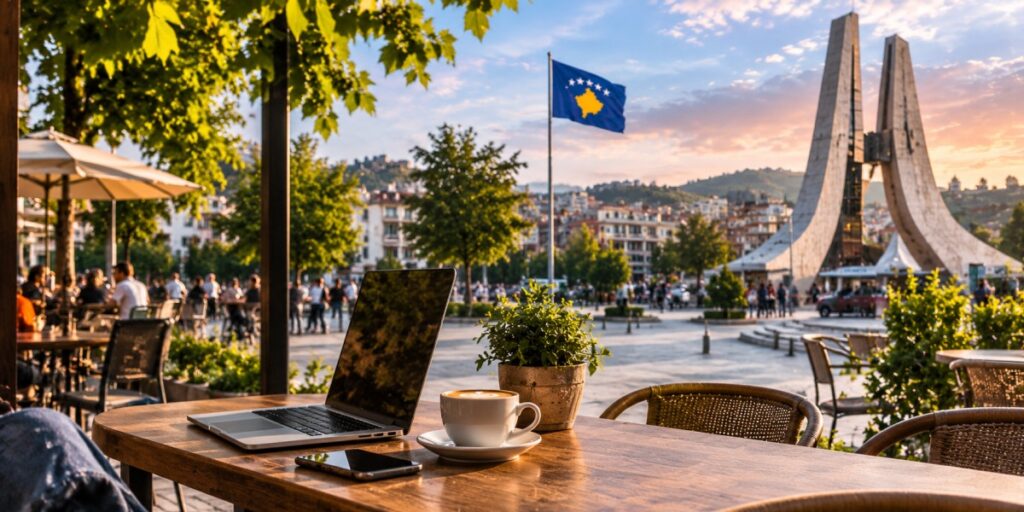
A surprisingly digital-nomad-friendly capital: Pristina's café culture doubles as an informal coworking scene, with fast, cheap Wi-Fi on nearly every block. However, to exceed the far reaches of connectivity, eSIM Kosovostill remains the most feasible and handy option.
Understanding Kosovo's Regions at a Glance
Capital Region (Pristina): It formsthe political and cultural hub of the country, clustered with most of the modern infrastructure, thus forming the best base for day trips.
Dukagjini Region (Peja, Gjakova, Prizren): The geography of this region directly backs onto the Accursed Mountains and Sharr range, a view that forms the country's scenic, outdoor-adventure core.
Northern Kosovo (Mitrovica, Gazivoda Lake): The regioncarries the most visible reminders of recent history, quieter and far less touristed.
Southeastern Kosovo: This forms the serene rolling countryside dotted with monasteries and fortress ruins, largely untouched by anything resembling a tour bus. This gives your wanderlust enough incentive to explore.
The 12 Best Places to Visit in Kosovo
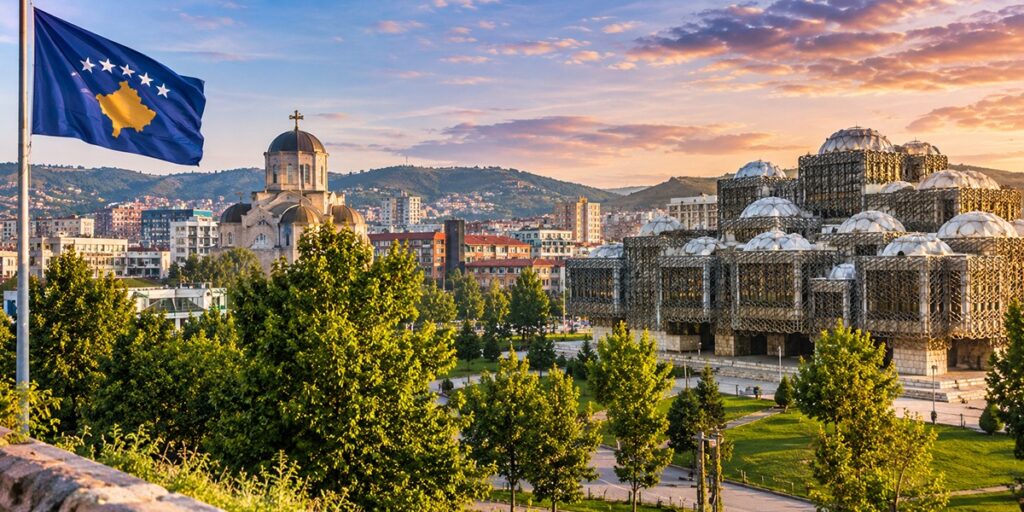
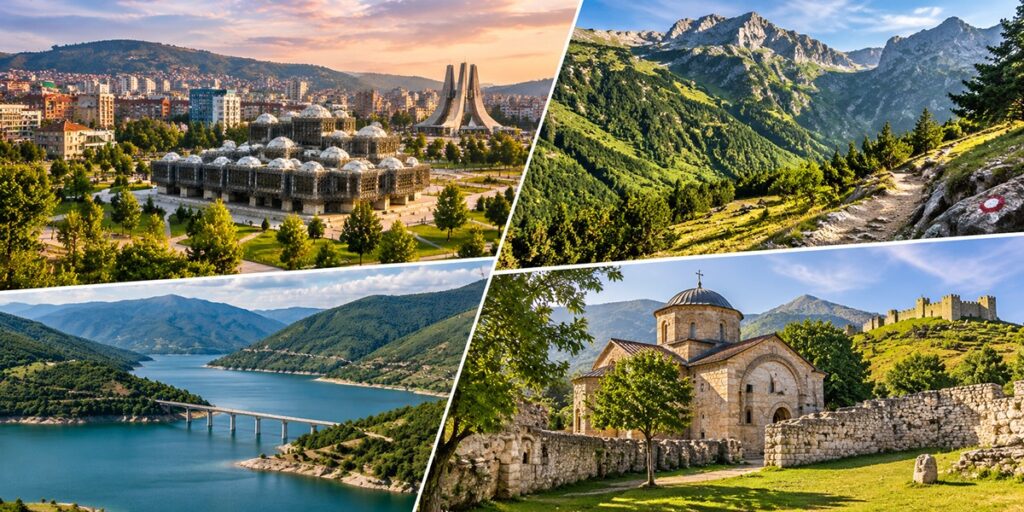
Pristina - The capital is chaotic in the most endearing way possible, with the ever-changing Newborn Monument, the pedestrian-only Mother Teresa Boulevard, and a café culture that rivals cities twice its size.
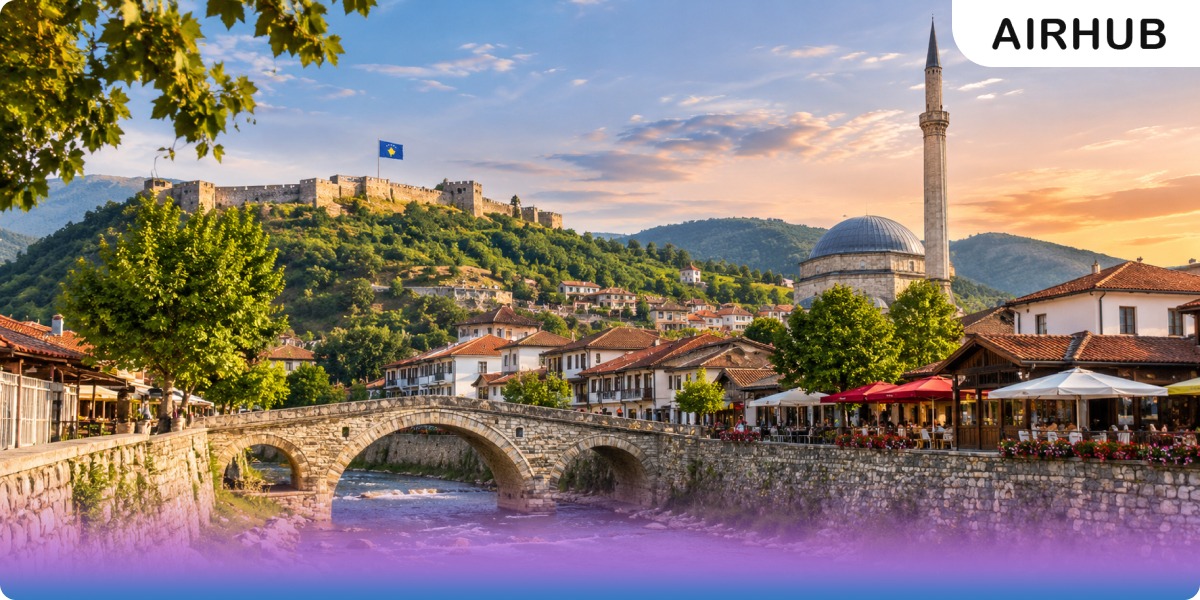
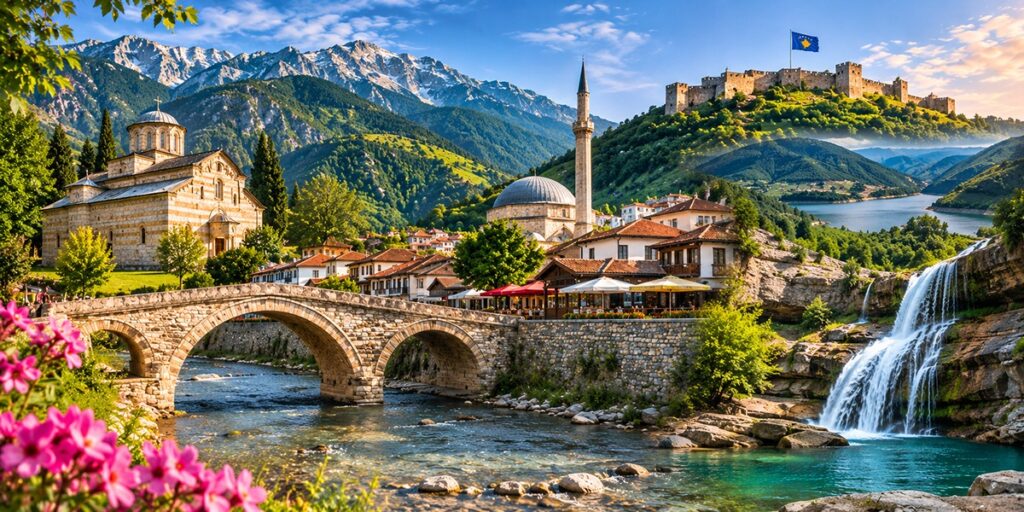
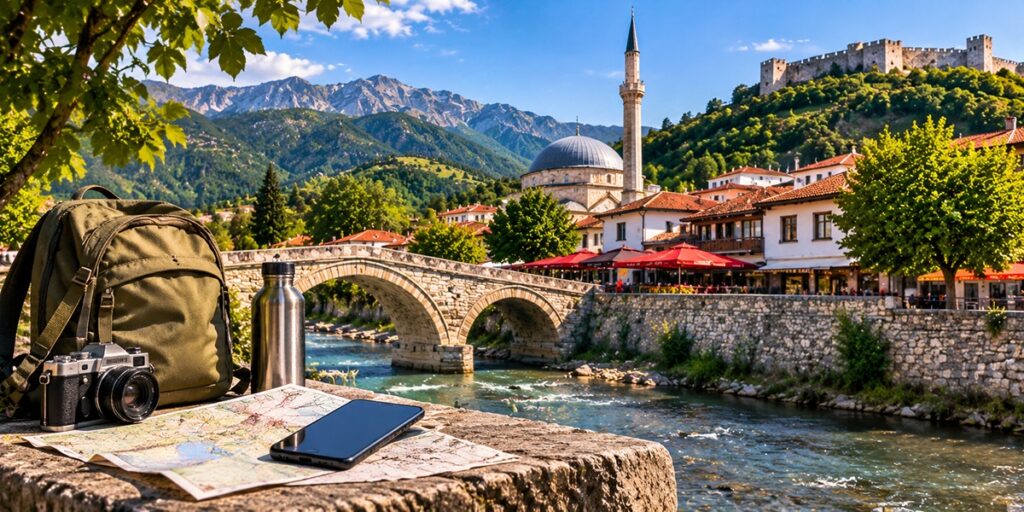
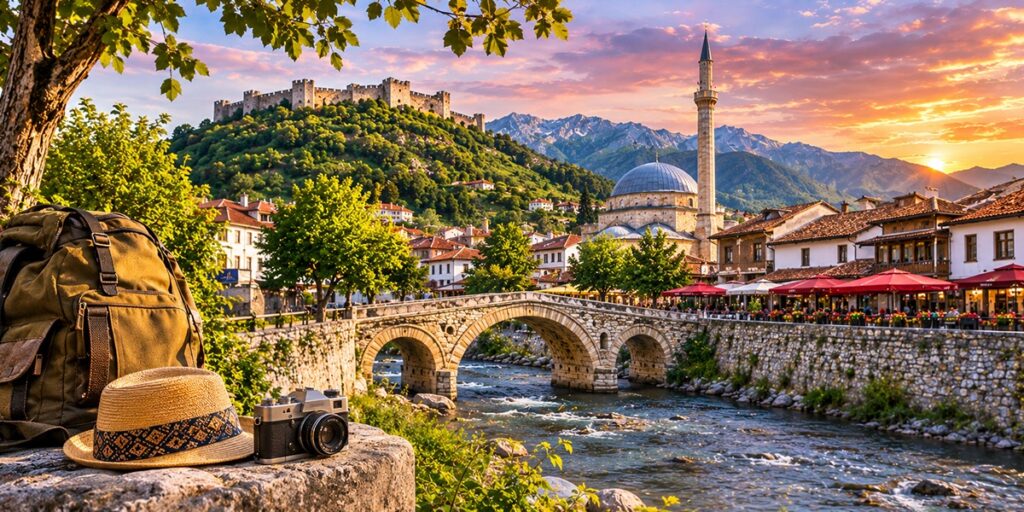
Prizren - It is widely considered Kosovo's most beautiful city, with an Ottoman-era stone bridge, a hilltop fortress, and the Sinan Pasha Mosque framed against the Sharr Mountains.
Gjakova - A home to the sprawling, recently restored Grand Bazaar, packed with artisan workshops and easily one of the most atmospheric places to visit in Kosovo for an afternoon of wandering and indulging in retail therapy.
Peja (Peć) - A laid-back mountain town and gateway to Rugova Canyon. It offers transitional relief too through traditional cafés, beautiful enough to justify slowing down.
Rugova Canyon and the Accursed Mountains - A scenery equipped with dramatic limestone cliffs and hiking trails that rival anything in the Alps, without the accompanying hustle and bustle.
Gračanica Monastery - A UNESCO World Heritage site just outside Pristina, with Byzantine frescoes so well preserved they still glow with colour centuries later.
Visoki Dečani Monastery - A UNESCO-listed site, tucked breathtakingly into forested hills near Deçan. The beauty of it necessitates its protection under NATO, making it open exclusively to respectful visitors.
Mirusha Waterfalls - A series of cascading pools carved into a river canyon, best visited in spring when the flow is at its strongest.
Bear Sanctuary Prishtina - This is a rehabilitation centre for rescued brown bears, offering an easy, meaningful half-day trip just outside the capital, with cuteness in residents that you just can’t bear.
Gazivoda Lake - A vast reservoir in Kosovo's north, popular for quiet lakeside afternoons well off the usual tourist circuit.
Novo Brdo Fortress - On first impression these are mediaeval ruins perched above rolling countryside, with barely another visitor in sight; however, its history has seen its fair share of visitors.
Mitrovica - A divided city that offers a sobering, important glimpse into Kosovo's ongoing story, best visited as a thoughtful day trip from Pristina.
Best Time to Visit Kosovo
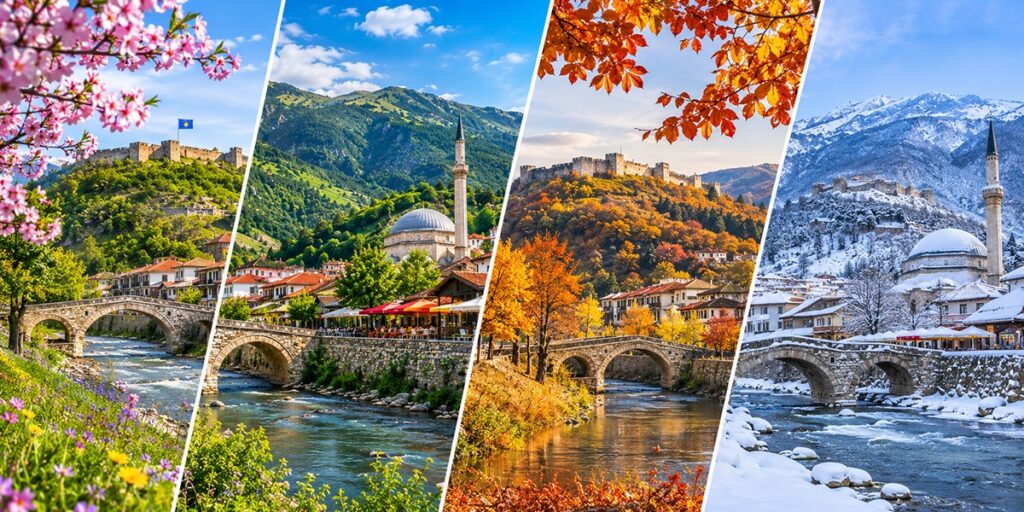
Spring (April–June): When wildflowers bloom across the mountains, and the Mirusha Waterfalls run at their fullest, the season becomes ideal if you're chasing dramatic scenery, punctuated with mild to severe rainfall.
Summer (July–August): Warm, reliably dry days make this the top pick for canyon hikes and city wandering, though Pristina's midday heat can get intense by early afternoon, so do not forget to hydrate.
Autumn (September–October): Crisp air and golden countryside make this arguably the most photogenic season, with noticeably fewer crowds than summer.
Winter (December–February): This time of the year is marked by snow blankets covering the Accursed Mountains, making it ideal for travellers chasing atmosphere, quiet monasteries, and pristine mountain views over activity-packed days.
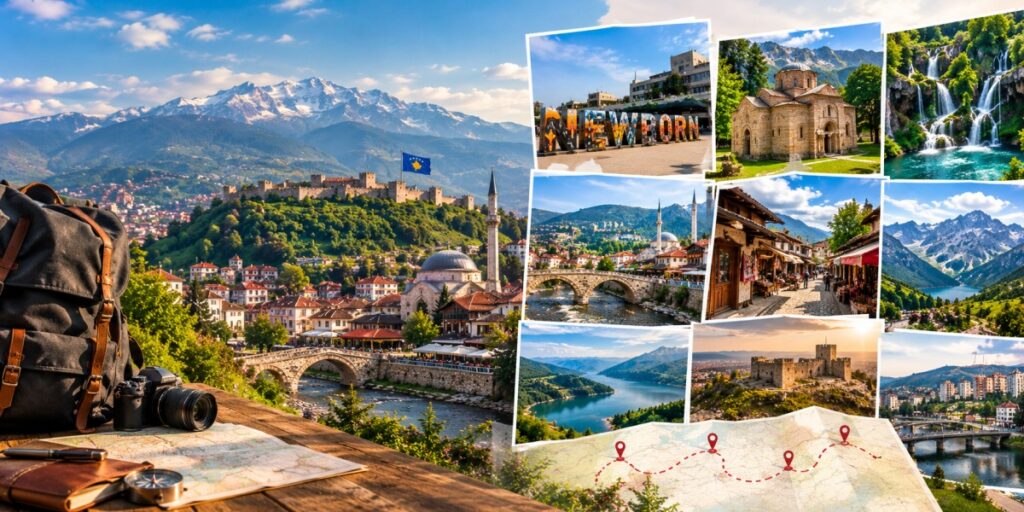
A Perfect Kosovo Itinerary and the Best Routes to Follow
The 3-Day Express Route (Pristina + Prizren)
Day 1: Pristina - Visiting the Newborn Monument, Mother Teresa Boulevard, and Ethnological Museum, which form the cultural base of the town.
Day 2: Day trip to Prizren - Further tourism could involve seeing the Old Stone Bridge, Prizren Fortress, and Sinan Pasha Mosque
Day 3: Finally peace returns to the setup with the Gračanica Monastery before the trip back to Pristina for departure.
The 7-Day Complete Immersion (the whole country, unrushed)
Days 1–2: Visiting the pristine Pristina, including Bear Sanctuary Prishtina, making the day wholesomely productive.
Day 3: Taking out an exclusive day to roam the streets ofPrizren
Day 4: Indulging in a guilt-free shopping spree in the vast Gjakova Grand Bazaar
Days 5–6: Further, the proximity of Peja, Rugova Canyon, and Visoki Dečani Monastery to each other makes it ideal to club them in a couple of days of detour.
Day 7: Finally to fall in love with the region completely, witness the Mirusha Waterfalls on the drive back to Pristina
Modes of Transport:
To provide convenience buses that connect all major towns cheaply and run regularly are prevalent. This makes them the easiest option for a car-free, city-focused trip.
Other options like renting a car open up pathways for harder-to-reach spots like Novo Brdo Fortress and Gazivoda Lake.
Taxis and rideshare apps are inexpensive for short hops within Pristina and Prizren.
Inhibitions for a Kosovo Traveller
Exercise added caution in Mitrovica and near the Serbian border, where political tensions occasionally resurface, though this rarely affects travellers passing through respectfully.
Expect limited English outside Pristina and Prizren, so a translation app or a few basic Albanian phrases go a long way.
Dress modestly at religious sites, and be ready to remove shoes or cover your head when visiting monasteries and mosques.
Food and Drink Worth Savouring
Food:
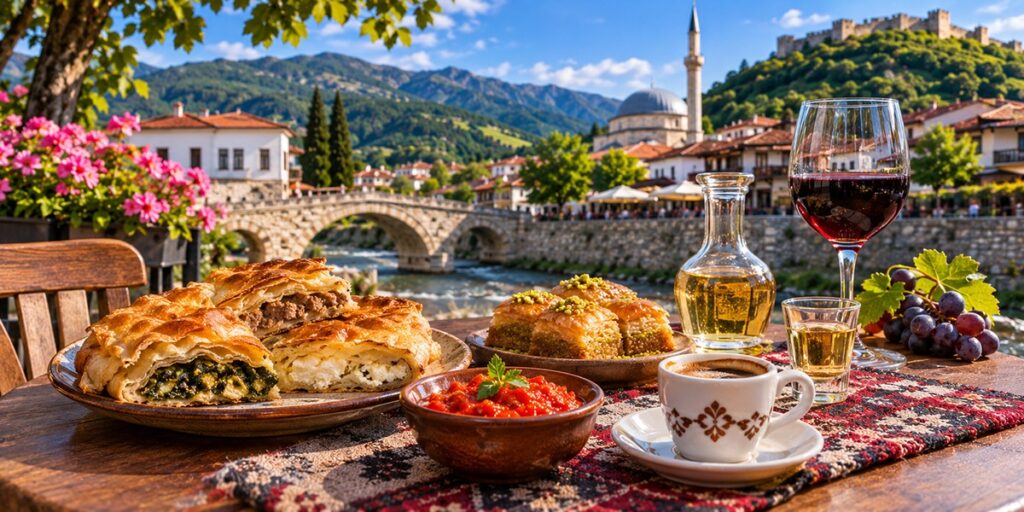
Burek - A beloved delicacy that is essentially a flaky pastry stuffed with cheese, meat, or spinach. Prevalent as a breakfast staple sold fresh every morning.
Ajvar - Kosovo's beloved roasted red pepper relish, often homemade and served with nearly every meal; it is essentially the fragrance of the streets.
Baklava - A shared Balkan sweet, layered with honey and nuts, found in nearly every café, increasingly popularised by social media.
Drinks:
Kosovar macchiato - This strong and cheap drink is a staple for the regional folk, making it central to daily social life. It is often cited as the excuse for an elongated café conversation.
Rakia - A traditional fruit brandy, often homemade, and commonly offered as a welcome gesture, forming a big part of the Kosovan hospitality culture.
Kosovo wine - The Rahovec region produces increasingly well-regarded wines, a lesser-known part of the food scene but extremely exquisite
Cultural and Regional Festivals of Kosovo
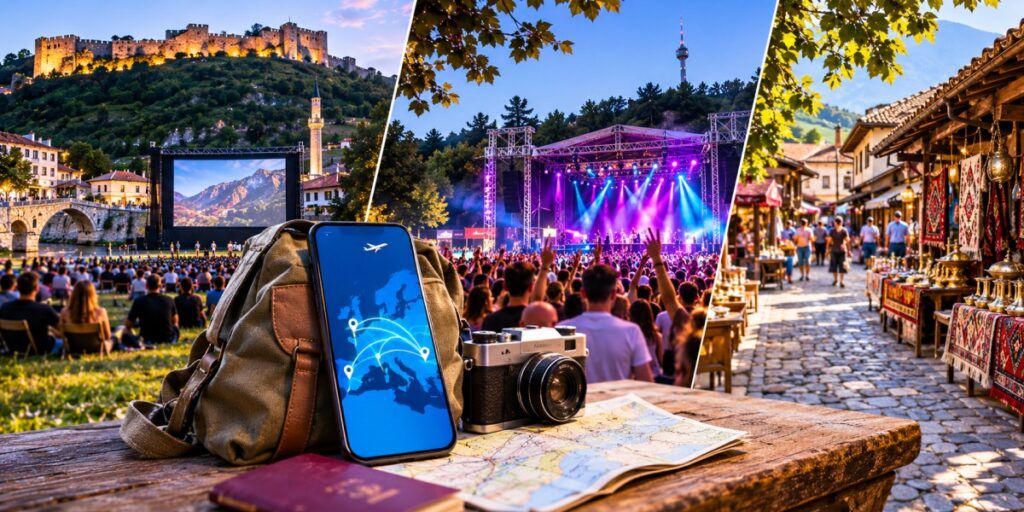
DokuFest (Prizren, August): One of the region's most respected documentary film festivals, drawing international filmmakers to Prizren's historic streets and open-air screening spots.
Sunny Hill Festival (Pristina, August): A major international music festival co-founded by Kosovo-born pop star Dua Lipa, drawing global headliners to Pristina's Germia Park.
Gjakova Bazaar Food Days: This seasonal festival for food gatherings is held in the historic Grand Bazaar and showcases the traditional Kosovar dishes alongside local artisan crafts.
Before you go, it's worth sorting connectivity for the wider region too, especially if Kosovo is just one stop on a longer Balkan route. A single eSIM Europeplan can cover multiple countries on the same trip, meaning one setup before departure rather than fumbling with a new SIM at every border. Beyond the convenience, an eSIM means instant activation without hunting for a local shop, no physical card to lose between hikes and bus rides, and pricing that's typically far more transparent than standard roaming charges. If your itinerary stretches beyond Kosovo's borders, it's worth setting this up before you fly rather than after you land.
How Does Life Go Enrichingly Slow in Kosovo?
Kosovo rewards the kind of traveller who doesn't need a country to be famous to be worth visiting. Between Prizren's Ottoman charm, Rugova Canyon's quiet drama, and monasteries that have survived through war and peace, containing more history than most buildings ever will, the best places to visit in Kosovo add up to a trip that feels genuinely rare in Europe these days, with the highlighting featured being uncrowded, unpretentious, and still very much genuine. Few countries this young have quite this much to offer.
FAQs
1. Is Kosovo part of the EU or the Schengen Area?
No, Kosovo isn't a member of either, though it uses the euro unofficially, and many EU, UK, and other Western travellers can still enter visa-free for short stays.
2. Do I need a visa to visit Kosovo?
It depends on your nationality, but travellers from the EU, UK, US, Canada, and Australia can typically enter visa-free for up to 90 days it's worth double-checking current requirements before booking, since these can change.
3. Will my regular SIM card just work when I land?
Not always as reliably as you'd expect. Because of Kosovo's disputed recognition status, some roaming agreements behave inconsistently at the border, which is exactly why many travellers set up local data in advance rather than leaving it to chance.
4. Is Pristina actually worth visiting, or should I just focus on Prizren and the mountains?
Pristina is absolutely worth the time it lacks Prizren's postcard prettiness, but it makes up for it with genuine youthful energy, a strong café scene, and monuments like the Newborn sculpture that you won't find anywhere else.
5. Will people understand English in Kosovo?
Albanian is the main language, with Serbian spoken in some enclaves, but English is widely understood among younger Kosovars, especially in Pristina and Prizren outside the bigger towns, a translation app is a handy backup.