







Ready to try eSIMs and change the way you stay connected?
Download the Airhub app to purchase, manage and top up your eSIMs anytime, anywhere!
App exclusive5% off at checkout
Travel Tuzla with Airhub eSIM. Enjoy instant data, no roaming fees, and seamless connectivity across the Balkans. Stay online stress-free!
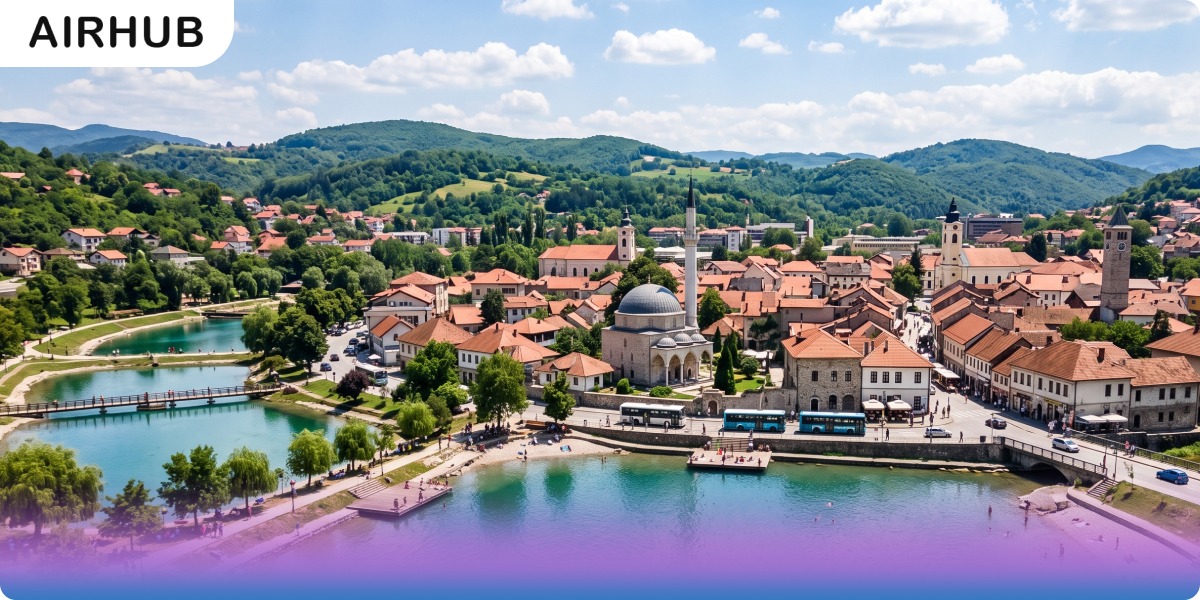
The standard Bosnia itinerary is Sarajevo, then Mostar, then out, usually inside a week, usually on a bus full of people doing exactly the same route. Tuzla, the country's third, largest city, sits up in the northeast and gets skipped by nearly all of them. That's the argument for going.
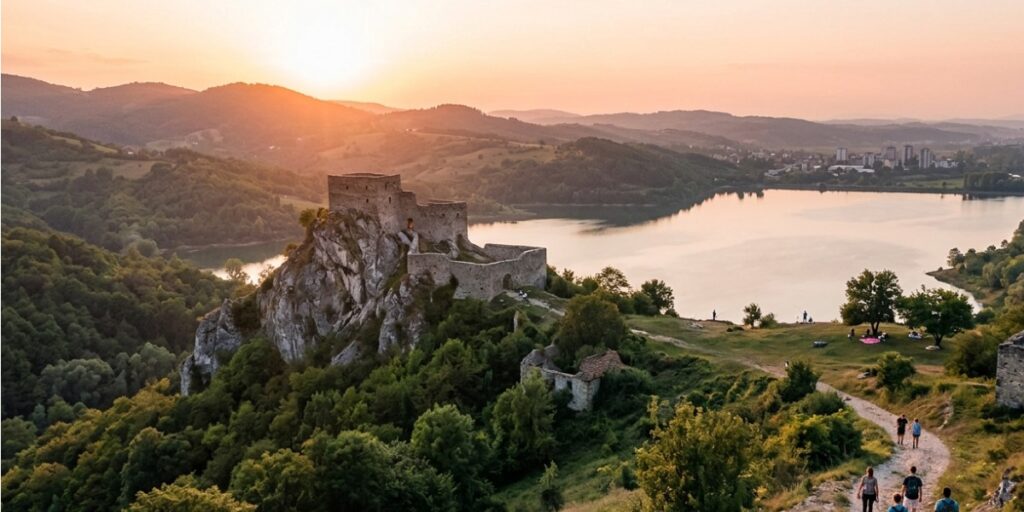
Salt explains most of what makes the place strange and good. The name comes from the Turkish word for it, and centuries of brine extraction hollowed out the ground beneath the city centre so thoroughly that parts of Tuzla have visibly subsided. The municipal response was unusually good,humoured: build saltwater lakes on top. So a landlocked industrial city in the Balkans now has a swimmable beach roughly five minutes from its main square, ringed by Ottoman era buildings, Austro,Hungarian facades and a café culture that treats hurrying as a character flaw. Almost nobody visits.
One clarification before we go further: there's also a Tuzla district in Istanbul and a Tuzla Bay near Izmir. This guide is about Tuzla in Bosnia and Herzegovina.
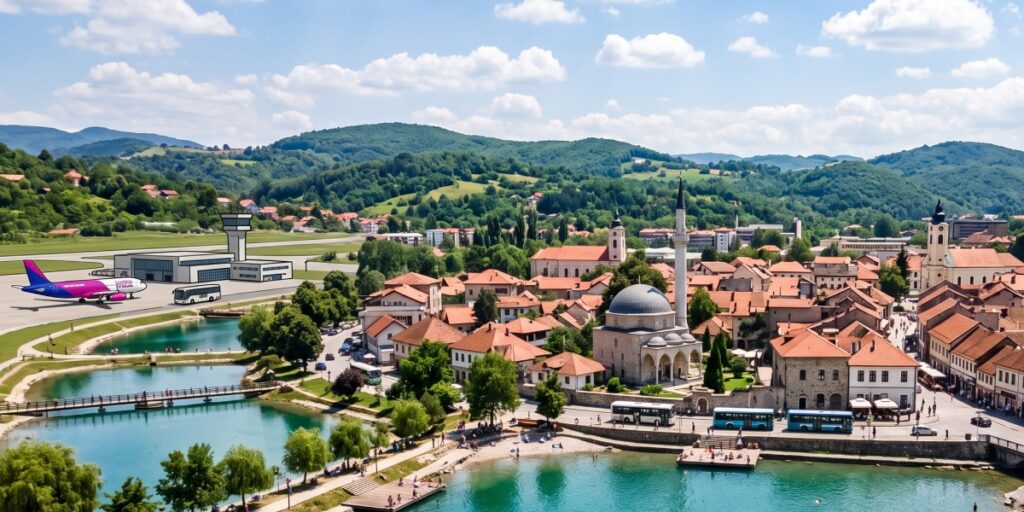
By air : Tuzla International Airport (TZL) sits about 11 km outside the centre and has quietly become a useful low-cost gateway into the country, particularly from Western and Northern Europe. For a fair number of visitors it works out cheaper than routing through Sarajevo,so it's worth comparing fares to both airports before booking.
By bus : which is how most people actually arrive. Services between Sarajevo and Tuzla run roughly one to two buses per hour in each direction across the day, so there's little point planning around a specific departure. Belgrade has direct connections taking around four hours. From Split, the journey takes around nine hours. , which is a long day but a scenic one. Coming from Banja Luka usually means changing to Doboj.
A piece of local advice worth taking seriously: ignore the timetable board at the bus station and ask at the ticket counter instead. The posted times don't cover every connection and aren't reliably updated, a small thing that has stranded plenty of travelers who assumed otherwise.
By train? You can't. As of publication, there are no passenger rail services to Tuzla. The nearest town with rail is Doboj, and even that involves a connection onward.
Once you're there, the centre is compact and properly walkable, you can cover almost everything worth seeing on foot. The city bus network handles longer hops cheaply, though buying tickets from a kiosk rather than on board avoids the inflated fare. Taxis are inexpensive by any European standard, but agree the price or confirm the meter before you set off.
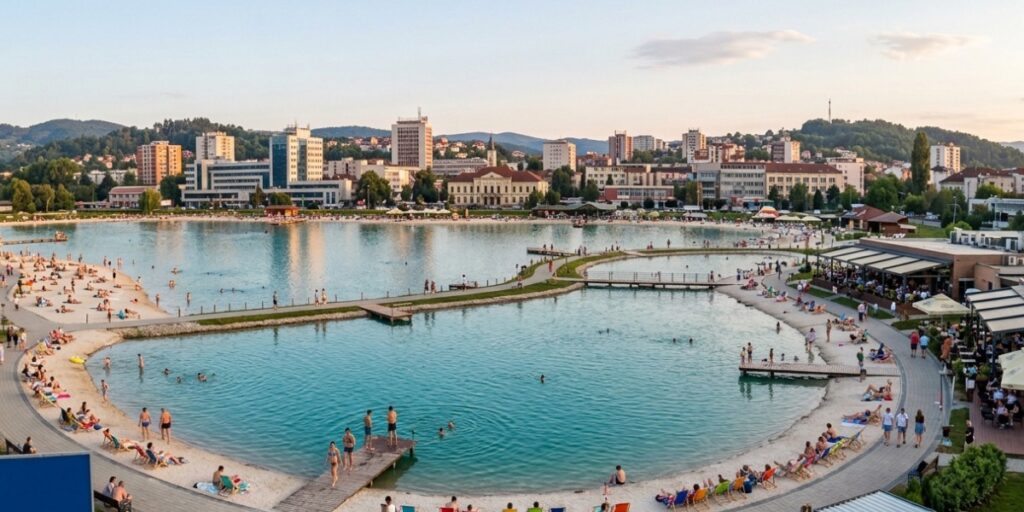
Panonska Jezera is why most visitors come, and for once the headline attraction earns it. Manmade saltwater lakes, sitting in the middle of a working city, warm and improbably calm given that the main square is a short walk away.
Summer is when the complex fills up and locals treat it as their beach. Go in the shoulder seasons and you get the walking paths and the views with barely anyone on them, which some people will prefer. If you're swimming, bring a towel and a change of clothes, lockers are available to rent and the area is patrolled, so it's an easy place to spend a few hours on your own without keeping one eye on your bag. Not swimming? The lakeside cafés have shade and no interest in turning your table.
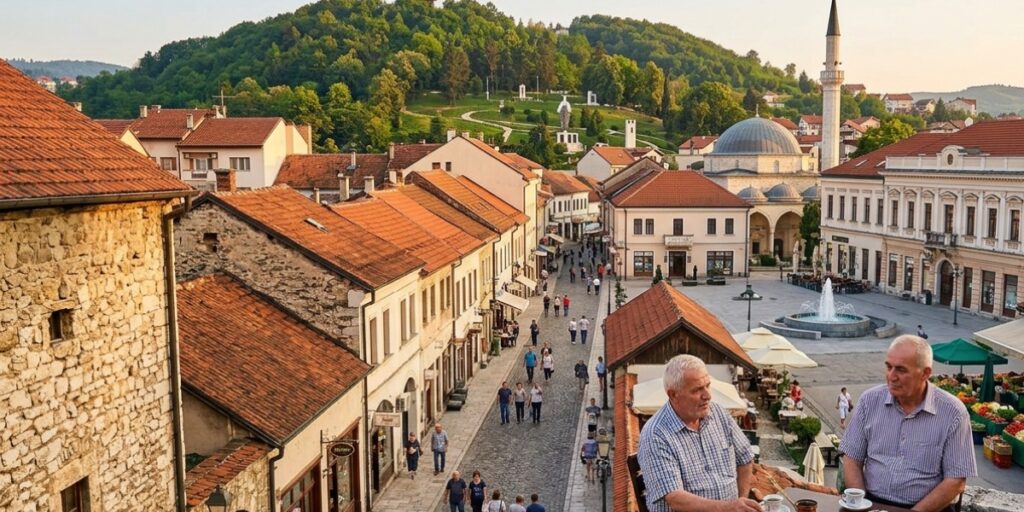
The centre is small enough to see properly in the morning and interesting enough to be worth doing slowly instead.
Then there's Zelena Pijaca, the central market, which is where you go for daily life rather than sightseeing. Seasonal produce, honey, cheese, homemade preserves. Arrive before 10am for the best of it, and ask before photographing anyone's stall.
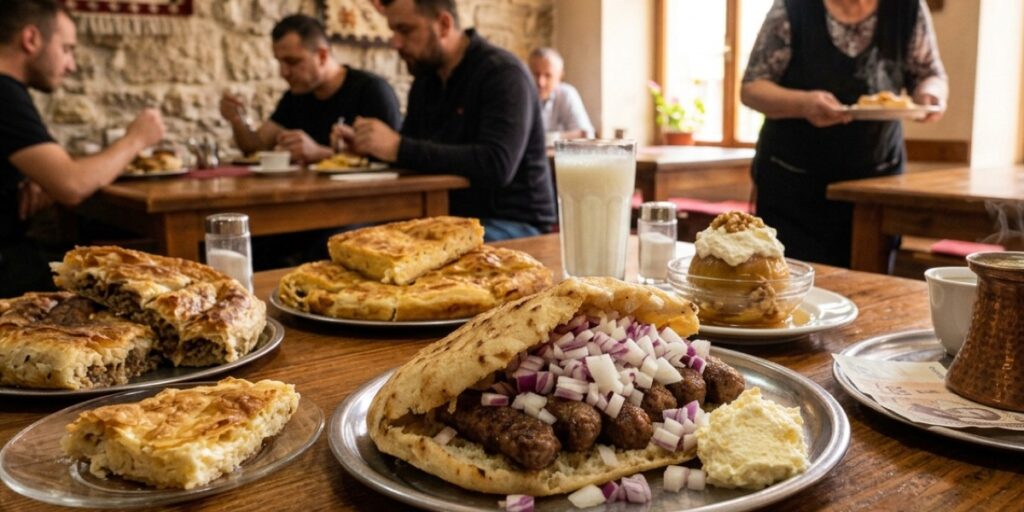
Bosnian food is underrated, enormous and cheap. Three things matter most.
Ćevapi, grilled minced meat with flatbread and raw onion, is the national dish and the first thing to order. Burek is a meat filled pastry sold by weight; pita sa sirom is the cheese version, traditionally eaten with a glass of yogurt drink that sounds wrong and is exactly right. And tufahija, a poached apple stuffed with walnuts under a cap of cream, is worth ordering even when you're already full.
The general rule: eat at the small family,run places and avoid anywhere with a laminated English menu. Staff are usually curious about visitors, portions are absurd, and the bill will surprise you in the right direction.
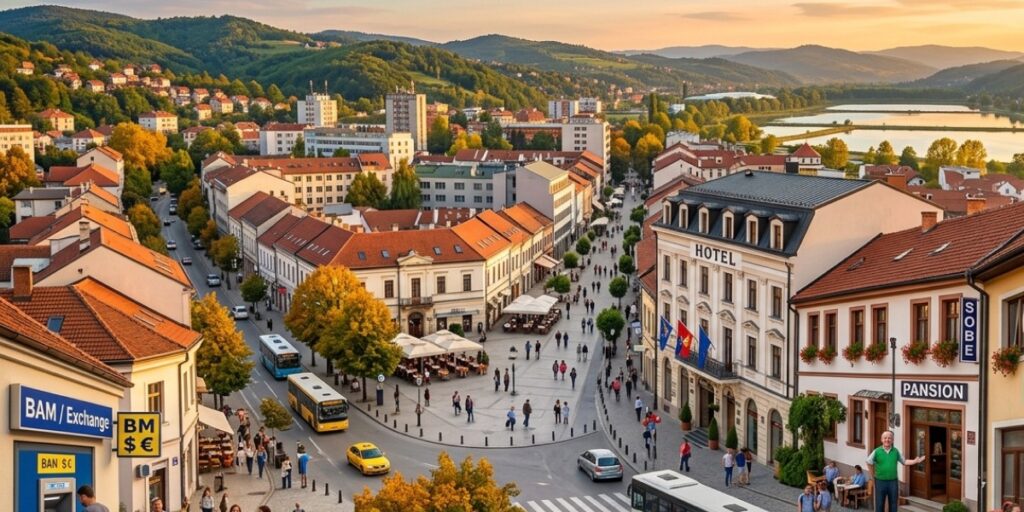
Tuzla has boutique hotels, family run guesthouses and a handful of hostels. Staying central is worth whatever small premium it carries, because it puts the lakes, the square and the evening scene within walking distance.
Guesthouses give you the most local experience, usually with a host keen to hand over recommendations you won't find online. Hostels are the better bet if you want company. Whatever you book, read the reviews for mentions of lighting, secure entry and helpful staff rather than thread count.
On money: Bosnia uses the convertible mark (BAM), not the euro, and this trips people up more than it should. Cards work fine in city, centre hotels and larger restaurants, but markets, small cafés, buses and taxis are frequently cash only. Carry some.
Best time to visit: spring and early autumn, for mild weather, thin crowds and the city at its most walkable. Summer if the lakes are the point.
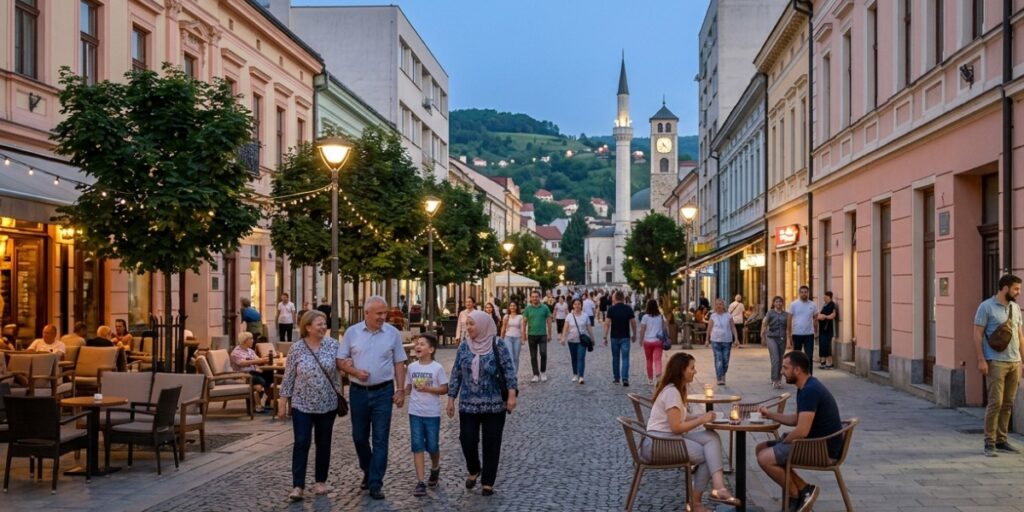
Broadly, yes, and more so than the country's reputation abroad tends to suggest. Tuzla is considered one of Bosnia's safer cities, with low rates of violent crime and a community minded feel that solo travelers notice quickly. The realistic concerns are ordinary ones: petty theft, the occasional overcharge, quiet backstreets after dark.
A handful of habits cover most of it. Keep your phone and wallet out of sight in crowds and at events. A crossbody bag beats a back pocket. Stay in populated areas at night, which isn't much of a constraint given the centre stays busy around Korzo and the lakes promenade well into the evening, with adequate lighting in most public spaces. Book taxis through your accommodation after dark rather than hailing one off the street.
Learning two words also goes further here than it does in most places. Hvala (thank you) and molim (please), and people warm up noticeably.
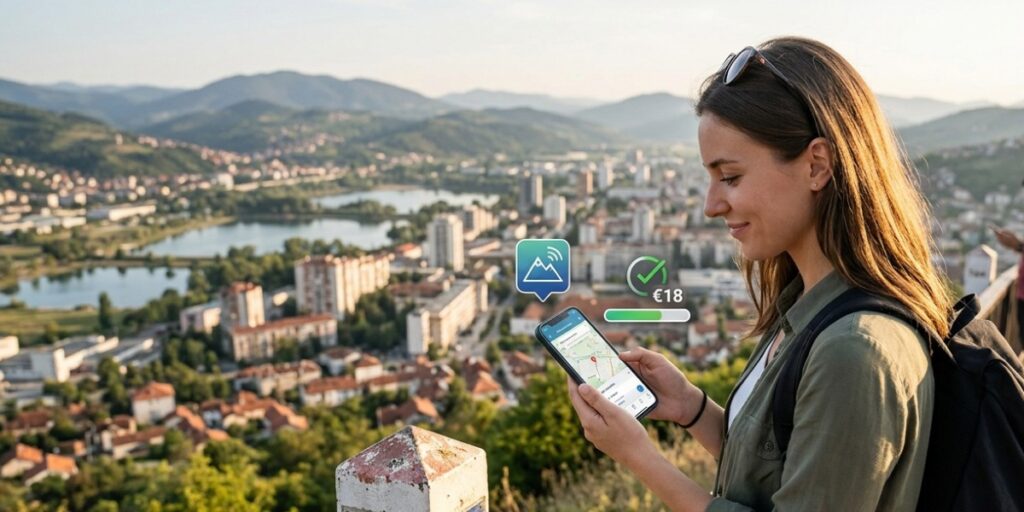
Here's the thing almost no Tuzla guide mentions, and the thing that catches European visitors out most often.
Bosnia and Herzegovina is not in the EU, and "Roam Like at Home" does not automatically apply here. Travelers cross from Croatia or fly in from Austria assuming their domestic bundle carries over, switch data roaming on at the border, and find out what it cost about four weeks later.
The picture is genuinely improving, but it isn't fixed. A regional agreement has allowed free roaming between the Western Balkan countries since July 2021, and a 2022 declaration signed by 38 European and Balkan operators started chipping away at the cost of crossing the EU border, capping retail data at €18 per gigabyte from October 2023, dropping to €14 in 2026 and €9 by 2028.
The bigger development is more recent. In February 2026 the European Commission proposed bringing Albania, Bosnia and Herzegovina, Kosovo, Montenegro, North Macedonia and Serbia into the EU's Roam Like at Home area, and on 4 June 2026 the Council authorised those negotiations. Ukraine and Moldova had already joined the free roaming area on 1 January 2026, and the stated goal is to eliminate the remaining surcharges by 2028.
Which is encouraging, and irrelevant to a trip you're taking this month. Negotiations are open, not concluded. Until an agreement is signed and implemented for Bosnia specifically, check your operator's terms before you cross the border, and whatever you do, don't assume.
The simplest way around all of it is a travel eSIM installed before you fly. An eSIM Bosnia plan puts you on a local network at a flat, predictable price the moment you land, with no mystery line on next month's bill. It also keeps you off open café Wi,Fi, which matters more than most people think when you're moving between maps, banking apps and a translation tool all day.
Carrying on through Sarajevo, Mostar, or across into Serbia and Montenegro? Our Balkans eSIM plans cover several countries on one plan, and an esim with unlimited data removes the low-level maths of rationing megabytes across a two-week circuit.
It takes a few minutes, and it's far easier at home on Wi,Fi than in an airport arrivals hall.
Checking your remaining data, topping up mid trip and reaching support all happen in the Airhub app. Not sure your handset supports any of this? The eSIM compatible devices list is the place to start.
If you like places that haven't been sanded down for tourism, yes. The saltwater lakes are genuinely unusual, the old town takes a morning, prices are low, and you'll share it with locals rather than tour groups. Two days covers the city; three if you're adding a day trip.
Northeastern Bosnia and Herzegovina, roughly two to three hours by bus from Sarajevo. Not to be confused with the Tuzla district of Istanbul.
Fly into Tuzla International Airport, 11 km from the centre, or take a bus, frequent services from Sarajevo, direct connections from Belgrade (around four hours) and Split (around nine). No passenger trains.
Generally yes, solo visitors included. Violent crime is low. Take normal precautions with valuables, stay in well,populated areas after dark, and book taxis through your accommodation at night.
Spring and early autumn for mild weather and few crowds. Summer if you want the lakes at full tilt.
The convertible mark (BAM). Cards work in hotels and larger restaurants; markets, buses, taxis and small cafés are often cash only.
Not automatically, Bosnia sits outside the EU's Roam Like at Home area. Negotiations to include the Western Balkans were authorised in June 2026, but nothing is finalised for Bosnia yet. Check your operator's terms, or use a travel eSIM at a fixed price instead.
Most recent smartphones, including iPhone XS and later, Google Pixel, and Samsung Galaxy S20 and newer. The full eSIM compatible devices list has the specifics.
Many regional plans cover multiple countries, which suits a Sarajevo–Mostar–Belgrade type route. Check the country list on the specific plan before buying, since coverage varies between them.
Top up in the AirHub app. Nothing to reinstall.
Tuzla doesn't perform for visitors, and that's most of its appeal, salt lakes, Ottoman mosques, a proper market and very good cheap food, none of it with a queue.
Sort your connectivity before you fly and you'll skip the one genuinely irritating part of arriving in Bosnia. Buy eSIM at home over Wi,Fi and it's ready the moment you land.
Get your Airhub eSIM in minutes and travel without roaming surprises.
Download the Airhub app to purchase, manage and top up your eSIMs anytime, anywhere!