











Ready to try eSIMs and change the way you stay connected?
Download the Airhub app to purchase, manage and top up your eSIMs anytime, anywhere!
App exclusive5% off at checkout
Do you keep on surfing the internet to find out the most interesting facts about Spain? This post will show you the fun side with travel tips you need.

Spain dazzles with sunshine, history, and vibrant flair, with a lot of international travelers. This jewel of the Mediterranean is a woven tapestry of rich Spain culture and traditions, with flamenco dancers, tapas banquets, afternoon siestas, and vibrant fiestas. In this guide, we’ll share surprising facts about Spain and insider travel tips in short bursts, so you can start dreaming (and planning) your Spanish adventure.
Spain’s appeal spans from art cities to natural parks. The variety of its culture and traditions, be it eating olives in Andalusia or wandering through busy urban markets, lends a local flavor to each visit. Along the way you’ll encounter fun, interesting facts about Spain (like a festival where thousands chuck tomatoes!) and learn how to travel smart.

Spain enchants visitors with a mix of historic landmarks and modern delights. For example, Barcelona’s Park Güell (designed by Gaudí) looks like a fairytale garden of mosaics, and Spain boasts 45 UNESCO World Heritage Sites, the third highest in the world. These include the Alhambra palace and the still-under construction Sagrada Familia church.
Beyond the cities, Spain’s landscapes are endlessly surprising. You’ll find everything from the Pyrenees ski slopes to palm-lined Mediterranean beaches. In southern Spain lies Europe’s only true desert, the Tabernas Desert in Almería, with scenery straight out of a Western movie. Meanwhile, over 80% of Spain is mountainous; it’s actually Europe’s second-most mountainous country, so hikers and skiers will feel right at home. Whether you crave snow, surf, or sun, Spain delivers.

Spain is a country that never fails to surprise travelers. It has various hidden gems that attract travelers to experience the art, tradition, and culture of Spain. Knowing these interesting facts will tell you why Spain, despite its long history and ancient festivals, is one of the most adventurous places to explore. These interesting facts about Spain will give you a better understanding of Spain's rich culture and maybe inspire you to take a look beyond the usual tourist spots.

Spain has 45 UNESCO World Heritage Sites (including the Alhambra and Gaudí’s works), more than almost any other country. These sites show the art, tradition, and innovation of the place.

Barcelona’s La Sagrada Familia has been under construction since 1882 and is still unfinished. Its long build makes it one of the world’s most unique cathedrals. The construction continues and is also one of the most visited landmarks.
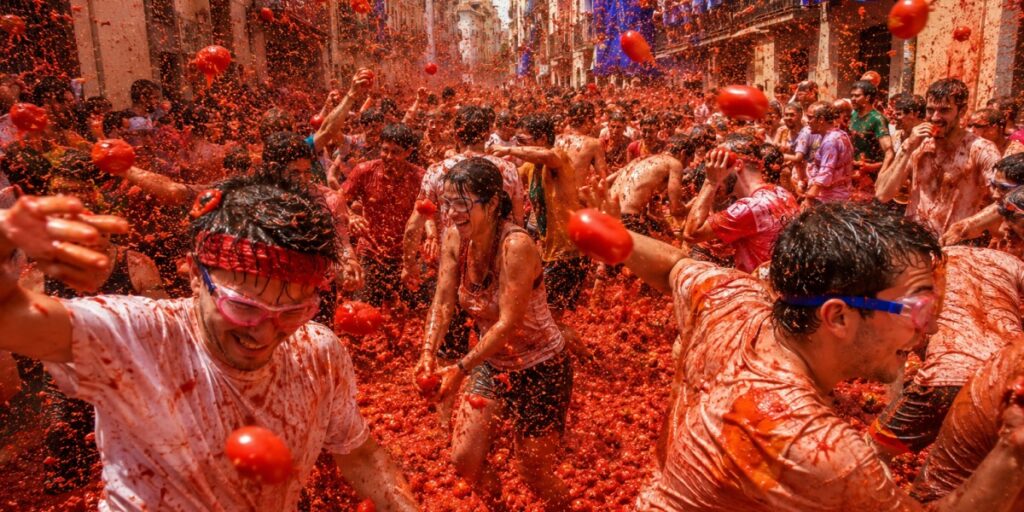
The famous Tomato fight is part of spain culture and traditions. Every August in Buñol, nearly 40,000 people lob over 220,000 pounds of tomatoes at each other in La Tomatina, a food fight. It started as a wild local tradition and is now a famous festival for thrill-seekers.
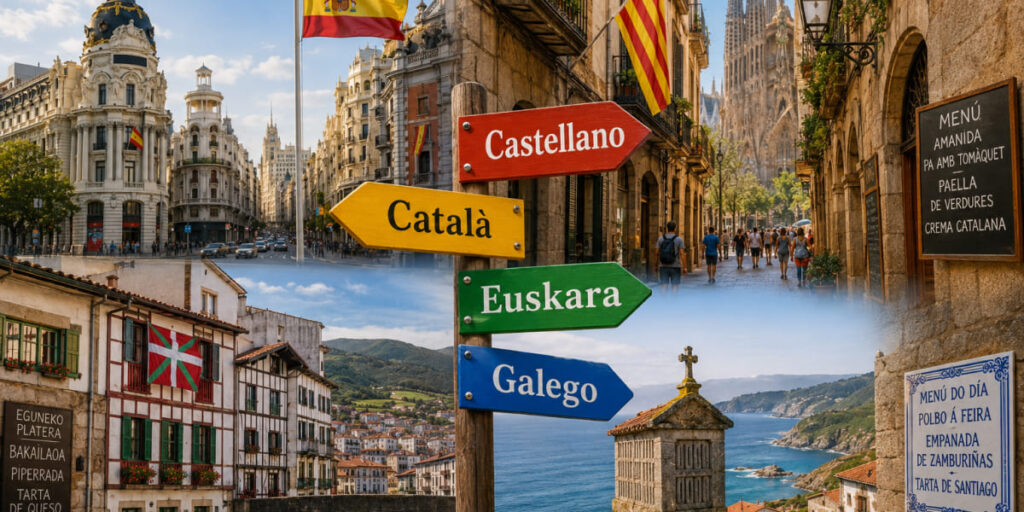
Spain has four official languages: Spanish (also called Castilian) throughout the country, Catalan is spoken in Catalonia, Basque in the Basque Country, and Galician in Galicia. Street signs and menus change languages as you travel around the country, highlighting its regional diversity.

La Liga (the Spanish league) attracts fans worldwide, and Spain has won both the men’s and women’s FIFA World Cups. Stadiums (like Real Madrid and Barcelona’s Camp Nou) are modern cathedrals to the sport. Watching a match is one of the best ways to experience local passion and community spirit.
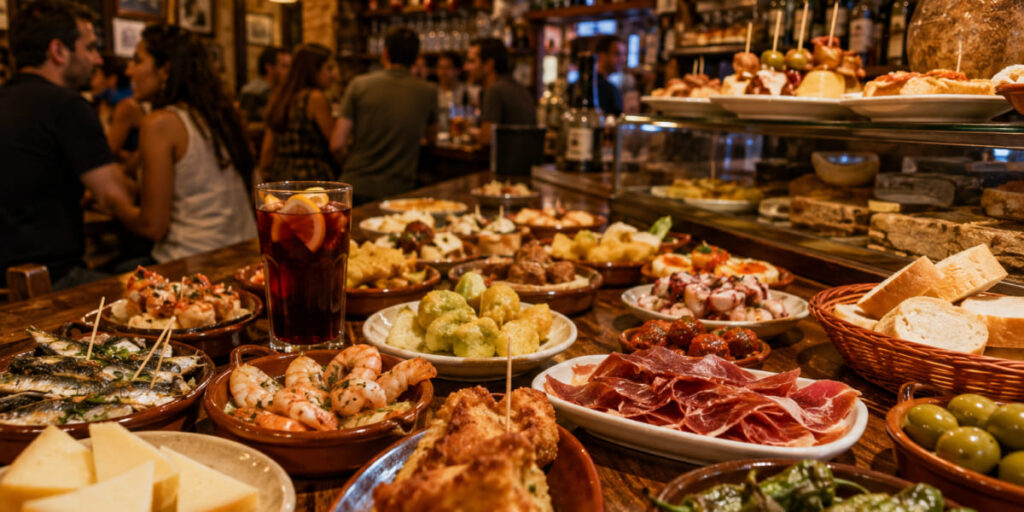
The word tapa means “cover.” Tapas began as snacks (like cheese or ham) that bar staff would place over a drink to keep flies away. Today, tapas are a way of life, small plates shared over evening conversations.

Spain produces about 40% of the world’s olive oil – more than Italy and Greece combined. Most of Spain’s golden olive groves are in Andalusia (Jaén province alone makes 70% of the country’s oil), so you’ll drench your veggies and bread in rich local olive oil.

This fiery dance and music style was born in Andalusia in the 15th century. Flamenco (singing, guitar, and dancing) is now UNESCO-listed as Intangible Cultural Heritage and a quintessential part of Spanish nightlife and festivals.
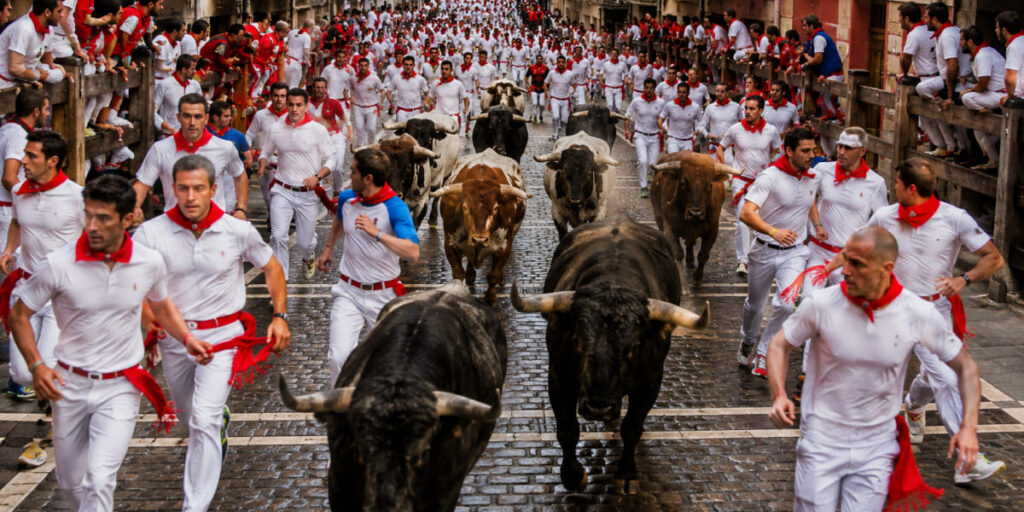
Every July, thousands of locals and tourists run through the streets of Pamplona before a group of charging bulls. This 400+ year old tradition (part of San Fermín week) is dangerous but iconic. Runners wear white with red scarves for good luck as they dash the half-mile route.
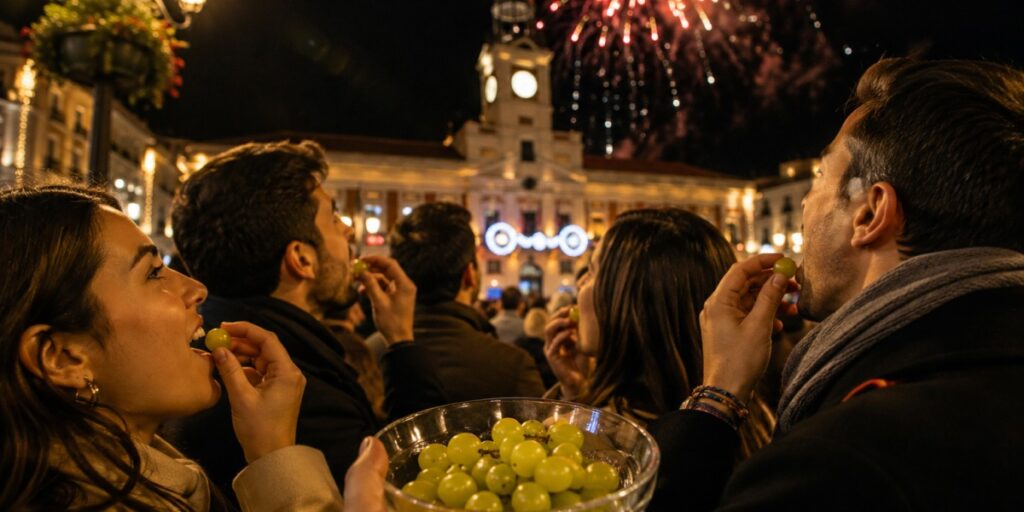
New Year’s Eve in Spain comes with twelve grapes. Spaniards eat one grape per clock chime at midnight (12 grapes total) for good luck in the new year. It’s a sweet and silly way to ring in the year; try it and hope for fortuna!
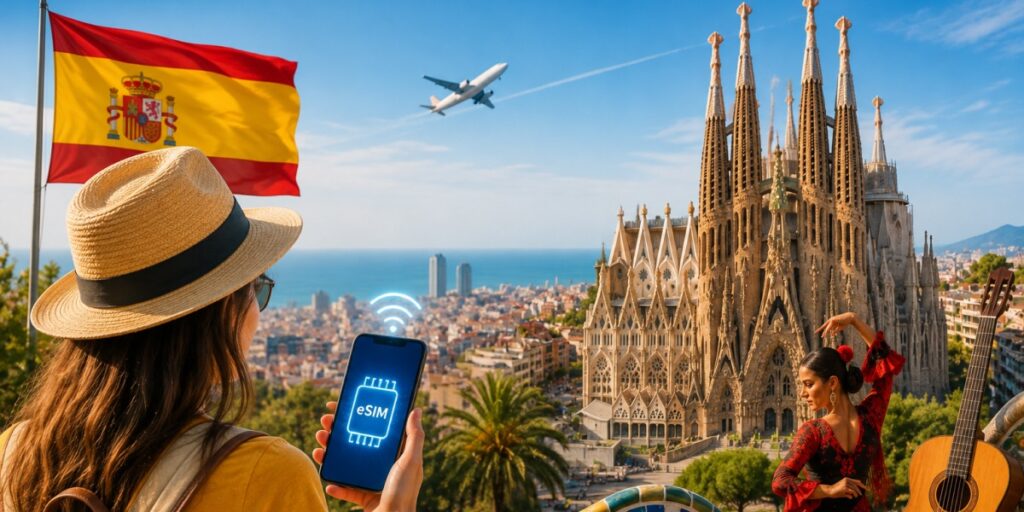
Staying connected in Spain is easy with Airhub’s travel eSIM. Instead of rushing to buy a local SIM, you can instantly activate a Spain eSIM through the Airhub app, with no plastic SIM card swap. Airhub’s Spain plans include unlimited data at 5G speeds, so you can stream flamenco shows and upload paella pics without worry.
Just download the Airhub app before you fly, set up your eSIM in a minute, and your phone works like it’s “local” upon arrival. Thousands of travelers use Airhub to skip roaming fees and hunt-free SIM shops; it’s a stress-free way to focus on your trip instead of your signal.
From the legendary monuments of the country to the weird and wonderful traditions, Spain has a multitude of things to offer. The fun facts about Spain we’ve covered, from thriving olive orchards to an anthem with no words, give you a glimpse of why travelers swoon over this place. All you need now is that handy eSIM, and these tips and tidbits will ensure that you have a smooth and rewarding trip. So go ahead: savor every bite of tapas, cheer at a soccer match, and say “Hola!” to Spain’s warmth. ¡Buen viaje!
Citizens of the EU/Schengen Area, the US, Canada, the UK, Australia, and many others can enter Spain for tourism (up to 90 days) without a visa. Others will need a Schengen visa in advance. Check your government’s travel site for entry requirements well before you go.
Spring (April–June) and fall (September–October) are ideal; you’ll enjoy warm but not scorching temperatures and fewer crowds. Summer is hot (especially in the south), while winter can be chilly in the north (though it’s great for skiing in the mountains). Check local festival dates too, since Spain celebrates year-round.
Spain uses the Euro. Credit cards (Visa, MasterCard) work in most places, but carry some cash for small shops or tips. ATMs (“cajeros automáticos”) are easy to find in cities.
The official national language is Spanish (Castilian). However, you’ll also hear Catalan, Basque, and Galician in their respective regions. In major tourist areas, most people speak at least basic English, but locals always appreciate a friendly “hola” or “gracias” in Spanish!
Generally, yes. Spanish cities are safe by day, but like everywhere, be cautious at night and watch out for pickpockets in crowded spots. The U.S. State Dept. advises travelers to steer clear of protests and remain aware of their surroundings. In short: use common sense, and you should be fine.
The easiest way is to get a Spanish SIM or eSIM for data. Airhub’s eSIM gives you immediate high-speed data with no physical SIM swap. You can also rely on free Wi-Fi (in cafés, airports, hotels), but for reliable service, an eSIM or local SIM is best. Remember to turn off roaming to avoid charges.
Not really. Tipping in Spain is low-key. A few coins or rounding up the bill is polite. For example, if your bill is €18, you might leave €20. At cafes or bars, people often just leave the change. Large tips aren’t expected, so tip only if service was exceptional.
Get your Airhub eSIM in minutes and travel without roaming surprises.
Download the Airhub app to purchase, manage and top up your eSIMs anytime, anywhere!