








Ready to try eSIMs and change the way you stay connected?
Download the Airhub app to purchase, manage and top up your eSIMs anytime, anywhere!
App exclusive5% off at checkout
Looking for eSIM compatible phones? Explore the 2026 list of supported iPhones, Samsung Galaxy, Google Pixel and other Android devices.
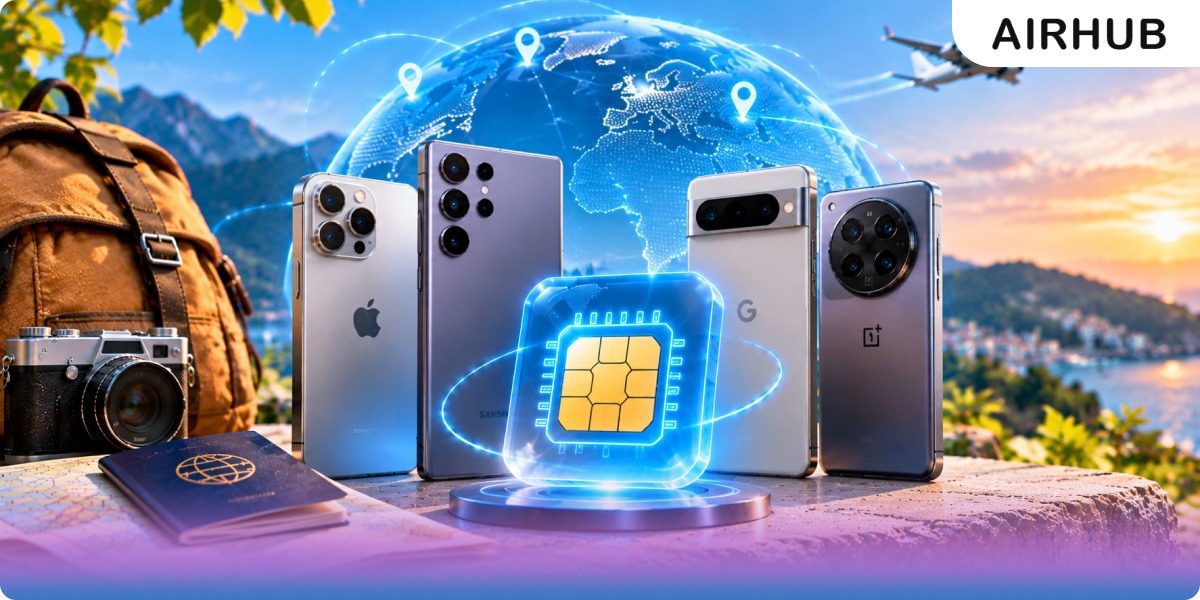
Somewhere between 2018 and now, the humble SIM card quietly started disappearing from flagship phones altogether. If you're trying to figure out whether your device belongs on the growing list of eSIM compatible phones, you're asking the right question at exactly the right time, as 2026 is the year several major manufacturers stopped treating eSIM as an optional extra and started treating it as the default. Industry estimates now put more than half of all smartphones in active use worldwide as eSIM capable, a figure that's only climbing as older models cycle out. This guide breaks down exactly which iPhones, Samsung Galaxy devices, Google Pixels, and other major Android phones support eSIM, how to double-check your specific model in under a minute, and what to actually do once you've confirmed you're good to go.
The onus to keep reading goes beyond just the list of eSIM compatible phones, as the sections on regional variants and carrier locks further down are where most people are susceptible, and skipping them is the fastest way to buy a plan that won't activate.
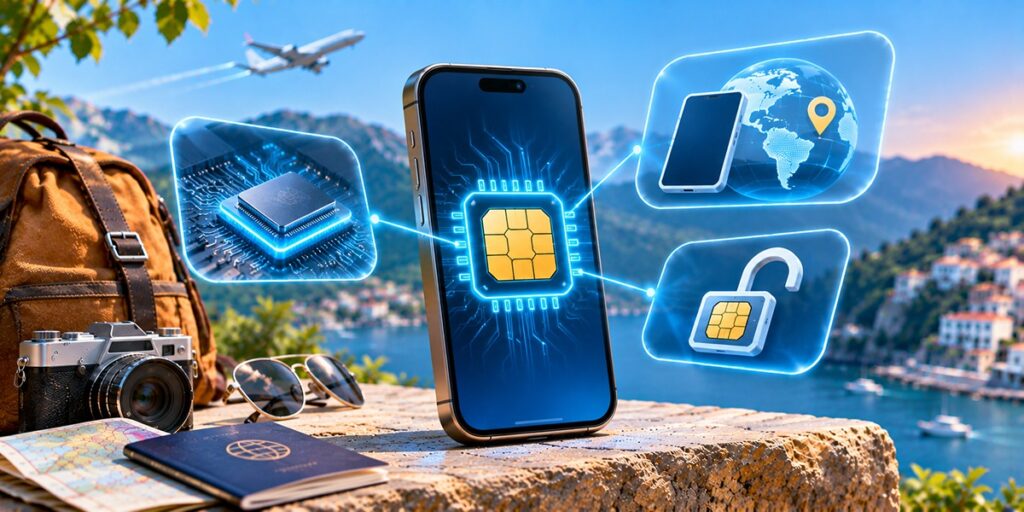
An eSIM (embedded SIM) is a small programmable chip soldered directly onto a phone's motherboard rather than slotted in as a removable card. Rather than swapping a physical card at a shop counter, a mobile plan is downloaded and activated digitally, usually via a QR code or a direct in-app install. But "compatible" hides three separate conditions that all need to be true at once:
Missing any one of these three means the phone won't work with a travel eSIM, which is exactly why simply assuming that your phone is new enough is often a setup for disappointment.
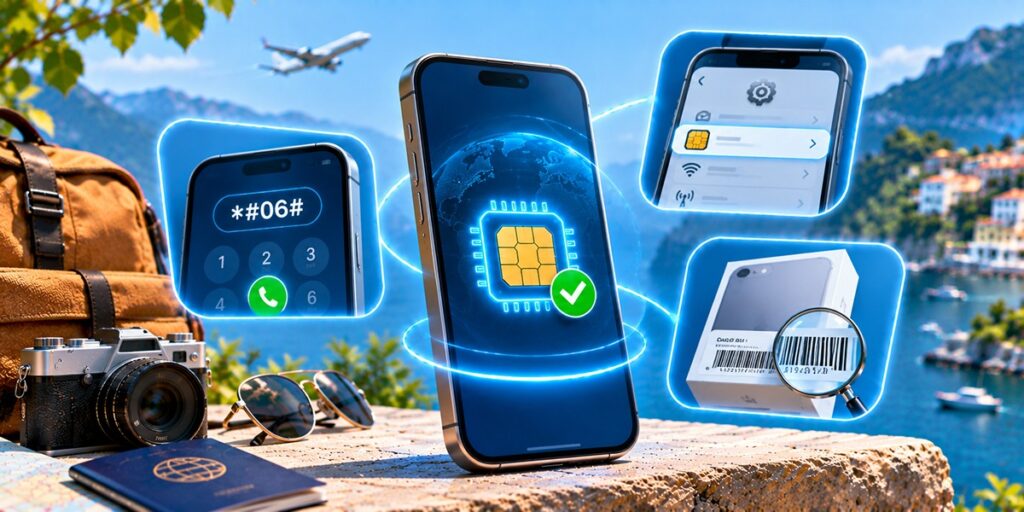
Before scrolling through brand lists, it takes under a minute to check your exact device:
If all three check out, you're ready to actually use the technology, which is where a lot of people prefer to skip the research and just buy travel eSIM online once compatibility is confirmed, rather than leaving it until they land.
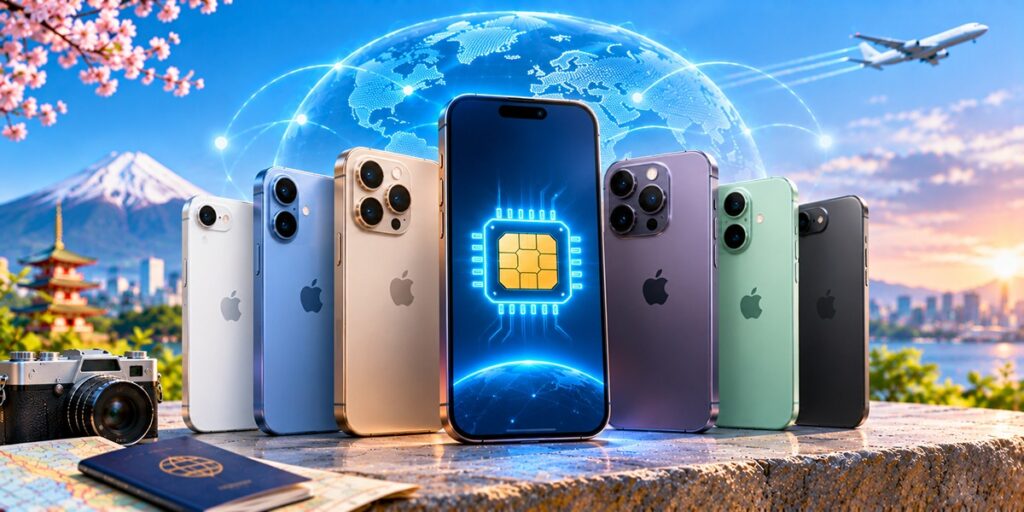
eSIM compatibility in phones has become a must over recent years, with the realization of the importance of embedded connectivity amongst the masses. Many popular phone manufacturers have taken this trend in stride and revolutionized the basis of communication technology for the people.
Apple has the simplest compatibility story of any brand, having supported eSIM since 2018:
Two important exceptions that can occur amongst models in this list are that iPhones sold in mainland China generally don't include eSIM capability at all, and starting with the iPhone 14 lineup, US models ship completely eSIM-only phones with no physical SIM tray whatsoever.
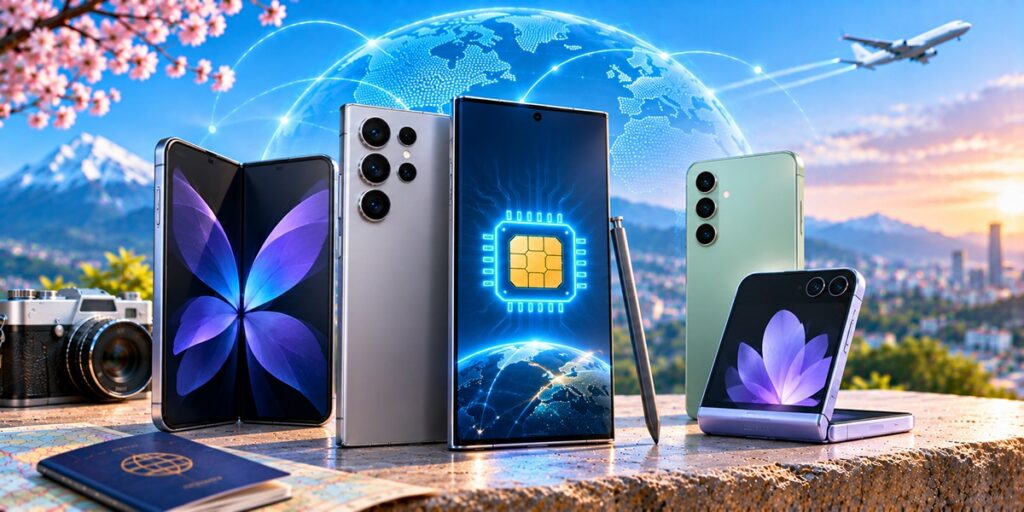
Samsung's rollout has been broader but far less consistent across regions:
An important nugget to keep in mind is that units sold in South Korea and Hong Kong are frequently excluded from eSIM support entirely, even when the identical model works fine elsewhere. Thus, if a Galaxy phone is secondhand or imported, this is worth double-checking before assuming it'll work.
Google was actually first to market with eSIM, introducing it on the Pixel 2 back in 2017, and it's remained standard across the entire lineup since:
Pixel reserves the same restrictions as Samsung, as phones sold in Hong Kong don't support eSIM, and early Pixel 3 units from Australia, Japan, and Taiwan were also excluded.
Phones aren't the only devices that have quietly gone digital-SIM. If you're traveling with a tablet for work or splitting connectivity across devices, it's worth checking these too:
As with phones, the same regional caveats apply; a cellular iPad bought in certain markets may still ship with the eSIM function disabled at a carrier level.
eSIM support among the rest of the Android field has expanded quickly, though it still varies far more by exact model than Apple or Google:
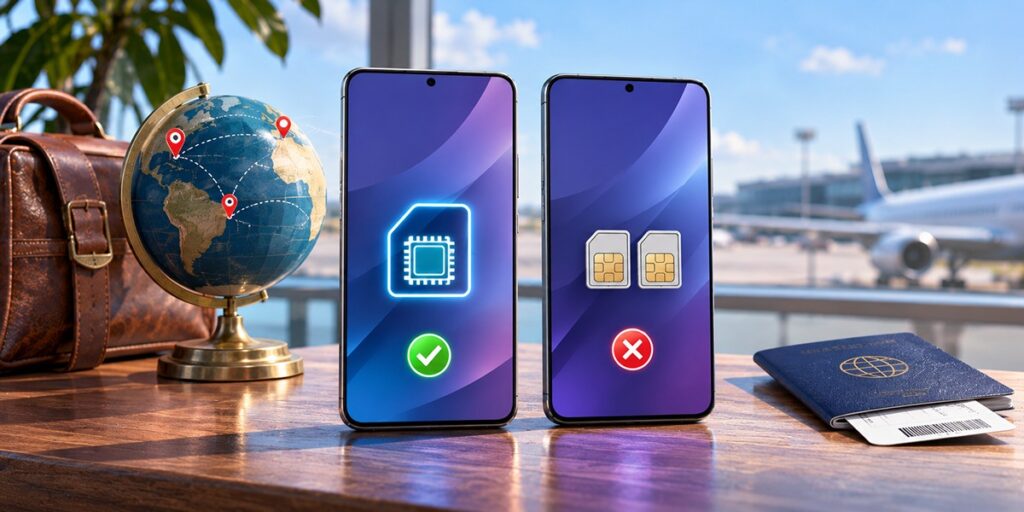
This is arguably the single most common reason a technically "compatible" phone still fails to activate a travel eSIM, and it barely gets a mention in most guides: the same phone name, sold in different markets, can be a genuinely different device underneath. A Galaxy S24 bought in South Korea and one bought in Germany may share a name and a screen, but only one of them has the eSIM hardware enabled while the other was built with a second physical SIM tray instead, largely due to local carrier agreements and regulatory quirks specific to that market. The same logic applies to iPhones from mainland China and Pixel phones from Hong Kong.
This matters most in three common situations: buying a phone secondhand from an overseas marketplace, picking one up duty-free while already traveling, or inheriting a device from a friend or family member who lives abroad. In all three cases, the model name printed in Settings can look identical to the version sold in your home country while quietly running different internal hardware. The fix is straightforward even if it's easy to overlook; just check your specific model number (not just the marketing name) against the manufacturer's regional support documentation, rather than assuming that because a "Galaxy S24" works for a friend at home, yours will behave the same way.
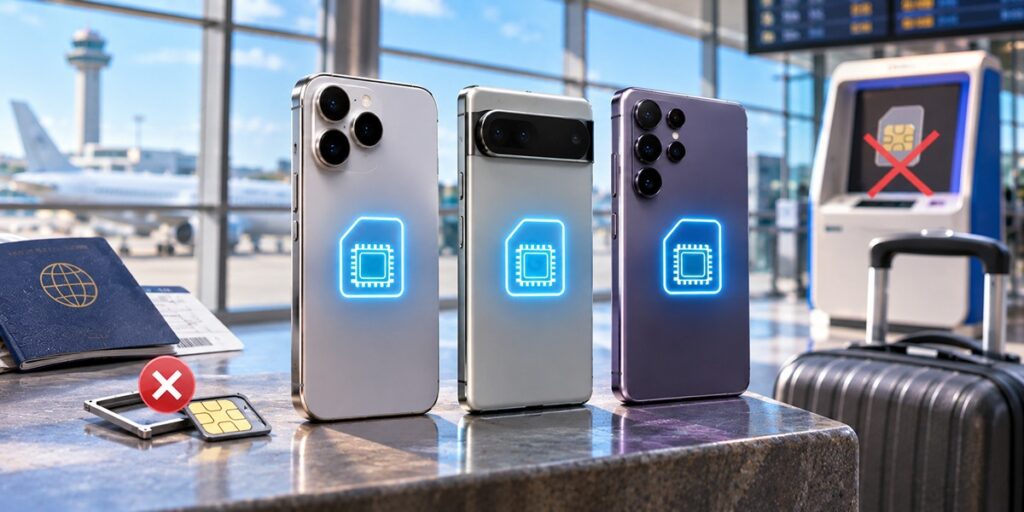
If there's one trend defining eSIM compatible phones in 2026, it's this: several flagships have stopped including a physical SIM tray at all. The iPhone Air is Apple's first globally eSIM-only device; US iPhone models have shipped this way since the iPhone 14 generation, and Google's Pixel 10 follows the same approach in US markets, with Samsung reportedly moving select Galaxy S26 markets in the same direction. Thus, for anyone shopping for a new phone with travel in mind, this isn't a minor technical footnote; it instead means eSIM is no longer a nice-to-have feature to check for; it's rapidly becoming the only option some flagships offer at all.
The practical knock-on effect is worth sitting with for a moment: airport SIM kiosks, once the default backup plan for forgetful travelers, are gradually becoming irrelevant for an increasing share of phones on the market, simply because there's no physical tray left to insert a card into even if you wanted one. Buying a plan digitally before departure, rather than assuming a kiosk will be there as a fallback, is quickly shifting from a preference to a necessity for anyone carrying one of these newer devices.
Not every compatible phone handles international travel equally well. If eSIM support is genuinely a factor in your next upgrade, a few models stand out specifically for how they handle it:
Once you know your device qualifies, setting up a travel eSIM is genuinely a five-minute process: choose a plan for your destination, scan the QR code or install the profile digitally, and label it clearly so you're not mixing it up with your home line. It's worth doing this before you leave rather than scrambling on arrival. Testing the connection in airplane mode before departure means any activation issues surface while you're still on home Wi-Fi, not standing in an unfamiliar arrivals hall. Doing this before you leave rather than after landing means you skip the arrivals-hall SIM kiosk entirely, and it's worth checking whether a global eSIM plan makes more sense than single-country options if your trip spans more than one border.
If you're an Airhub user, this is exactly the gap Airhub eSIM is built around. Since dual-SIM support on newer eSIM compatible phones means your home number can stay active while your travel data runs separately, Airhub's plans are designed to activate instantly once you land, cover a wide spread of destinations under one setup, and skip the inflated pricing that often comes with airport kiosks or unfamiliar local providers. Given everything this guide has covered, from checking your EID to dodging the regional-variant trap, the actual final step is refreshingly simple: buy your Airhub eSIM before you fly, and it's ready the moment your confirmed-compatible phone reconnects to a network.
Checking whether your device belongs among today's eSIM compatible phones takes less time than boarding a flight, but skipping it is one of the more avoidable travel mistakes people still make. Between Apple's consistent rollout, Samsung and Google's broader but patchier support, and the regional quirks that occasionally catch even recent flagships off guard, the safest approach is always the same: verify your specific model, not just its name, before you assume you're covered. With eSIM-only phones becoming more common by the year, that quick check is only going to matter more, not less, and it's a far better use of five minutes before departure than finding out the hard way after landing.
Most eSIM-compatible phones from iPhone 13 onward typically have two eSIM profiles active simultaneously, alongside a physical SIM on models that still include one, which is exactly why many travelers run a home number and a travel data plan side by side.
This almost always comes down to a carrier lock or a regional variant restriction rather than the phone itself. Confirm your device is fully unlocked, and double-check your exact model number against your country of purchase before assuming there's a bigger problem.
No, eSIM depends on a physical chip built into the hardware, so a phone that shipped without one can't gain the feature later through a software or firmware update, regardless of how current its operating system is.
It's a reasonable trade-off to weigh, since eSIM-only phones like the iPhone Air still support dual active profiles digitally, where you'd simply be running two eSIMs instead of one eSIM plus one physical card, which for most travelers ends up being just as flexible in practice.
Get your Airhub eSIM in minutes and travel without roaming surprises.
Download the Airhub app to purchase, manage and top up your eSIMs anytime, anywhere!