










Ready to try eSIMs and change the way you stay connected?
Download the Airhub app to purchase, manage and top up your eSIMs anytime, anywhere!
App exclusive5% off at checkout
Day of the Dead vs Halloween: compare their origins, traditions, celebrations, destinations, and connectivity tips for travelers.
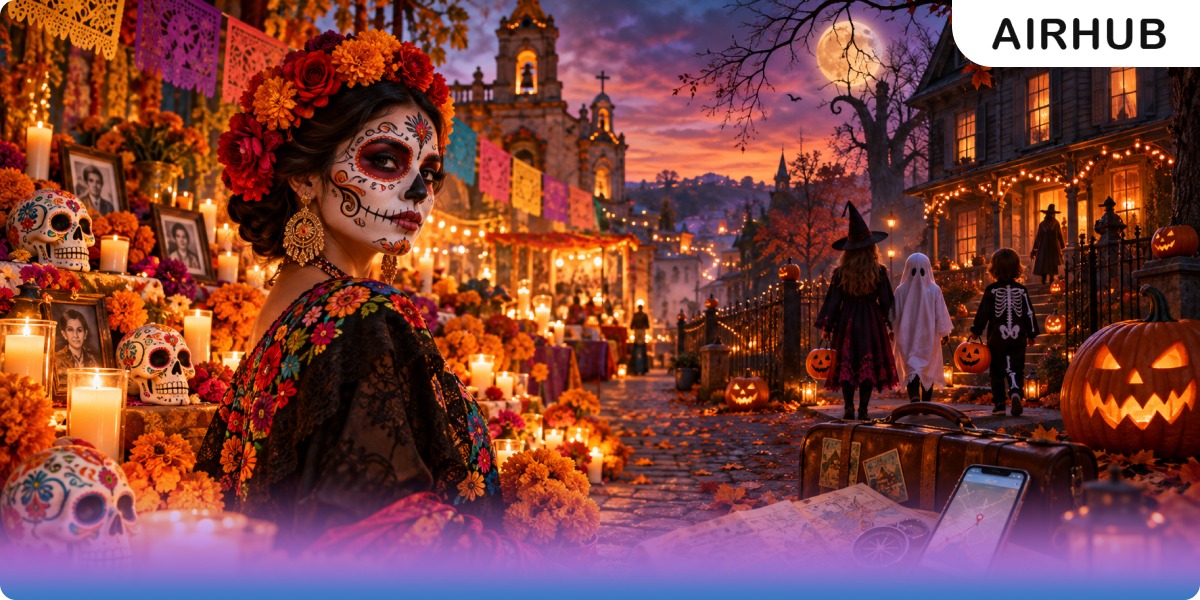
Halloween means costumes, candy, pumpkins, and a bit of harmless fear. Then, just a day or so later, Mexico fills up with marigolds, music, food, and altars covered in photos and candles. Put Day of the Dead vs Halloween side by side, and you might think it's one spooky season split in two. It isn't. The meanings, the customs, and the mood are quite different. For travelers, that's exactly why both are worth seeing in person.
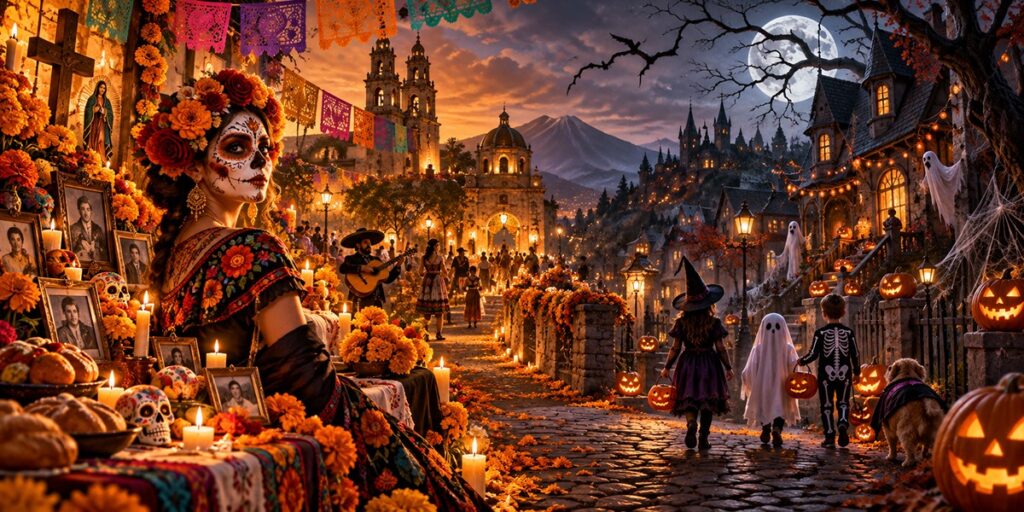
The Day of the Dead goes back to Indigenous traditions in Mexico, including practices tied to the Aztec world. Over time, those customs mixed with Catholic observances like All Saints' Day and All Souls' Day, and that blend is what people mark on November 1 and 2. Today it's the Day of the Dead festival, a tradition built around remembering loved ones who have died and welcoming them back for a visit. Death isn't treated as something to run from. It's part of life, and part of the family story.
Halloween has its own backstory. Most people trace it to Samhain, an old Celtic festival that marked the shift between seasons and a time when the line between the living and the dead was thought to blur. Christian All Hallows' Eve customs got layered on later.
Over the years, it turned into the version most travelers know: costumes, pumpkins, ghost stories, parties, candy, and a good scare or two.
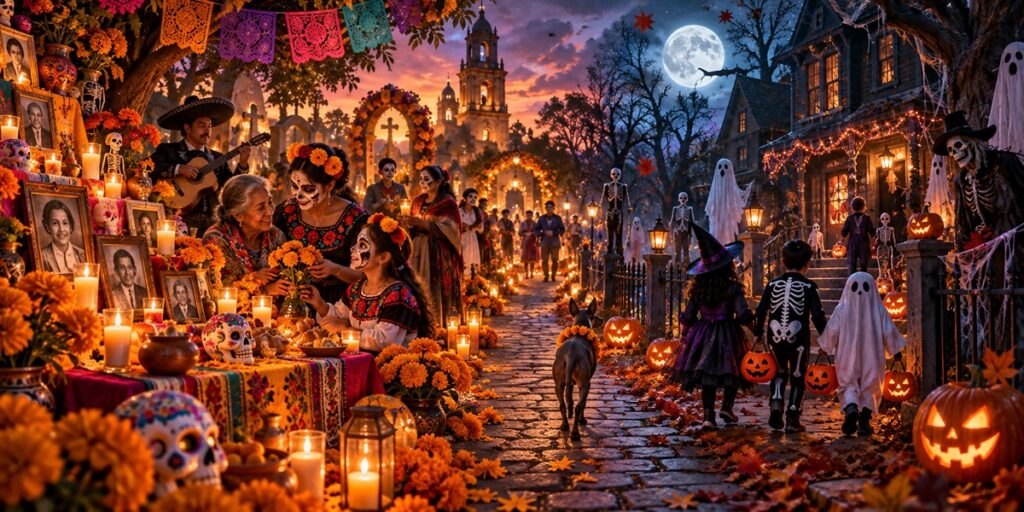
You really notice the difference once you're standing in the middle of each one.
Both have skeletons, spirits, and a touch of the supernatural, but they're doing very different things emotionally.
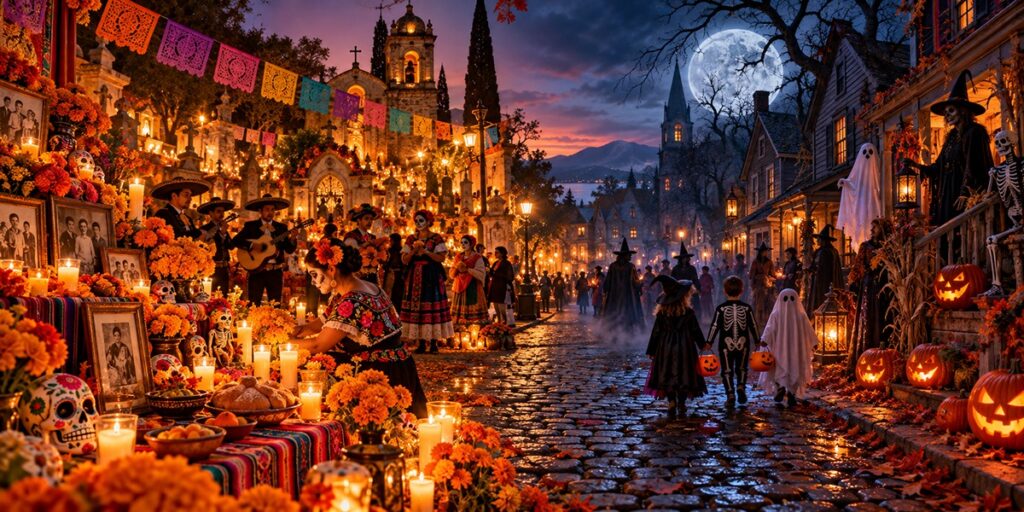
Here's a quick side-by-side of symbols and customs, which is where Day of the Dead traditions and Halloween traditions are easiest to separate.
| Feature | Day of the Dead | Halloween |
| When | November 1–2 | October 31 |
| Roots | Indigenous Mexican traditions blended with Catholic observances | Celtic Samhain and later Christian traditions |
| Main focus | Remembering and honoring deceased loved ones | Spooky entertainment and community fun |
| Key symbols | Marigolds, sugar skulls, candles, ofrendas | Pumpkins, jack-o'-lanterns, ghosts, witches |
| Typical activities | Altars, family gatherings, cemetery visits, music, food | Trick-or-treating, costume parties, pumpkin carving |
| Overall mood | Warm, colorful, nostalgic | Eerie, energetic, playful |
One thing to keep in mind: the Day of the Dead and Halloween aren't interchangeable. Looking alike doesn't mean they carry the same cultural meaning. For travelers, knowing that makes the trip a lot richer.
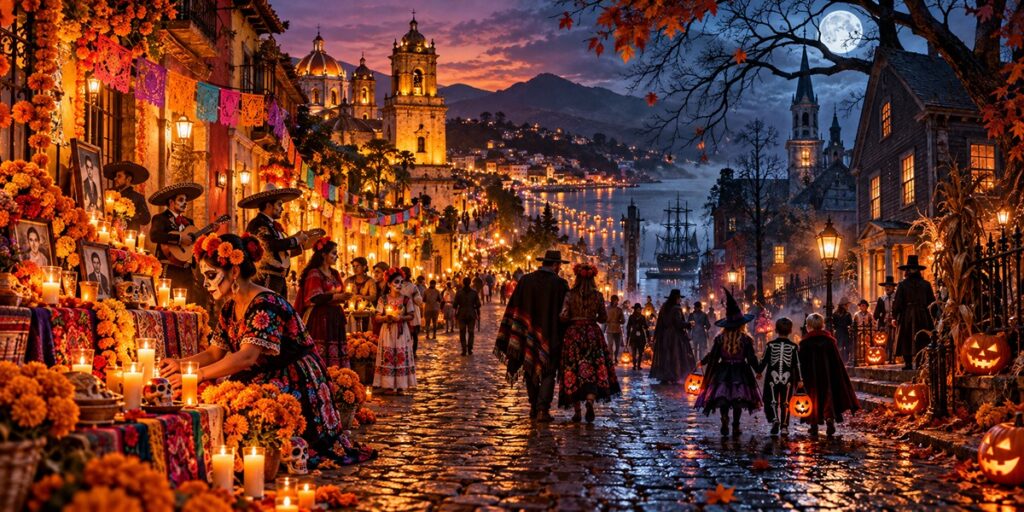
Both holidays have gone global, but a few places stand out.
Planning around October and November? Looking up the best halloween travel destinations is a good way to find historic streets, ghost tours, and big costume events. And if you'd rather go deeper into culture, Mexico gives you a very different kind of trip.
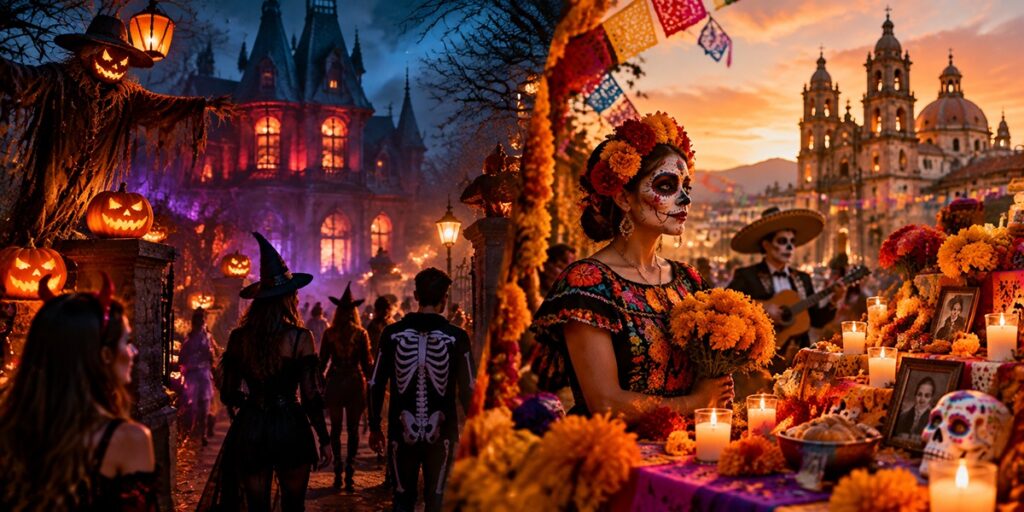
Which one you pick depends on what kind of trip you're after. Want costumes, nightlife, scary attractions, and a little adrenaline? Halloween is probably your match. You can seek out haunted places, hop into themed events, or spend an evening working your way through elaborate haunted houses.
Prefer something more cultural and reflective? A Day of the Dead trip gives you a closer look at Mexican family traditions, food, art, music, and remembrance. Don't treat either one like a checklist. Watch how locals take part, respect cultural spaces, and keep in mind that some traditions mean far more than what shows up in photos.
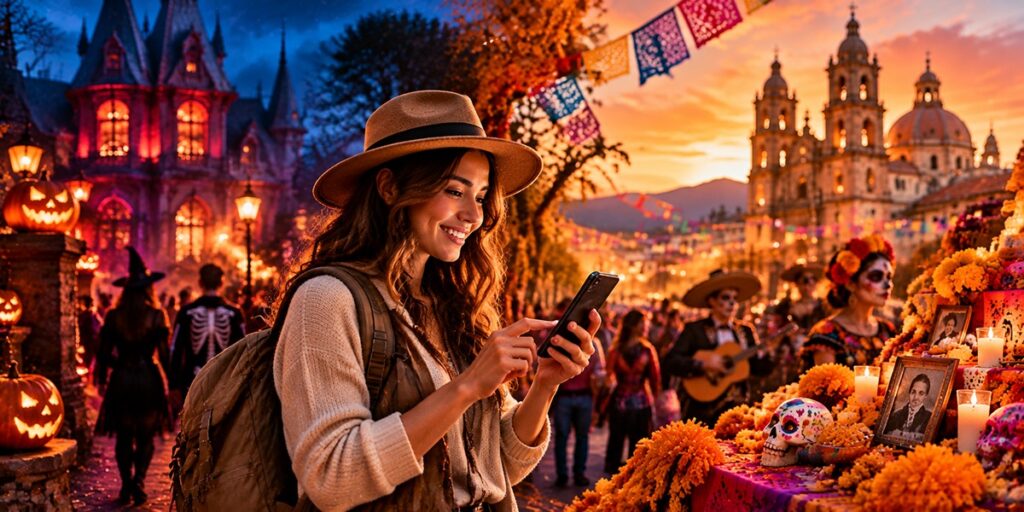
One practical thing makes either trip easier: staying online. If you're hopping between festival spots, checking maps, booking rides, translating a menu, or posting photos, mobile data helps a lot. Rather than hunting for a physical SIM after you land, you can use a travel esim and manage it right from your phone.
Airhub has more than 250 eSIM options for travelers across plenty of eSIM countries, which comes in handy for trips that cross borders or hit several destinations. Before you leave, download the Airhub app on iOS or Android and get your connection set up before the celebrations start. Less time worrying about signal, more time enjoying the trip.
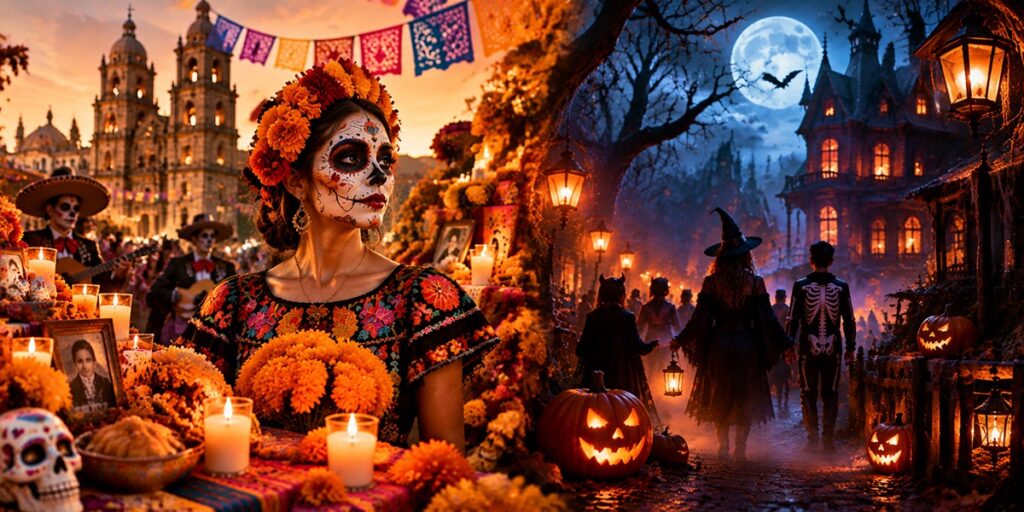
Day of the Dead vs Halloween isn't really a competition. Each one is a different way cultures have built traditions around death, memory, community, and the unknown. The Day of the Dead pulls families and memories together with color, food, music, and remembrance. Halloween takes the supernatural and turns it into an evening of costumes, laughter, and suspense.
Either one can make a trip memorable. Doing both is even better, especially if you take the time to learn what each celebration actually means. So whether you end up following marigolds through Oaxaca or chasing ghost stories in Salem, go with curiosity, respect, and an open mind. That's usually where the good stories start.
No. They occur around the same time of year, but their histories and purposes are different. Day of the Dead focuses on remembrance and family, while Halloween centers on spooky entertainment.
The main observances take place on November 1 and 2, although events and preparations can begin earlier in many communities.
Halloween is observed on October 31. Many destinations hold Halloween-themed events throughout October.
Marigolds, candles, photographs, decorated altars, food, and sugar skulls are among the best-known symbols.
Oaxaca, Mexico City, and Pátzcuaro are among the destinations known for particularly distinctive celebrations.
Salem and Sleepy Hollow are popular choices in the United States, while Derry in Northern Ireland is another major Halloween destination.
Get your Airhub eSIM in minutes and travel without roaming surprises.
Download the Airhub app to purchase, manage and top up your eSIMs anytime, anywhere!