











Ready to try eSIMs and change the way you stay connected?
Download the Airhub app to purchase, manage and top up your eSIMs anytime, anywhere!
App exclusive5% off at checkout
If you are curious about when the Cherry Blossom Season is in Japan, this is the perfect guide. Find out all the details, the best region, & ways to control your budget.
Nowhere does a season quite like Japan does spring. For a few weeks the whole country vanishes under pale pink, and everything — picnics, festivals, evening strolls, the national mood — quietly reorganises itself around the blossoms. The trouble with cherry blossom season, sakura season, is that it's as brief as it is beautiful: peak bloom lasts roughly a week in any one place, and it rolls from the far south to the far north over about three months. Which means the whole game is timing. So this isn't a "why you should go" piece — you already want to. It's the when and the how: the bloom, region by region, the best places to see it, how to read the live forecast so you actually catch peak instead of bare branches or falling petals, what the trip really costs, and how to stay online while you chase the pink across the country.
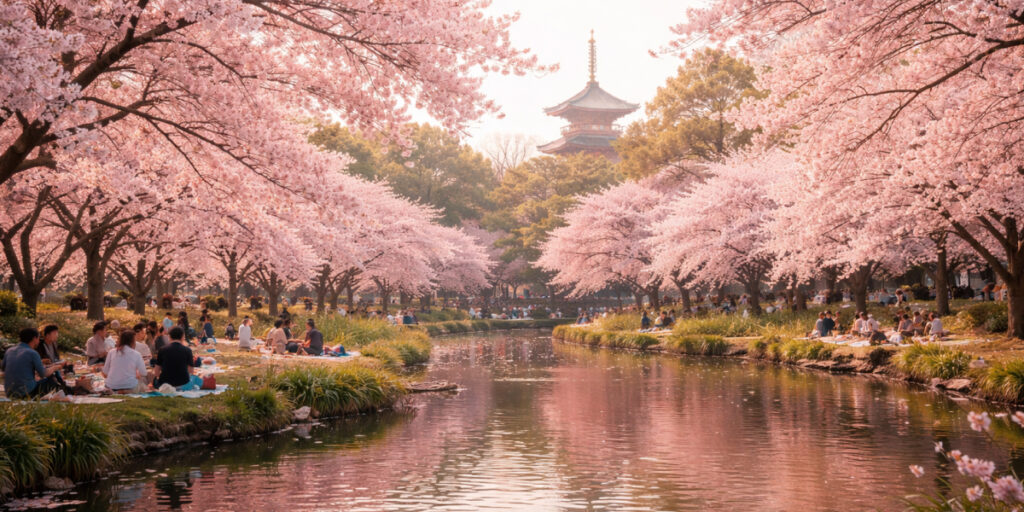
Sakura are the soft pink and white blossoms that open on cherry trees each spring, and they've carried meaning in Japanese culture for centuries — spring's arrival, renewal, and, more poignantly, the beauty of things that don't last. When they come out, parks, temple grounds, and entire city streets disappear under drifting petals, and the country slips into hanami — flower-viewing picnics under the trees, blue tarps and convenience-store snacks and all, which makes the season as much a social occasion as a sight to photograph. And because the blossoms hold for only about a week before they start to fall, getting your dates right is half the trip.
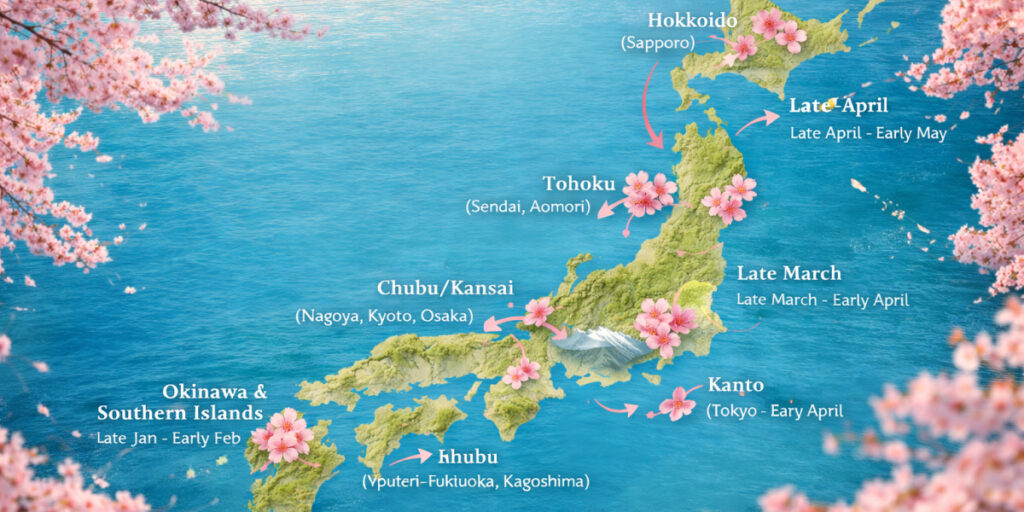
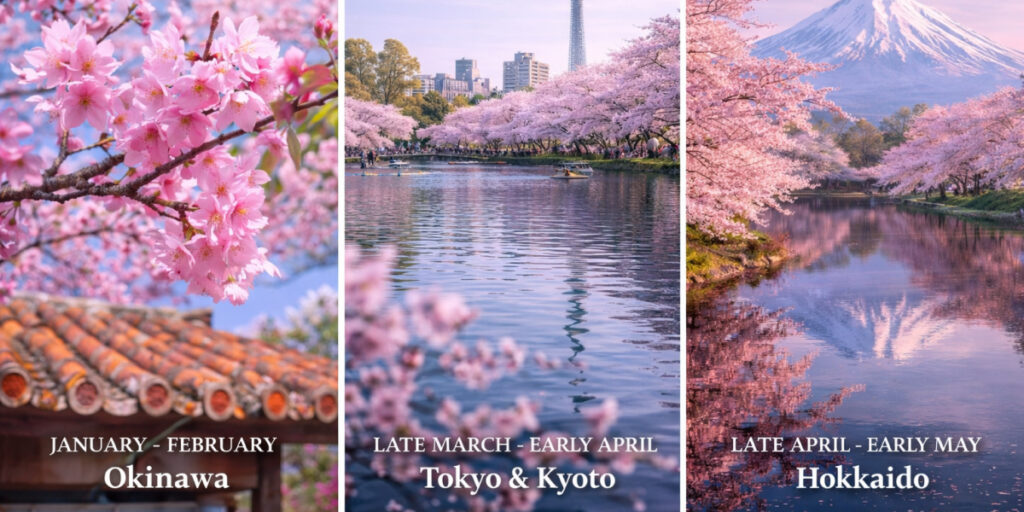
Japan runs from the subtropical south to the snowy north, so the bloom follows the warmth up the map over several weeks. Here's the typical timeline, region by region:
| Region | Typical Bloom Time |
| Okinawa & Southern Islands | Late Jan – Early Feb |
| Kyushu (Fukuoka, Kagoshima) | Mid-March |
| Chubu / Kansai (Nagoya, Kyoto, Osaka) | Late March – Early April |
| Kanto (Tokyo) | Late March – Early April |
| Tohoku (Sendai, Aomori) | Early – Mid April |
| Hokkaido (Sapporo) | Late April – Early May |
So the season runs from January in Okinawa all the way to May in Hokkaido, creeping north the entire time. Treat those windows as a guide rather than a promise, though — the real dates swing by a week or more each year depending on the weather, which is exactly where the forecast earns its keep.
This is the step that separates a perfectly-timed trip from an expensive near-miss, and it's the one most guides gloss over. Each year, Japanese forecasters publish a sakura forecast — the sakura zensen, or "cherry blossom front" — predicting bloom dates city by city, with the first estimates landing around January and sharpening as spring nears. Two words worth learning:
Both the Japan Meteorological Corporation and Weathernews run detailed trackers you can follow before you book and again once you're on the ground. The practical lesson is a hard one that plenty of travellers learn too late: don't lock in non-refundable dates six months out and trust the trees to play along. Choose a region, watch the forecast tighten, and if your dates are fixed, either leave a few days of slack or be ready to chase the bloom a little north or south when it comes early or late.
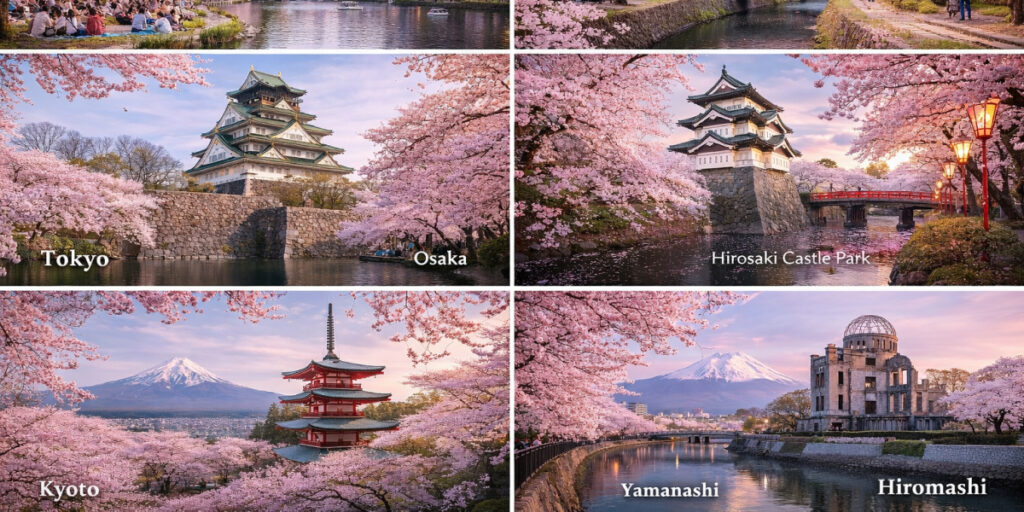
Six that reward the effort:
For most of the country, late March into early April is the sweet spot. Roughly:
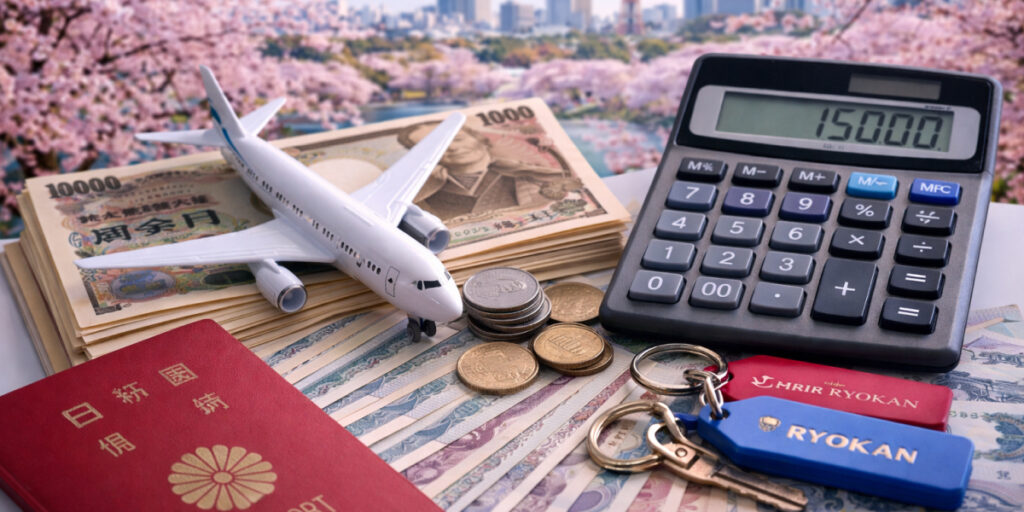
This is peak season, so price it in. Flights jump in spring, and hotels in Tokyo, Kyoto, and Osaka routinely run 30–50% above off-season rates, with boutique ryokans and central hotels gone weeks ahead. The offsetting piece of good news is the weak yen, which has made Japan better value for foreign visitors than it's been in years — so your food, transport, and entry fees stretch further even while the flights and rooms carry the peak-season markup. Book early and the premium stays reasonable.
Entry costs deserve a clear word, because the 2026 headlines muddled them:
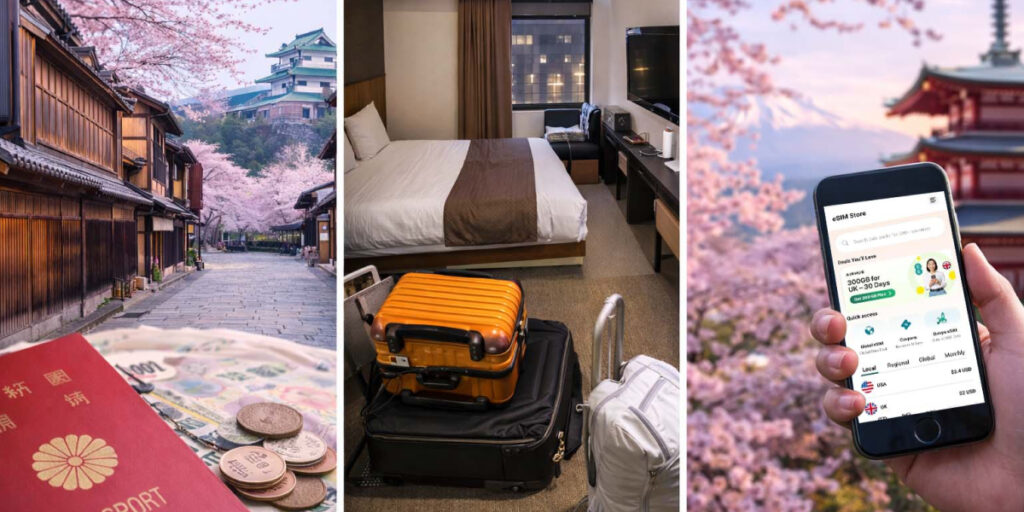
Even at peak prices, a few moves take the edge off:
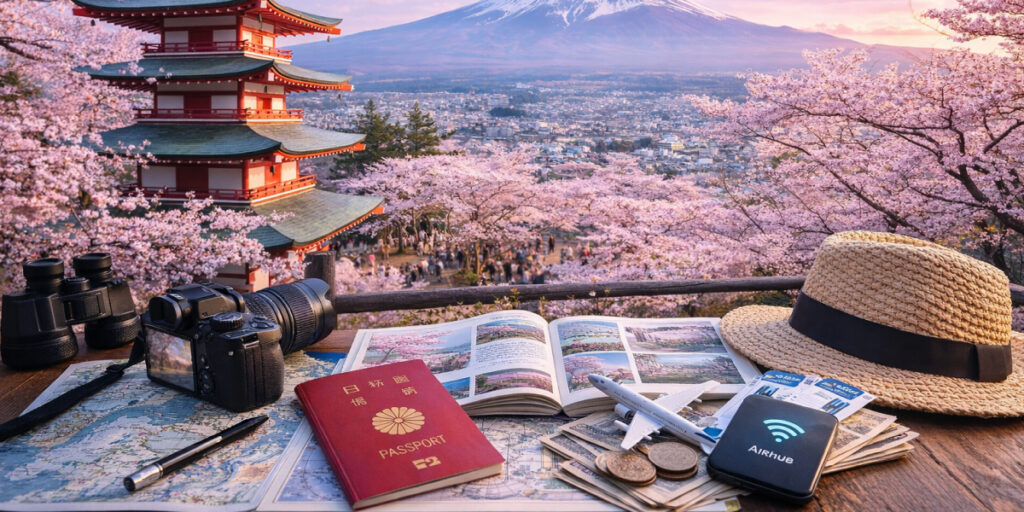
A sakura trip is a running loop of forecast-checking, decoding unfamiliar stations, and translating menus on the spot — which makes solid data less a convenience than a necessity. With eSIM Japan from Airhub you pick a plan in minutes, scan a QR code to install it before you leave home, and land already on a local network — no roaming bill, no SIM hunt. Tacking Korea onto the same trip? An eSIM Asia Pacific plan covers both on a single install.
It runs from late January in Okinawa to early May in Hokkaido, moving north with the warmth. For most of the country — Tokyo, Kyoto, Osaka — peak bloom lands in late March to early April.
Japanese forecasters publish an annual bloom prediction (the sakura zensen) city by city, updated from around January. Check the Japan Meteorological Corporation or Weathernews trackers, and aim for mankai (full bloom), usually five to seven days after the first blossoms open.
In any one place, full bloom holds for only about a week — a little longer in cool, calm weather. Nationwide it stretches from roughly January to May because the bloom keeps moving north.
Most Western travellers don't — the US, UK, Canada, Australia, and most of the EU get a free 90-day short-stay entry. The 2026 visa-fee rise only affects nationalities that require a visa. Everyone pays a small departure tax, which is included in the airfare. Check your passport's status on an official source.
The scenery is unmatched and the festival atmosphere is genuinely special — just go in expecting crowds and peak prices. Book early, watch the forecast, and it more than earns the effort.
Yes — you'll lean on it constantly for the bloom forecast, train schedules, maps, and translation. A prepaid eSIM installed before you fly is the simplest way to land connected without roaming charges.
Get your Airhub eSIM in minutes and travel without roaming surprises.
Download the Airhub app to purchase, manage and top up your eSIMs anytime, anywhere!