







Ready to try eSIMs and change the way you stay connected?
Download the Airhub app to purchase, manage and top up your eSIMs anytime, anywhere!
App exclusive5% off at checkout
Know the best time to visit Greece with this seasonal travel guide. Learn which months offer you the best deals in Greece & make your holidays affordable.

Here's the short version, because it's the thing everyone actually wants to know: the best time to visit Greece is late April to mid-June or September to mid-October. Warm, settled weather, a sea you can swim in, a fraction of the July–August crowds, and prices that haven't been marked up for peak season. High summer is gorgeous, but it's hot, heaving, and dear. Winter is the cheapest stretch of all — just know that a lot of the islands more or less close up shop.
That's the verdict. The rest of this guide is the detail behind it: what each season really feels like on the ground, the weather and sea temperatures through the year, when the big festivals land, the right timing for whatever you came to do, and how to pull the whole thing off cheaply. Empty beaches, long days among ancient ruins, or the lowest fare on the board — there's a month built for each.
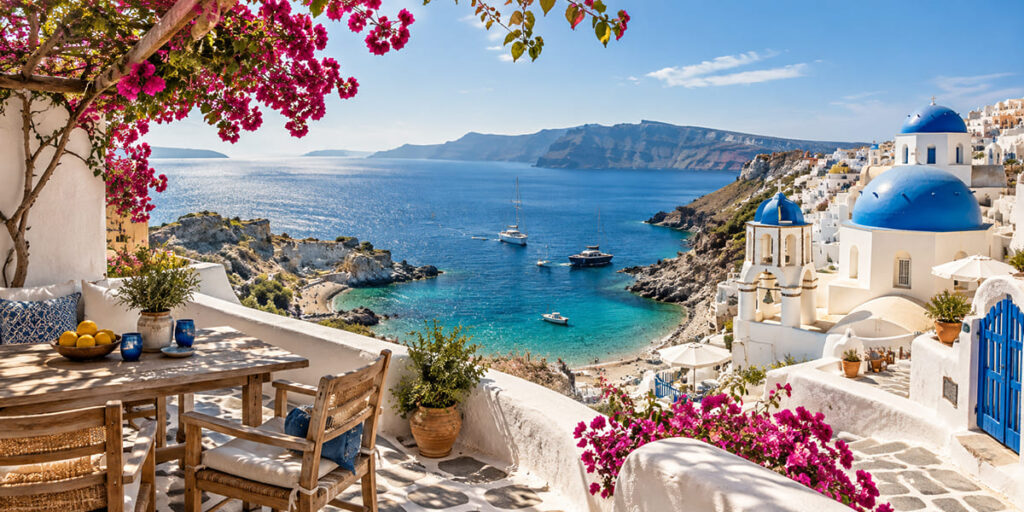
For most people, the sweet spot is the shoulder seasons — late April to mid-June and September to mid-October. The weather is warm without being punishing, the sea is swimmable by late spring and still holding its heat come autumn, the crowds stay manageable, and prices sit comfortably below peak. Set on long beach days and late nights out? High summer delivers — book early and go in with eyes open. And if the budget is the whole point of the exercise, the quiet winter months undercut everything else.
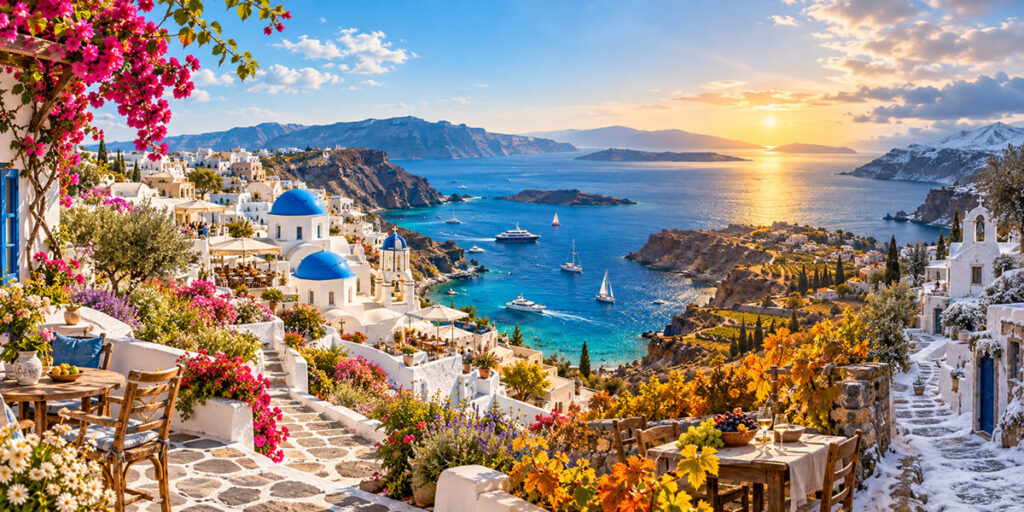
Here's the year at a glance — weather, sea temperature, crowds, and relative cost side by side.
| Season | Months | Typical daytime temp | Sea temp | Crowds | Cost | Best for |
| Spring | Apr – mid-Jun | 18–28°C / 64–82°F | Cool, warming to ~20°C by June | Light, building | Low–moderate | Sightseeing, hiking, early beaches, wildflowers |
| Summer | mid-Jun – Aug | 28–35°C / 82–95°F | Warm, 24–26°C | Peak | Highest | Beaches, island-hopping, nightlife |
| Autumn | Sep – Oct | 20–29°C / 68–84°F | Warmest of all, ~24–25°C | Easing | Moderate, dropping | Warm-sea swims, sightseeing, wine harvest |
| Winter | Nov – Mar | 8–16°C / 46–61°F | Cold | Very light | Lowest | City breaks, budget trips, Crete/Athens |

Line a trip up with the right festival and a good holiday turns into one you'll be talking about for years. A few of the big ones worth planning around:
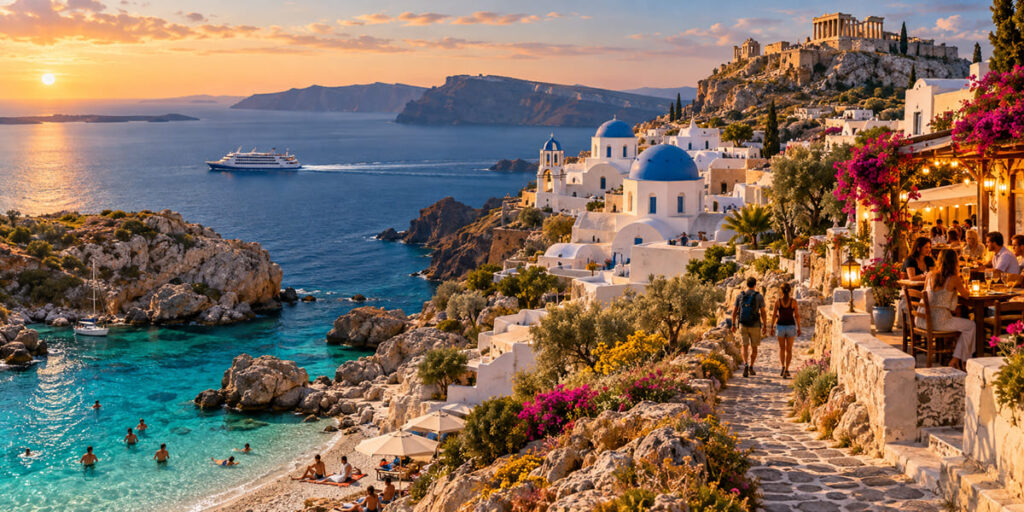
Ask five travellers for the "best" month and you'll get five answers — because it really does come down to what you're there to do:
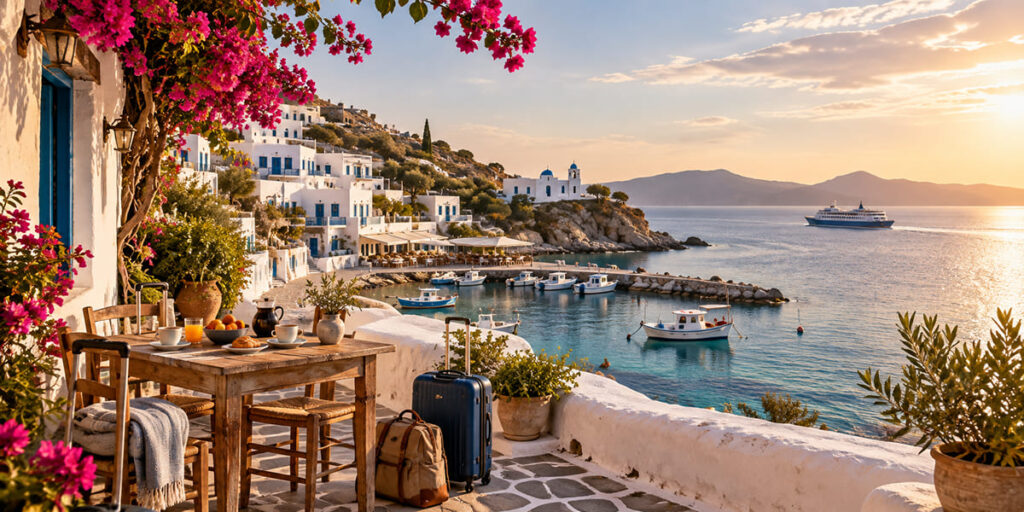
If price is the deciding factor, the off-season (November to March) is where the rock-bottom rates live — while the shoulder months (April–May, October) give you the best trade-off between a cheap trip and a pleasant one. Either way, a few habits keep the total down:

Two practical things the glossy guides tend to skip. The first is the Meltemi — a strong, dry north wind that sweeps the Aegean, mostly from mid-July through August. It takes the edge off the heat and polishes the sky to a hard blue, but it also kicks up the sea, turns exposed beaches into a sandblasting, and now and then delays or cancels ferries, the Cyclades especially. For island-hoppers and anyone who gets queasy on the water, it's worth building into the plan.
The second is that ferries run on a season. Schedules are at their fullest and most frequent from roughly late May to September; come winter, a lot of island routes thin to a couple of sailings a week or stop altogether. If your whole trip hinges on hopping from island to island, the shoulder-to-summer window is the safe one.

Whenever you end up going, you'll want data the moment you land — for maps, ferry times, a dinner reservation, or translating a taverna menu that's chalked up in Greek. Rather than queuing for a local SIM or gambling on roaming, a Greece eSIM lets you sort it before you fly: install the plan, scan the QR code, and you're online the second you reach Athens or step off onto an island.
And if you're the type who navigates by phone and shares photos all day — or you're bouncing between several islands — an eSIM with unlimited data means you're not rationing megabytes while you find your way through an unfamiliar harbour town.
For most travellers, late April to mid-June and September to mid-October. You get warm weather, a swimmable sea, thinner crowds than peak summer, and lower prices. July and August are hottest and busiest; winter is cheapest but quieter, with many island resorts closed.
September is hard to beat — the sea is at its warmest after summer, the crowds have eased, and prices are on the way down. May is the pick if you'd rather have greener landscapes and cooler weather for sightseeing.
The off-season, roughly November to March, has the lowest flight and hotel prices — though many island hotels and restaurants close, so cities like Athens, Thessaloniki, and Crete make the better winter bases. For cheap and pleasant, aim for April, May, or October.
If heat and crowds aren't your thing, July and August — temperatures peak, the popular islands pack out, and prices top out with them. Book well ahead if you have to travel then, and keep an eye on the mid-July to August Meltemi winds affecting ferries.
By late spring it's swimmable and warming; in autumn it's at its warmest, often comfortable well into October. Crete and Rhodes hold their warmth later in the year than the Cyclades.
Not strictly — but it's the easiest way to stay online. A travel eSIM spares you the airport SIM queue and the roaming bill: set it up at home and you land already connected for maps, ferry times, and bookings.
Get your Airhub eSIM in minutes and travel without roaming surprises.
Download the Airhub app to purchase, manage and top up your eSIMs anytime, anywhere!