











Ready to try eSIMs and change the way you stay connected?
Download the Airhub app to purchase, manage and top up your eSIMs anytime, anywhere!
App exclusive5% off at checkout
Discover the key benefits of eSIM for smarter connectivity, including easy activation, better security, and device compatibility.
There's a particular flavor of stress that hits the moment you land somewhere new and realize you have no signal no map, no ride, no way to tell anyone you arrived. For years the only fix was the airport SIM ritual: find the kiosk, queue, hand over your passport, then perform minor surgery on your phone with a bent paperclip because the ejector pin is, of course, at home. Plenty of seasoned travelers still flinch at the memory.
That ritual is quietly dying, and good riddance. An eSIM does the same job digitally buy a plan, scan a code, you're online without the plastic or the queue. What follows is a straight look at the real benefits of eSIM, how it compares to a physical SIM, and the part most brand guides conveniently skip: the handful of cases where a traditional SIM still earns its place.
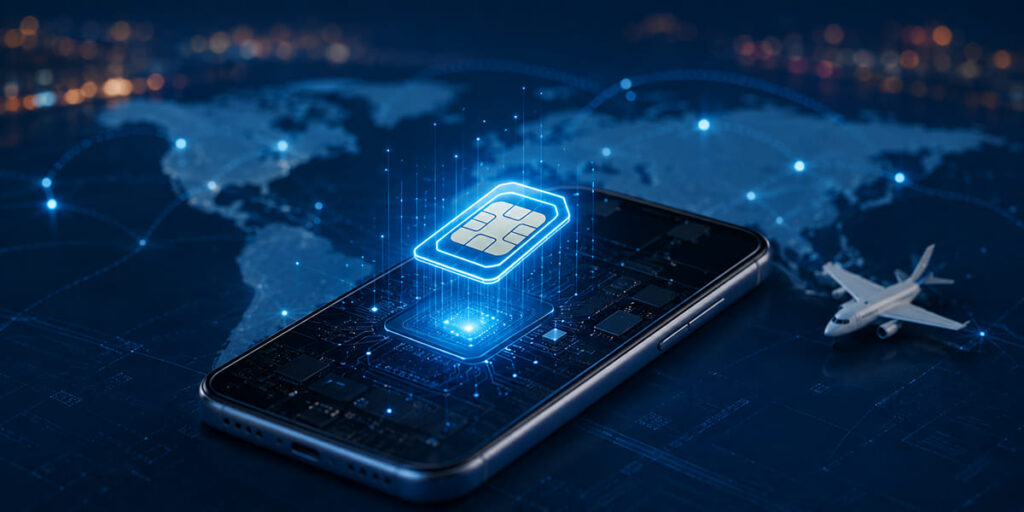
An eSIM short for embedded SIM is a SIM card that lives in software instead of plastic, built straight into your phone. Nothing to swap, no tray to lever open, no fingernail-sized chip to lose on an airport floor. You download a plan directly to the device, keep several stored at once, and switch between them without touching hardware. Want the longer explanation first? Here's a primer on what is eSIM.
Worth untangling one thing early, because it genuinely confuses people: "eSIM" gets used for two different ideas. One is the technology the embedded chip already sitting in your phone. The other is a travel eSIM, a prepaid data plan (Airhub's included) that runs on that chip to get you online abroad without roaming. When travelers talk about the benefits, it's almost always that second meaning they have in mind and it's the one this guide leans on.
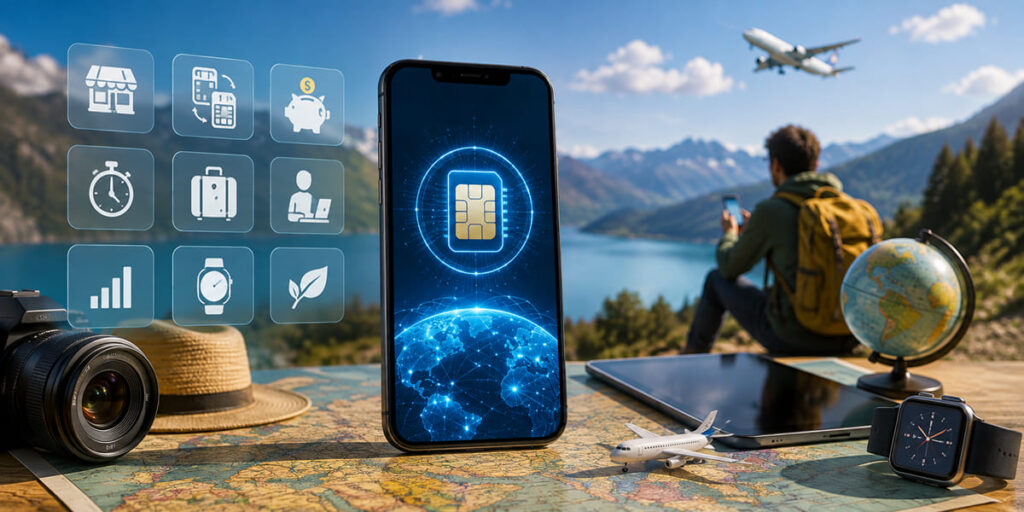
Strip away the marketing and here's what actually converts people:
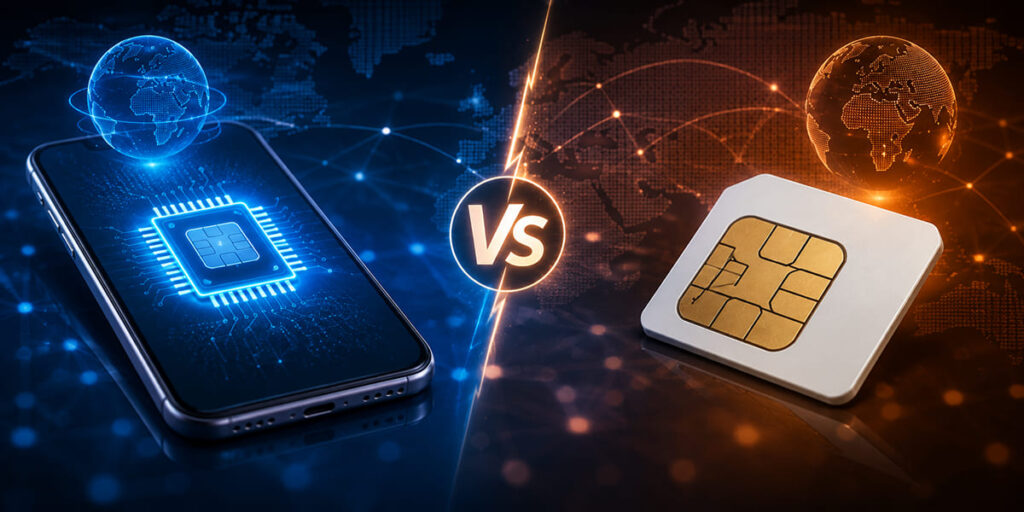
Weighing eSIM against a physical SIM? The short version fits in a table:
| Feature | eSIM | Physical SIM |
| International use | Buy plans online, skip roaming | Pricey roaming, or buy a local SIM |
| Multiple profiles | Store several, switch anytime | One at a time |
| Risk of loss/damage | None — nothing to remove | Can be lost or damaged |
| Environmental impact | Low | Plastic card + packaging |
| Setup time | Minutes, online | Often a shop visit and paperwork |
For anyone who travels often or splits life between countries, the case for eSIM over a physical SIM is lopsided. But "lopsided" isn't "universal," and pretending otherwise would be doing you a disservice so here are the exceptions.
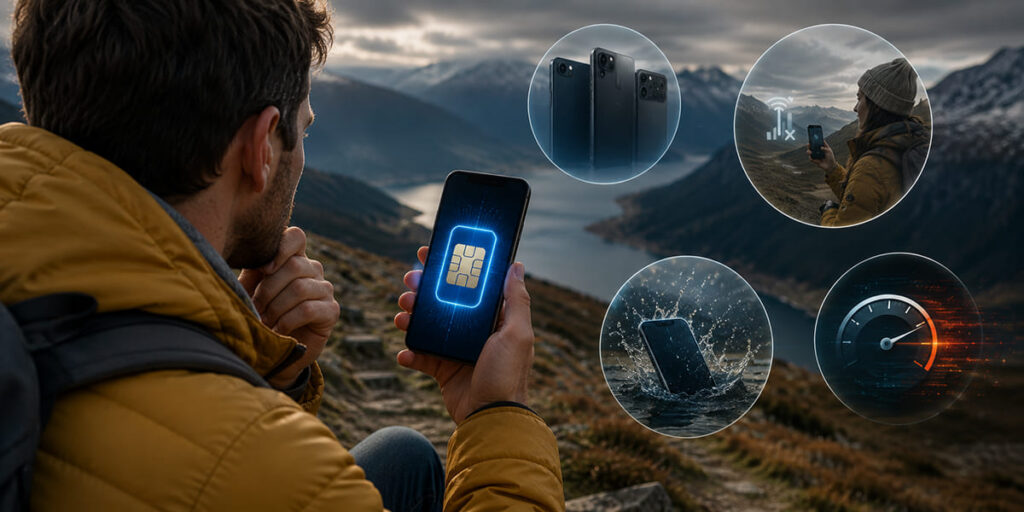
For most travelers, most of the time, an eSIM is the better call. A guide worth trusting also tells you when it isn't:
None of this sinks the case for typical travel. They're just the honest edges, laid out so you can decide with your eyes open rather than discover them at the worst moment.
Still undecided? A few travelers it suits almost perfectly:
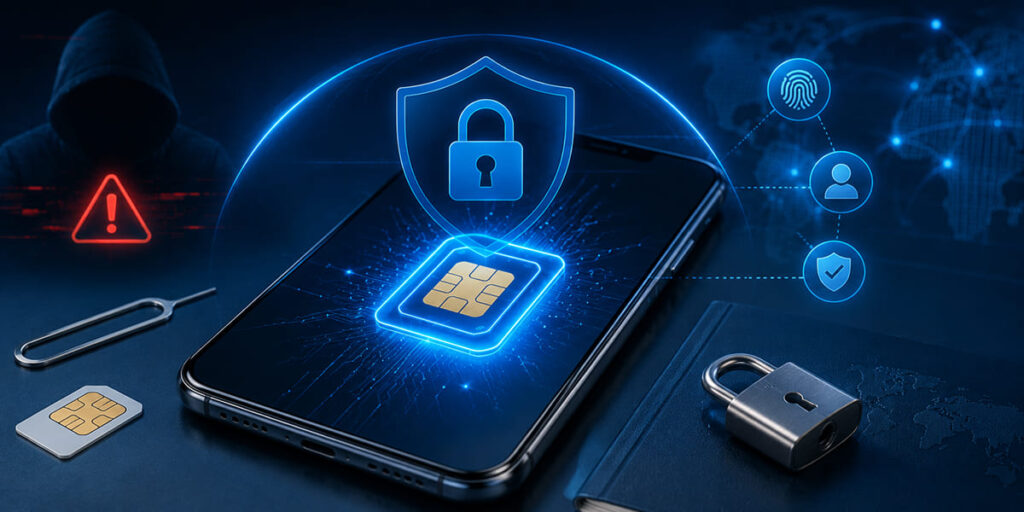
Yes eSIMs are safe and can be more secure than physical SIM cards in some ways. Since the SIM profile is built into your device, it cannot be physically removed or swapped, making SIM-swap attacks more difficult. These attacks can allow criminals to take control of phone numbers, access accounts, and intercept verification codes. With an eSIM, your profile is protected through device security features, and trusted providers require authentication before profiles can be transferred or removed.
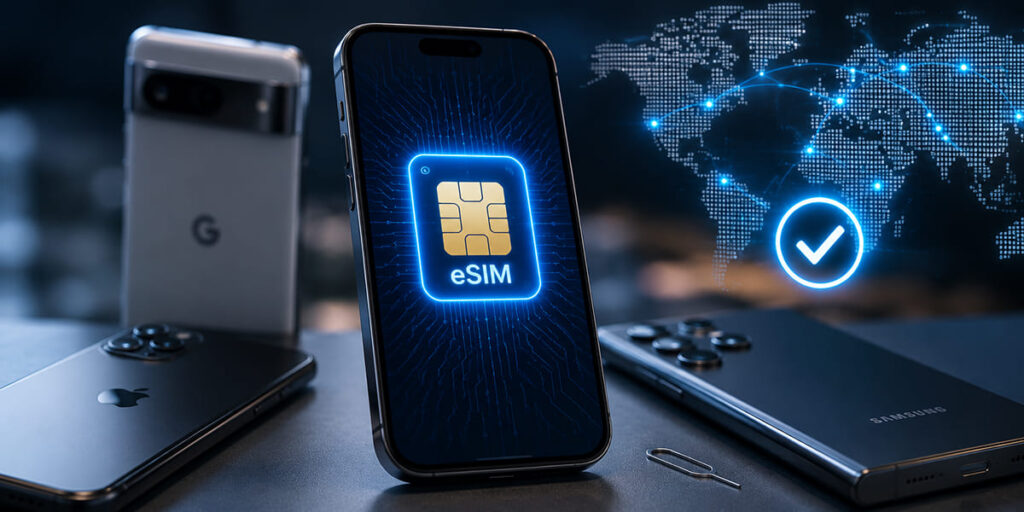
Not sure your phone can run one? Three quick checks:
2. Check the model. Apple has supported eSIM since the iPhone XS, iPhone XS Max, and iPhone XR (2018), while many Samsung Galaxy, Google Pixel, and other flagship smartphones also support eSIM. However, availability can vary by model, region, and market.
3. Mind the carrier side. Carrier-based eSIM plans still require support from your mobile network provider. Travel eSIMs from providers like AirHub typically work independently, without needing your home carrier to enable eSIM service.
Want the full rundown? Here's how to check if your device supports eSIM.
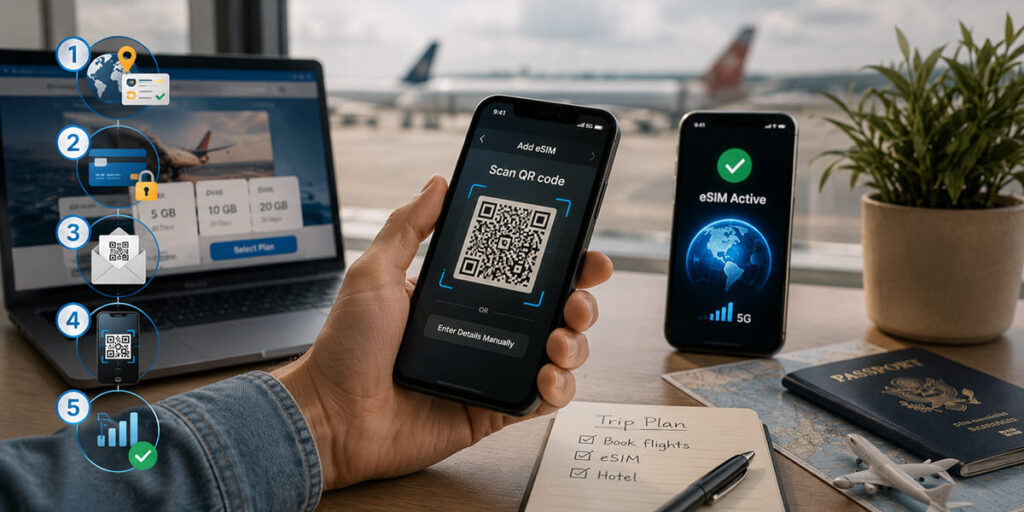
Buying one online is faster than most people expect:
One thing to get straight carrier eSIM or travel eSIM? Your home carrier can often convert your existing plan to an eSIM, but that keeps you on the same roaming rates once you leave the country. A dedicated travel eSIM connects you to local networks at local style prices which is the difference that actually shows up on your bill.

If you want a reliable place to buy an eSIM online, Airhub is worth considering. Airhub offers eSIM data plans across 190+ countries and regions, with flexible options to suit different travel needs. Whether you're traveling across continents or need local data for a short trip, you can choose a plan, set it up before arrival, and avoid the hassle of buying a physical SIM at the airport. Heading somewhere specific? A local destination eSIM can often be a better fit. Once your trip ends, learn how to turn off an eSIM to prevent unwanted data usage.
Instant digital activation, no card to lose, room for several plans on one device, and real roaming savings when you travel all sorted online in minutes.
Not really no more than a physical SIM. Both lean on the same network hardware, so battery life tracks with signal strength and background apps, not the type of SIM. Running two active lines at once can nudge usage up a touch.
Your mobile data just stops until you top up or buy a new plan. No nasty surprises on a bill prepaid plans don't keep charging once the data's gone.
Instead of paying your home carrier's roaming rates, you buy a local or regional plan at lower prices often before you leave home and connect straight to networks at your destination.
Yes, though it's a couple of steps rather than a card swap: you re-download or transfer the profile, sometimes with the provider's help. Handy to know before you upgrade, or if a phone gives out on you.
Usually most plans allow it just like a regular SIM. It does depend on the specific plan and provider, so check the terms before you count on tethering.
Get your Airhub eSIM in minutes and travel without roaming surprises.
Download the Airhub app to purchase, manage and top up your eSIMs anytime, anywhere!