









Ready to try eSIMs and change the way you stay connected?
Download the Airhub app to purchase, manage and top up your eSIMs anytime, anywhere!
App exclusive5% off at checkout
Looking for cool facts about Mexico? From high-altitude stadiums to canyons deeper than the Grand Canyon, discover what makes it.
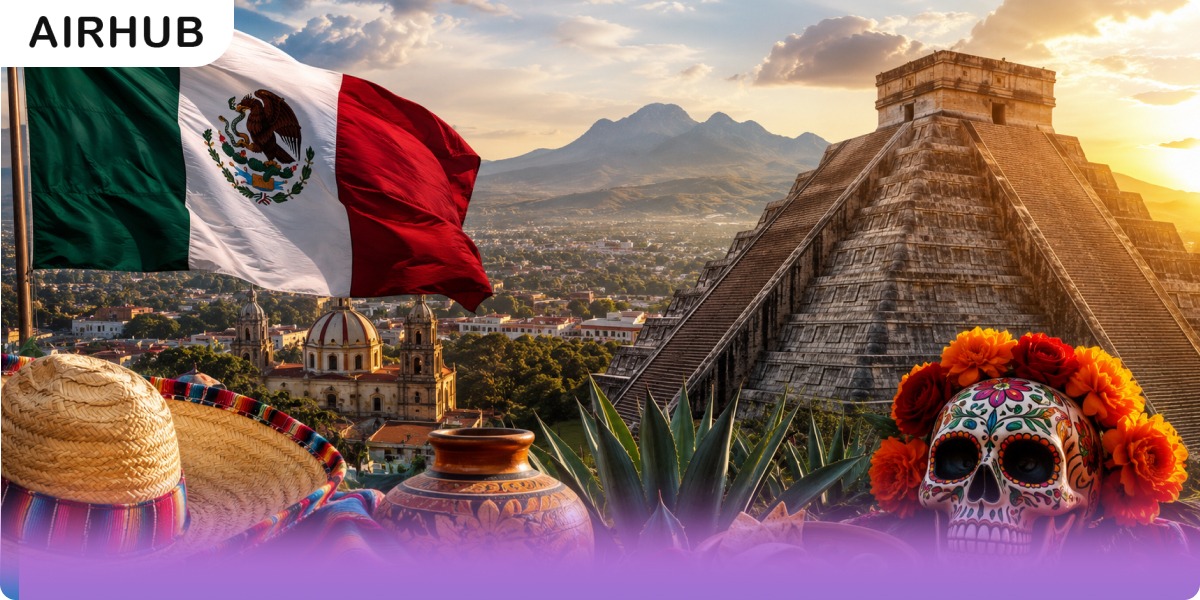
Mexico’s heritage cannot be summarized in a few lines, as it spans a domain as vast in time as it is in its geographical boundaries. The Mexican culinary and cultural heritage amounts to far more than our imagination, from providing us with delicious chocolate through its indigenous cacao plantations, to firing up these same taste buds through the tang and spice of the salsa sauce. One of the cool facts about Mexico is that it is home to ruins built by civilizations that tracked the stars centuries before telescopes existed, and to street markets where the smell of roasting chiles hits on the corner of each avenida.
Mexico’s history is in no way another lecture to drown out, with instances representing the intricacies of real life arising often. So don the charro hat and get ready to dance to the Mexican Mariachi band. Uno, dos, tres, dive into the magnificence of Mexican beauty and digress.
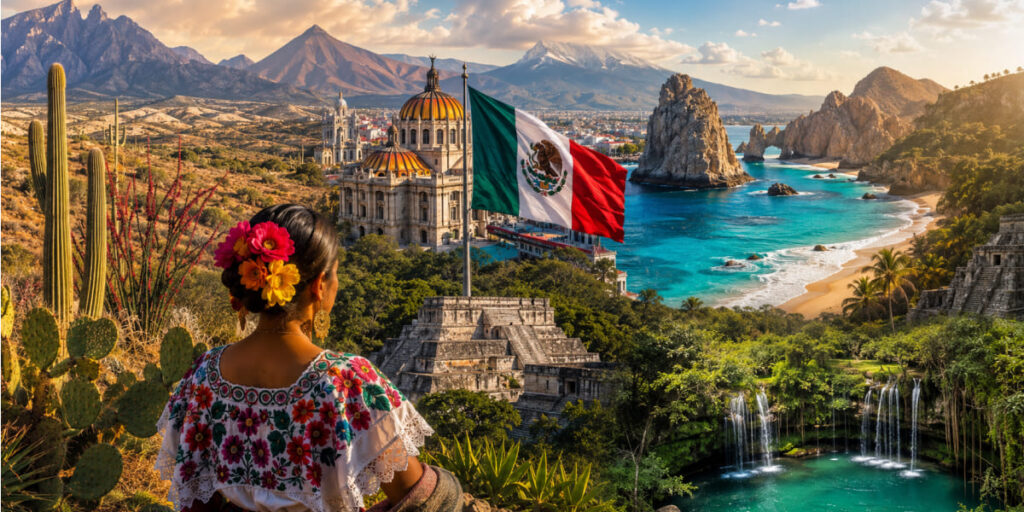
Mexico harbours great diversity within its borders, whether it is the physical features of its terrain or the varying demographics of its citizens; interesting things about Mexico never cease to exist. Its terrain runs from the arid stretches of the Sonoran Desert in the north to dense tropical rainforest in Chiapas, from twin mountain ranges (the Sierra Madre Occidental and Oriental ), down to volcanic highlands and two entirely different coastlines on the Pacific and the Gulf.
That topographic range isn't incidental; it's part of why so many distinct civilizations, from the Olmec to the Maya to the Aztec, rose in different pockets of the same country rather than as one unified culture from the start. However, the unification in the spirit of the country transcends any boundary, as all Mexicans remain eager to convert any stranger into a “Hermano”.
There's a version of Mexico for almost every kind of traveler, and through this blog we will unfold this mystery for everyone to perceive, so your travel goals can remain in tune with what the country offers. This isn't going to be a usual roundup of interesting things about Mexico filled with redundant features; instead, it celebrates the festivity of a Mexico holiday with a gusto that captures the Mexican vibe.
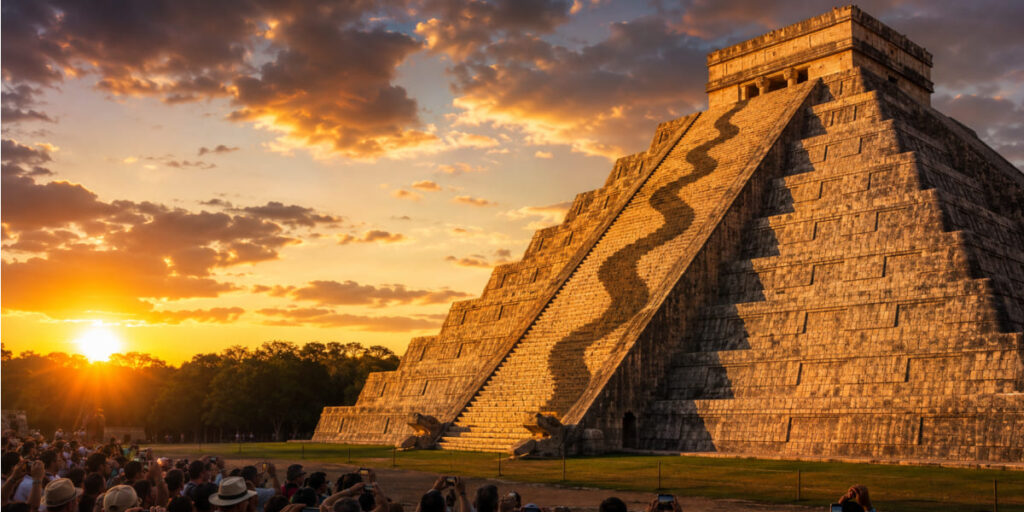
Twice a year, at the spring and autumn equinoxes, the setting sun hits the staircase of El Castillo at Chichén Itzá. The result is a shadow that slithers down like a serpent, in an astonishing effect that Maya astronomers engineered roughly a thousand years ago, with no instruments involved. The illusion lasts minutes, but its picturesque beauty is precise enough that visitors plan entire trips around it. In 2007, the site was voted one of the New Seven Wonders of the World.
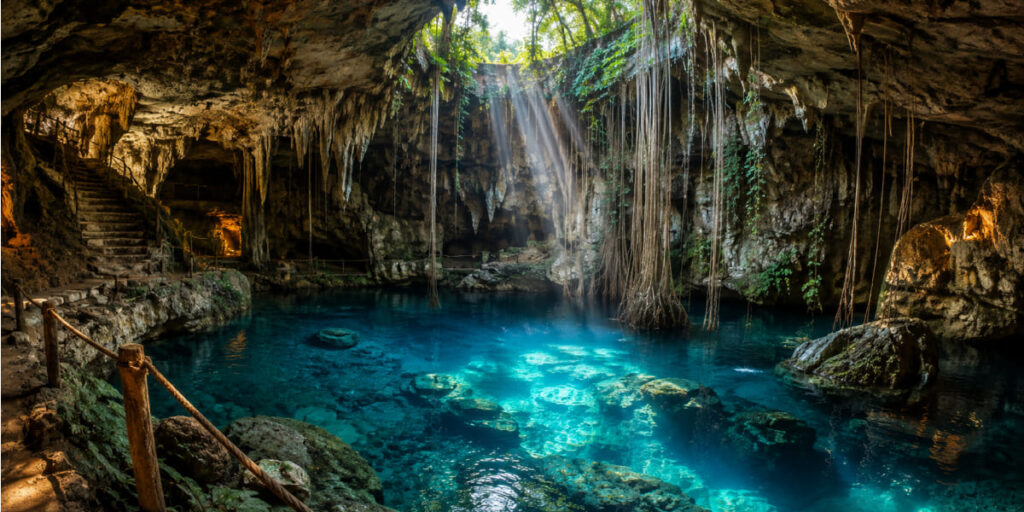
Cenotes are essentially sinkholes where collapsed limestone reveals underground rivers; these uncanny but simultaneously beautiful wonders dot the Yucatán Peninsula, and the Maya. It is popularly believed that they open straight into Xibalba, the underworld, in Mexican folklore. Archaeologists have pulled offerings, pottery, and human remains from their depths, remarking its importance since ancient times. A swim inside this crystal-clear water forms a part of the most interesting things about Mexico
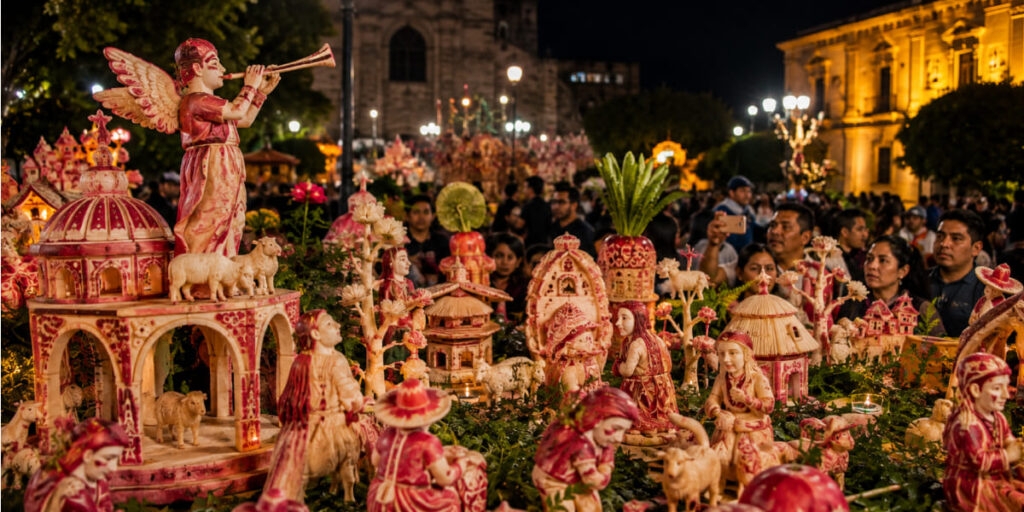
The festival scene in Oaxaca is as unique as it is prevalent. Every December 23rd, Oaxaca holds La Noche de los Rábanos, where farmers carve giant radishes into nativity scenes, folk tales, even miniature villages, which culminates in a single-night competition. Started in the 1800s as a way to show off an unusually large harvest, it has since turned into a full-blown cultural event.
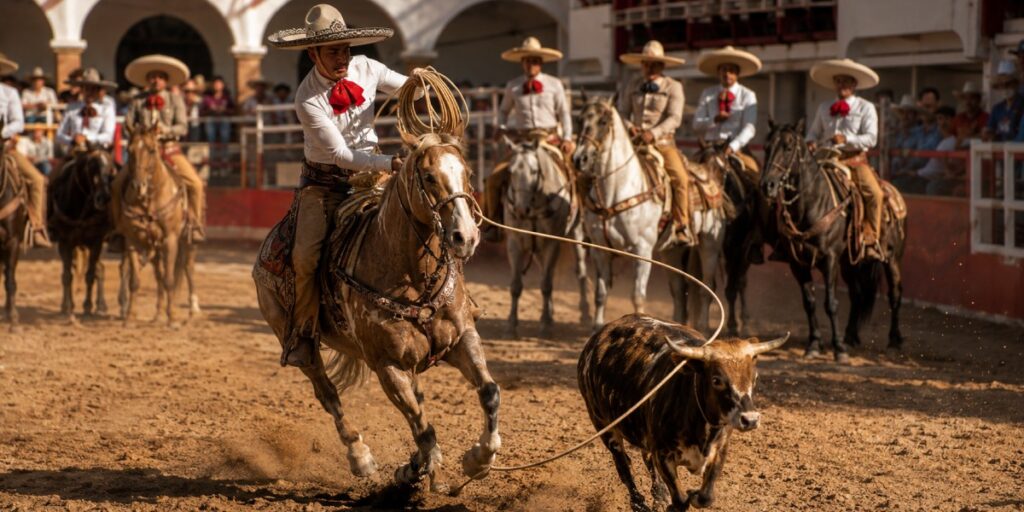
Charrería, Mexico's official national sport, is built on precision roping and horsemanship, performed by charros in silver-buttoned suits exhibiting skills that started once as ranch necessities on colonial haciendas before becoming a ceremony, celebrating a sign of those times. Bullfighting arrived here with Spanish rule and is still practiced, and still debated, mainly in Mexico City and Aguascalientes.
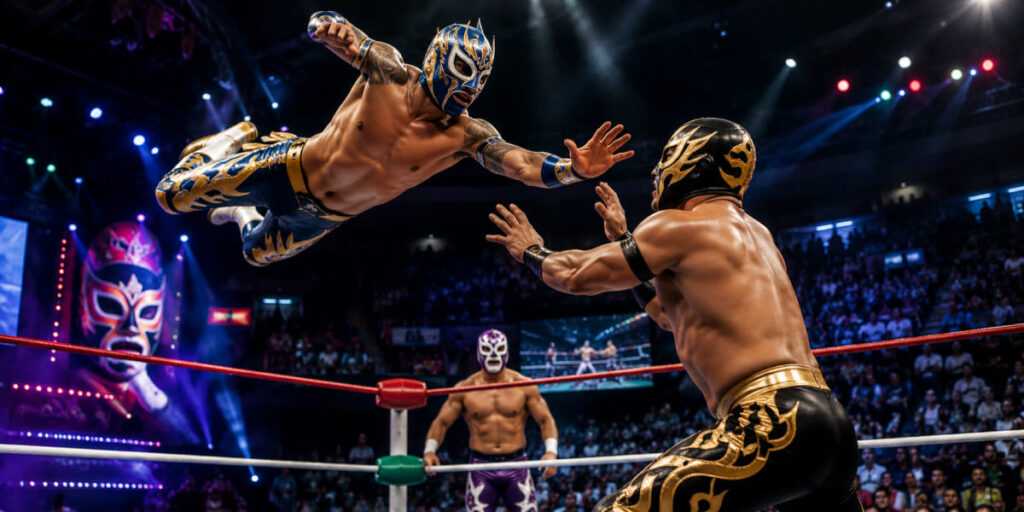
In lucha libre, the mask is ironically the identity, as the culture demands this attire. Fighters wear elaborate designs based on gods, animals, or legends, while featuring in a "mask vs. mask" match, featuring incredible displays of flexibility and acrobatics, reminiscent of Rey Mysterio of WWE. Losing the mask in this ring broadcast on live television is considered worse than losing the fight. Some luchadores have even kept their real faces hidden their entire careers.
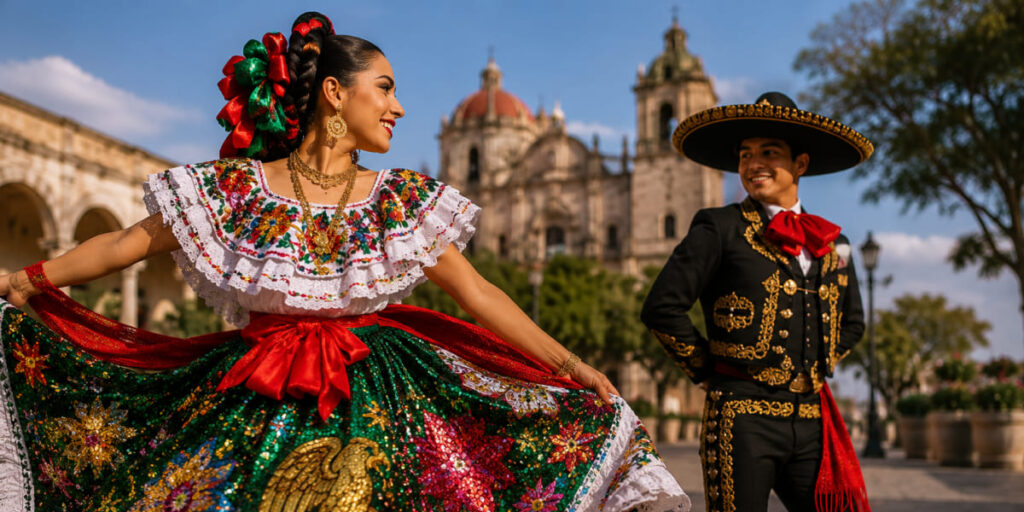
The China Poblana dress, which can be distinguished by a sequined skirt, embroidered blouse, and the charro suit, is widely recognized as Mexico's most recognizable traditional look, still worn at festivals and ballet folklórico shows today.
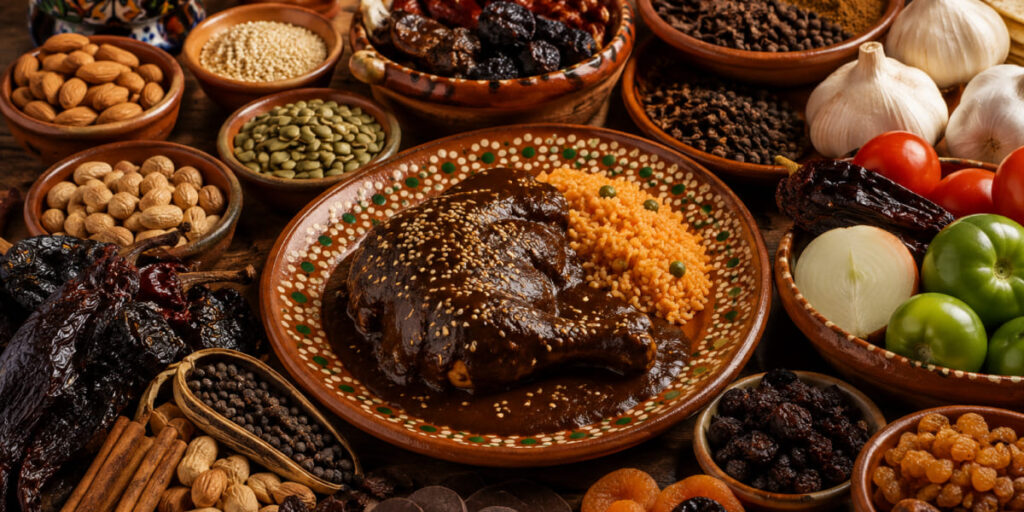
Mole poblano is made up of a delicious amalgamation of more than twenty ingredients, namely, chilies, chocolate, nuts, spices, fruit, combined for hours, sometimes stretching to a full day, for its proper simmering. Legend says nuns in a Puebla convent invented it on the fly for a visiting archbishop.
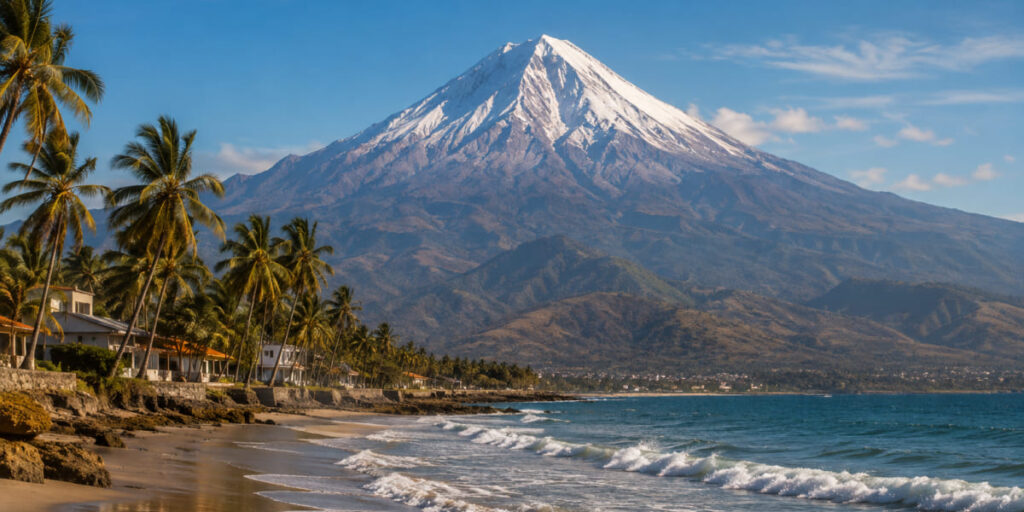
Pico de Orizaba, Mexico's tallest peak at over 18,000 feet, is a dormant volcano and North America's third-highest mountain after Denali and Mount Logan. On a clear day, its glacier-capped summit is visible from the Gulf Coast. This variation gives us a snapshot of how much elevation this country fits into a small footprint.
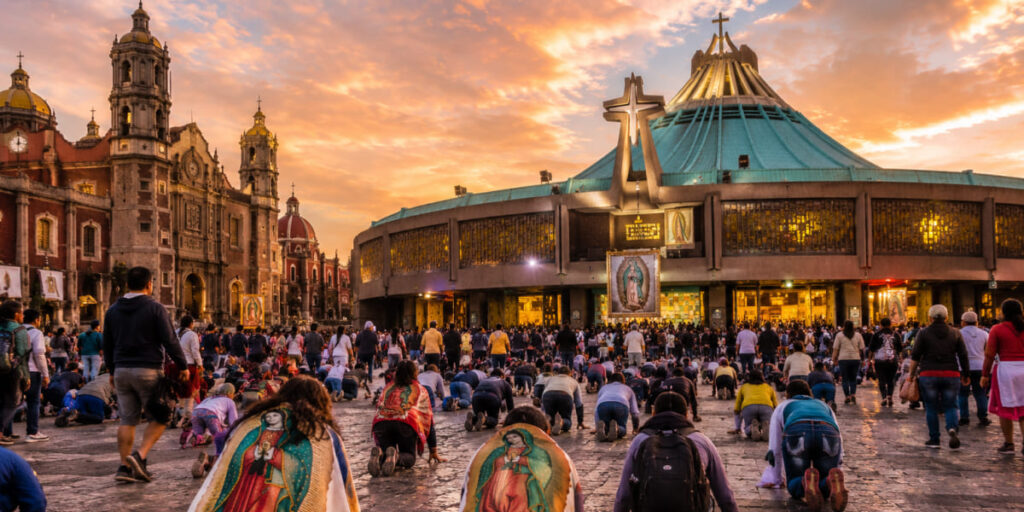
The Basílica de Guadalupe in Mexico City draws an estimated 20 million pilgrims a year, which is significantly more than any other Catholic site on Earth, Vatican included. The location marks where the Virgin of Guadalupe reportedly appeared before Juan Diego in 1531. Every December 12th, some pilgrims cover the final stretch on their knees as an ultimate gesture of devotion.
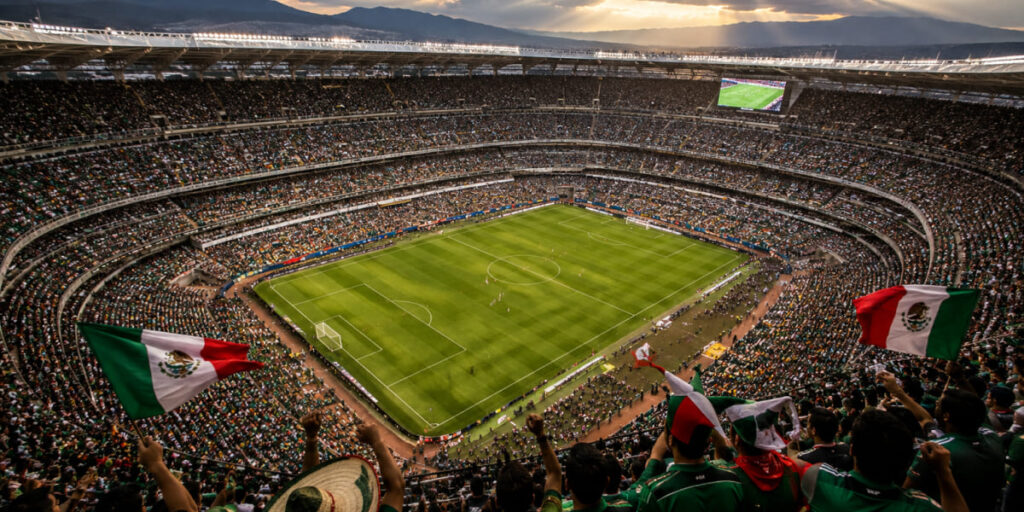
Estadio Azteca sits roughly 2,200 meters (7,200 feet) above sea level, thin enough to cut available oxygen by nearly a quarter and wear down unacclimatized visiting teams for decades. It hosted the 1970 final (Pelé's third title) and the 1986 final, tied to Maradona's "Hand of God" a round earlier. In 2026, it became the first stadium ever to host World Cup matches across three separate tournaments. The atmosphere of the stadium is scarce, tense, and punctuated with the cries of the perennial passion of the Mexican footballing fans.
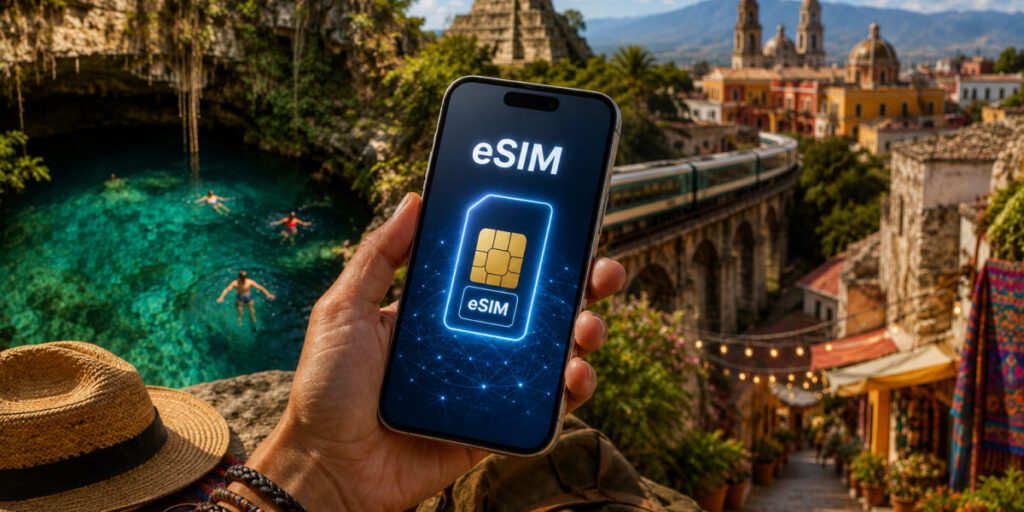
Between canyon railways, cenote swims, and street food crawls through unfamiliar neighborhoods, the last thing you want is to lose signal right when you need a map, a translation, or a ride home. This is where an Airhub eSIM earns its reputation as a keeper, providing essential advantages such as:
From a pyramid engineered to track the sun to a wrestling tradition where a mask carries more weight than a title belt, these cool facts about Mexico only scratch the surface of a country built on layers of historical, linguistic, geological, and culinary culture. For travelers comparing options, an upfront setup, transparent coverage, and one consistent app experience are often the differences between an eSIM that quietly works and one that becomes its own travel hiccup.
Before you land, it's worth setting up an Airhub eSIM, so the only thing you're navigating is the destination itself, not your signal bars, because none of these facts are worth much if you can't actually get to them, connected and ready to explore.
A few that surprise people most: the Estadio Azteca has now hosted World Cup matches across three separate tournaments, at an altitude that genuinely wears down visiting players. There's also a canyon system in Chihuahua that's actually bigger than the Grand Canyon, and a salamander native to Mexico City's canals that can regrow parts of its own brain.
Ask around and food usually comes up first as it's one of the few cuisines with its own UNESCO recognition. After that, it's the ruins left behind by the Maya and Aztec, celebrations like Día de los Muertos, and a regional variety in music and craftsmanship that shifts noticeably from one state to the next.
Soccer gets the crowds, but charrería, a rodeo style sport built around roping and horsemanship, performed in traditional charro attire, is the one officially recognized as the national sport. You'll see it more at regional fairs and haciendas than on national television.
Mole poblano is the one that takes the longest to make properly, sometimes a full day and over twenty ingredients. Tacos al pastor are the street-food staple most visitors end up craving again once they're home, and pozole is worth seeking out if you're somewhere with cooler evenings.
Yes, definitely. Marked by vibrant cities like Mexico City, Cancún, and Puerto Vallarta, each having its niche sense of tradition and celebration. The country as a whole has developed immaculate tourism infrastructure, so any itinerary does not need to be built from scratch. Smaller towns like Taxco or Oaxaca are still manageable for a first trip; they just take a little more planning around transport and timing.
Get your Airhub eSIM in minutes and travel without roaming surprises.
Download the Airhub app to purchase, manage and top up your eSIMs anytime, anywhere!