









Ready to try eSIMs and change the way you stay connected?
Download the Airhub app to purchase, manage and top up your eSIMs anytime, anywhere!
App exclusive5% off at checkout
Generate New Revenue Systems with the eSIM Reseller Program for B2B Marketers. Explore your any Business with Airhub's eSIM reseller program at lowest cost.

Here's a pattern worth noticing: the moment a traveler lands abroad, the first thing they reach for is data and most would far rather buy it from a brand they already trust than stand in an airport kiosk line for a local SIM. That gap is exactly what an eSIM reseller program exists to fill. You sell mobile data plans under your own name, your provider quietly runs the network and the technology, and connectivity stops being the thing customers complain about and starts being a line on your revenue.
Stripped of jargon, an eSIM reseller program is simply a partnership: you buy eSIM data wholesale and sell it to your customers as your own. You own the front end the pricing, the brand, the relationship while the provider handles the infrastructure underneath. What follows is the practical version: who it actually works for, the models you can choose between, how the economics really shake out, and how to get started.
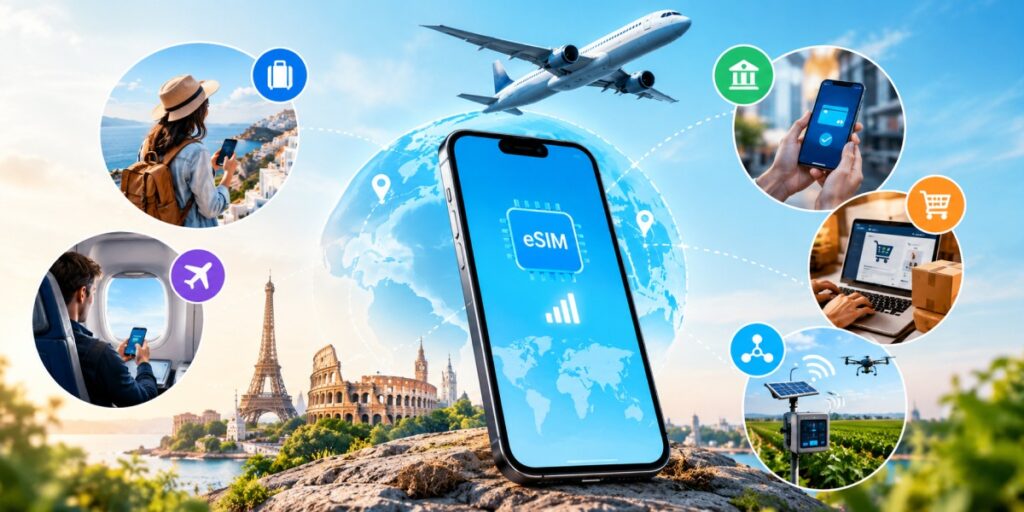
This isn't a telecom only game not anymore. Reselling eSIMs makes sense for almost any business whose customers travel or carry connected devices, because it takes an expensive roaming headache and turns it into a branded product you actually profit from. A few of the businesses doing it well:
Notice the thread running through all of them: the customers are already there. A reseller program just hands you something new and genuinely in demand to put in front of them.
Before anything else, you have to decide how you want to sell, because that choice shapes everything that follows and providers don't all offer the same routes. Airhub's own partner options include Partner Programs, a Voucher Program, and Co-Branding.
Reseller dashboard or platform a ready-made portal where you buy, distribute, and manage eSIMs with no technical build at all. The fastest start if you don't have developers to spare.
So which one is right? A rough map: travel agencies usually want a white-label store or a dashboard; a fintech or app wants the API; a retailer leans toward vouchers; a creator fits the affiliate route. And these aren't mutually exclusive; plenty of resellers run an API inside their app and hand out vouchers for a seasonal promotion.
The upside here is real — but the fastest way to lose a serious B2B reader is to wave your hands about "huge margins," so let's be straight about how the money actually behaves.
Your margin comes from the gap between wholesale and retail: you buy data at a wholesale rate, set your own retail price, and keep the difference. How wide that gap runs depends on your provider and your volume, which is why "attractive margins" is a number to pin down, not a promise to take on faith.
The startup side is genuinely light, no physical inventory, no SIM cards to ship, setup that's almost entirely digital. That's the whole reason a reseller can go live in a fraction of the time and cost it takes to build connectivity from scratch. Minimums, meanwhile, cut both ways: some programs ask for none at all, others expect volume before they hand over their best rates. And with white-label or co-branding, you keep the brand and the customer they buy from you, come back to you, and don't get quietly handed off to someone else's storefront.
The honest read: reselling eSIMs can be a genuinely profitable, low-overhead revenue stream but what you actually earn comes down to the wholesale rate you negotiate, the price you set, and how many of your existing customers you convert. Get those three numbers from your provider before you build a spreadsheet around them.
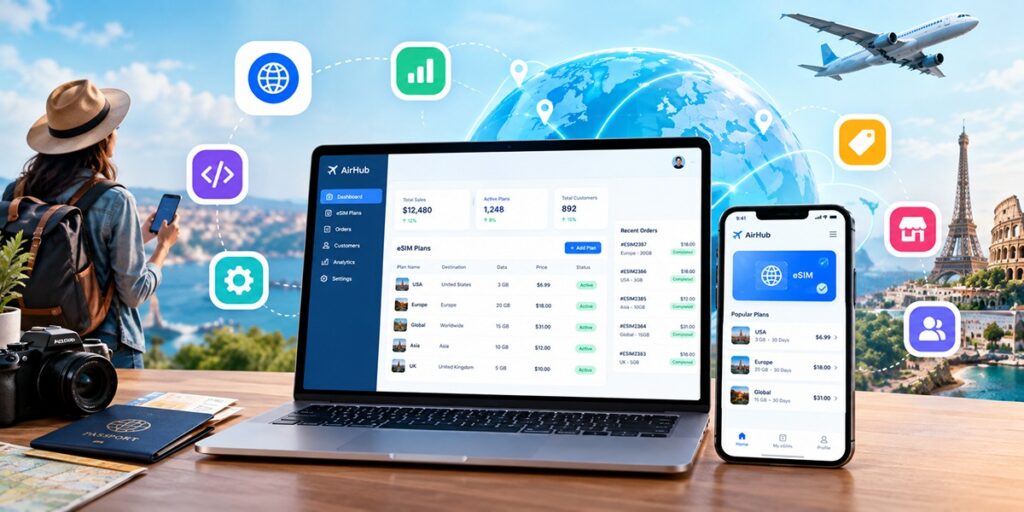
If you're sizing up providers, here's where Airhub lands with anything that needs confirming flagged, so nothing ships unverified:
And if you'd simply like to point your own customers to buy esim plans directly, or manage everything from the Airhub app, that works too.
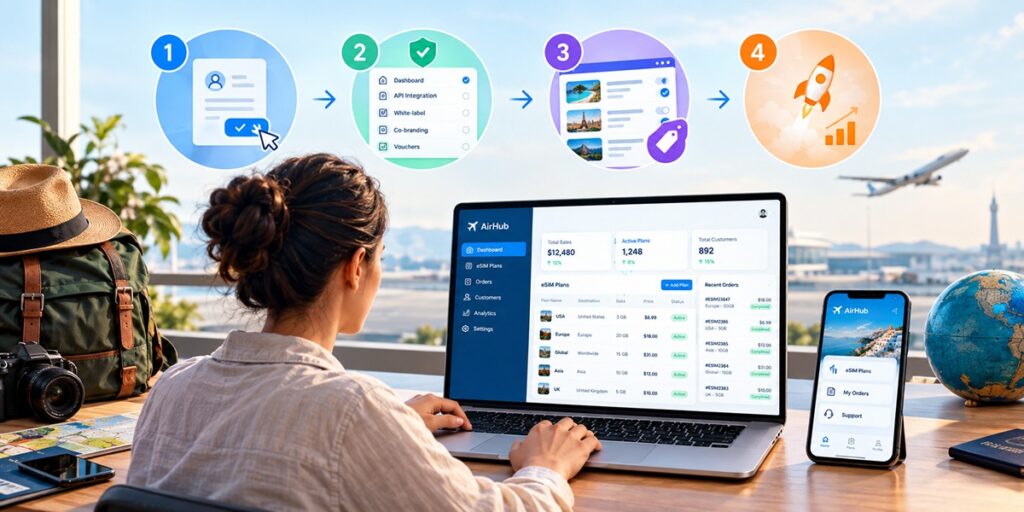
Standing up a reseller operation is usually a matter of days, not months:
It's a partnership where you buy eSIM data plans wholesale and sell them to your own customers under your brand. The provider runs the network and the technology; you own the pricing, branding, and customer relationship. Travel, fintech, retail, and IoT businesses use it to add a connectivity revenue stream without becoming a telecom company.
You buy data at a wholesale rate and sell it at a retail price you set the difference is your margin. What you earn depends on the wholesale discount your provider gives you, the price you charge, and your volume.
No. If you've got developers, an esim api lets you build eSIMs straight into your app or site. If you haven't, a reseller dashboard or white-label store lets you sell with no code at all.
Yes white-label and co-branding let customers buy under your brand while the provider handles activation and billing behind the scenes.
It varies by provider some have no minimum, others want volume for their best rates.
With no physical inventory or infrastructure to build, most resellers are set up and selling within days of approval.
Apply through the eSIM reseller program, get verified, choose your model, set your pricing, and go live. The partnerships team can walk you through rates and coverage for your target markets.
Get your Airhub eSIM in minutes and travel without roaming surprises.
Download the Airhub app to purchase, manage and top up your eSIMs anytime, anywhere!