




Ready to try eSIMs and change the way you stay connected?
Download the Airhub app to purchase, manage and top up your eSIMs anytime, anywhere!
App exclusive5% off at checkout
Plan your Japan trip with confidence: discover the best time to visit, seasonal weather, festivals, and tips to avoid crowds for a journey.
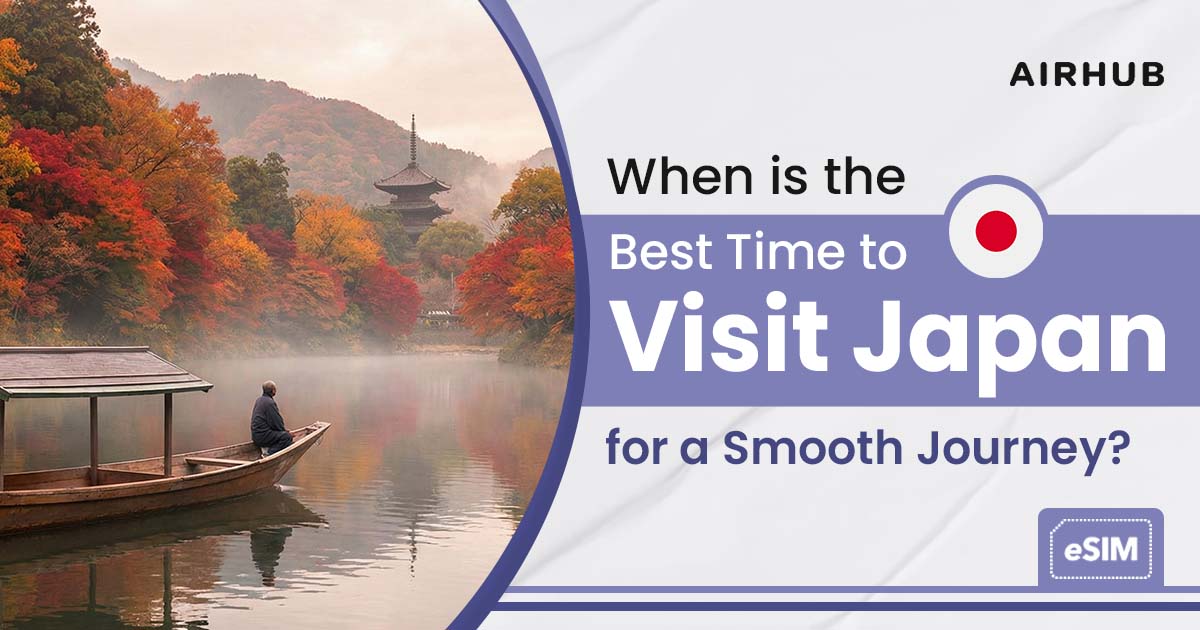
Japan’s climate and festivals vary dramatically throughout the year. This makes it a necessity to be vigilant while setting travel goals, in tune with Japanese culture. The weather in Japan enjoys great vibrancy. From snow-capped peaks to sunny skies, you can find everything if you choose the best time to visit Japan. Read on to plan when to visit Japan by month, region, and festival.
Late March into early April is especially famous for cherry blossoms (sakura). In Tokyo and Kyoto, peak bloom usually falls in early April. The weather is generally mild and pleasant, though early spring can still be cool. May is also very nice: after Golden Week (a national holiday rush in late April–early May), “the remainder of May is one of the best times,” with lush greenery and comfortable temperatures. Just be aware that Golden Week (around April 29–May 6) can be crowded (see below).
June marks the start of the rainy season (tsuyu) across most of Japan, bringing frequent rains and higher humidity. By July, the rains typically end, and Japan becomes hot and humid. Tokyo and Osaka often reach the high 20s–30s °C (80s–90s °F) by July. Many vibrant summer festivals (matsuri) and fireworks light up June–August. If you visit in summer, stay hydrated and pack light, breathable clothing. Beach destinations like Okinawa and Hokkaido (which stays cooler) are popular escapes.
The answer to the question about when to visit Japan falls in the months of fall, which are generally one of the most pleasant times to visit. From October onward, the weather cools down (warm days, cool nights), and autumn foliage begins coloring the landscape. By November, the weather is “relatively dry and mild, and the autumn colors are spectacular” in many regions. Tourist crowds are lower (except maybe around the autumn foliage peak), making November a great month for sightseeing.
Winters in Japan vary by region. Tokyo and southern parts have mild winters (cool but often sunny), while northern areas and mountains get heavy snow. Hokkaido and the Japanese Alps become winter-sports paradises. December is generally dry, but days are short (sunset in Tokyo is around 4:30 PM). January and February bring the coldest weather (and festive New Year celebrations). If you love snow (e.g. Sapporo’s famed snow festival), winter can be magical, but if you hate cold, spring or autumn are often preferred.
Japan is a long island chain stretching from subarctic in the north to tropical in the south. This distinction would help you to ascertain the best time to travel to Japan.
Winters here are very cold and snowy. Expect sub-zero temperatures and heavy snow from December through February. Summers are short and cool; Hokkaido, for example, is popular in July for its comfortable weather and outdoor activities. The northern spring (cherry blossoms) arrives about a month later than in Tokyo, often not until late April or May.
Summers (June–Aug) are hot and humid with a chance of typhoons, while winters are cool (temperatures around 5–10 °C in Tokyo) with occasional light snow. Spring and fall are mild and generally dry. In Tokyo and Kyoto, expect 18–25 °C (64–77 °F) in spring/fall, making these ideal times for sightseeing.
Winters are very mild (often above 15 °C even in January). For example, Okinawa’s warm climate rarely drops below 15 °C in winter, and summer there is long and hot. However, Okinawa and Kyushu have early rainy seasons (late May–mid June) and are most at risk from typhoons in August–September. The farther south you go, the more tropical the climate.
Japan’s culture is celebrated year-round through seasonal festivals (matsuri). Each season has its highlights:
Most famous are the cherry blossom celebrations. Hanami parties under blooming sakura occur nationwide, especially late March–April. Parks like Tokyo’s Shinjuku Gyoen become pink wonderlands. Spring also brings cultural events like Takayama’s Spring Festival (with ornate floats) and Hina Matsuri (Girl’s Day doll displays). Another spring rite is Omizutori in Nara (a fiery torch ceremony).
Summer bursts with energy. Kyoto’s Gion Matsuri (July) is the most iconic: massive, decorative floats (yamaboko) parade through the streets. Tokushima’s Awa Odori (August) features endless parade dancers in yukata. Countless fireworks (hanabi) displays light up August nights across the country. Other notable matsuri include the Nebuta Festival in Aomori and Obon (mid-August) folk dances.
Autumn is harvest time. Takayama holds an elaborate autumn festival (October) with beautiful floats and music. Tsukimi (moon-viewing) ceremonies in Sept-Oct see families admiring full moons with rice cakes and sake. Osaka’s Kishiwada Danjiri (September) is an exhilarating float-racing event. Autumn festivals often involve thanking ancestors, celebrating rice harvests, and of course enjoying the fall colors.
Winter in Japan has a special charm. The Sapporo Snow Festival (February) is world-famous for its massive snow and ice sculptures. Numerous smaller snow festivals (e.g., Yokote Kamakura Snow Festival) and winter illuminations (light displays in city parks) occur. Of course, New Year (“Oshogatsu”) is a hugely important holiday, with temple visits and special foods (ozoni soup). Winter festivals focus on embracing the cold: ice-carving contests, hot springs (onsen), and festive lights brighten the season.
Despite Japan being open year-round, some times can be challenging:
This is Japan’s longest holiday stretch (usually April 29–May 5) when several national holidays cluster together. Domestic travel surges, trains, flights, and attractions (Kyoto, Sapporo, Okinawa, etc.) become extremely crowded, and hotel rates skyrocket. If you visit then, book everything months in advance or choose a quieter region.
Early summer (late June–July) brings the seasonal rains. Weather is often gray and wet. Travel can be damp and visibility low. Then in August-September, typhoon season peaks. Powerful typhoons usually affect Okinawa, Kyushu, and sometimes wider Japan, bringing heavy rain and wind.
Japan’s New Year (January 1) is a major holiday. Many attractions and restaurants close around Dec 29–Jan 3. If you prefer sightseeing over shrine visits, avoid that week; on the other hand, experiencing Japanese New Year traditions (Hatsumode temple visits) can be memorable if planned well.
If you are an international traveler visiting Japan for the first time, here is what you should know about it:
No matter when you travel, one practical tip is to secure reliable mobile data before landing. Instead of fumbling with local SIMs, consider eSIM technology. Travel experts recommend pocket Wi-Fi or International eSIM cards for visitors. With an eSIM, you simply download a digital SIM profile to your unlocked phone.
Airhub, for instance, offers easy eSIM plans for Japan (and 190+ countries) so you’re online the moment you arrive. You can purchase and activate an Airhub eSIM in minutes via their app or website, skipping roaming fees and extra SIM cards. Staying connected with a global eSIM means instant access to maps, bookings, and translation apps throughout your trip, one less thing to worry about on your Japan adventure.
All told, Japan can be visited year-round with rewarding experiences. As many guides note, spring (Mar–May) and autumn (Sept–Nov) stand out as the best time to visit Japan: cherry blossoms and pleasant weather in spring, and brilliant foliage in fall. These seasons see mild temperatures (often around 18–22°C) and a carnival of festivals. That said, each season has its own charm: summer offers lively matsuri, and winter delivers snowy wonderlands in the north.
Most travelers prefer late March early April or October–November. In early April, cherry blossoms are in full bloom, and late October to November brings crisp weather and vibrant fall leaves.
Cherry blossoms generally peak in late March through early April in central Japan. (The bloom moves north: Okinawa can see flowers in January, while Hokkaido’s peaks in late April–May.)
The annual rainy season (tsuyu) typically lasts from early June until mid-July. During this time, many parts of Japan have persistent rain and overcast skies. (Hokkaido usually misses the rainy season.)
Winter (January through March, excluding the New Year holidays) tends to be the least expensive period. Tourist numbers drop after New Year’s, so airfares and hotels often have lower rates. Ski resorts in Hokkaido and the Alps can be busy despite being budget-friendly elsewhere.
Japan’s low season is winter (again, mid-January and February) when fewer international travelers visit. Also, avoid school holiday weeks (e.g., spring break, Golden Week, Obon) if you want fewer crowds. November is usually quiet except at famous foliage spots.
It depends on the season. Summer is hot and humid (pack shorts, T-shirts, a sunhat). Winter can be chilly (especially north), so bring a warm coat and layers. Always have a light jacket or umbrella in spring (occasional rain) and layers in autumn (cool nights, warm days). Comfortable walking shoes are a must year-round.
Get your Airhub eSIM in minutes and travel without roaming surprises.
Download the Airhub app to purchase, manage and top up your eSIMs anytime, anywhere!