






Ready to try eSIMs and change the way you stay connected?
Download the Airhub app to purchase, manage and top up your eSIMs anytime, anywhere!
App exclusive5% off at checkout
Discover the best places to visit in Thailand, from beaches and islands to cities and hidden gems. Learn where to go and what to skip.
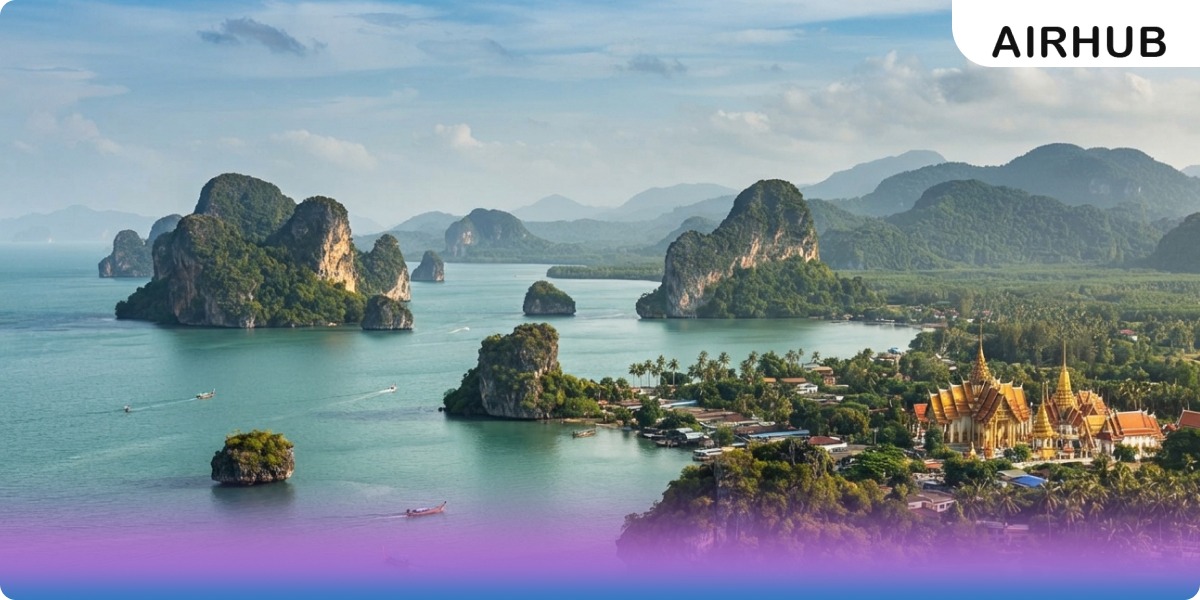
The hard part of a Thailand trip isn't finding somewhere worth going it's choosing, because almost everywhere is. Temple heavy cities, a laid-back mountain north, ancient ruins you can cycle through, and two entirely separate coastlines of islands all want a slice of the same week or two you've got. Most "best of Thailand" lists don't help much here, because they tell you everything is magical and leave you exactly as stuck as before. So this one does the opposite: it sorts the best places to visit in Thailand by what each is honestly best for with the sights worth your time, where to base yourself, how to get there, and the catch nobody mentions. The downsides are the useful part; they're how you actually narrow the list.
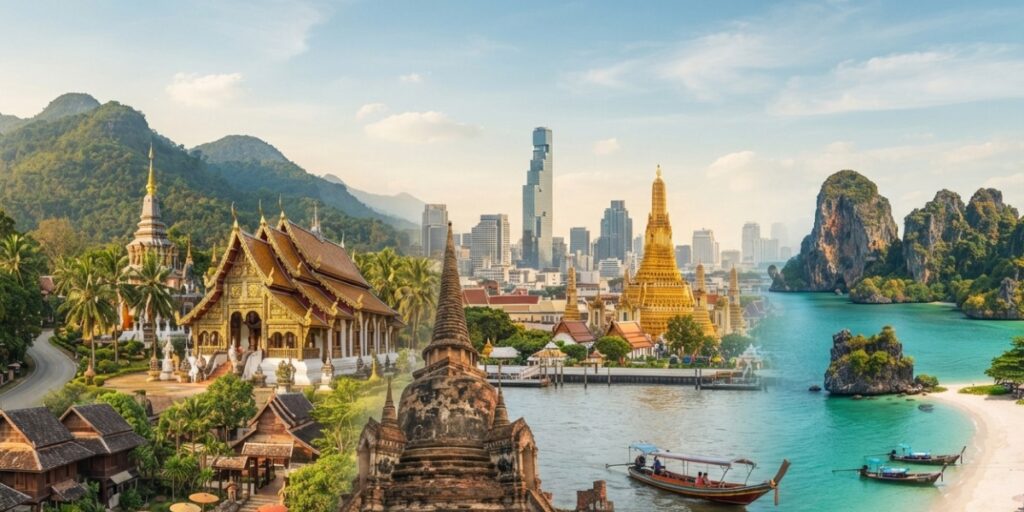
Short on time? Match the place to the kind of trip you're planning:
| If you want… | Go to |
| An easy first trip / a bit of everything | Bangkok + Chiang Mai |
| Culture & temples | Chiang Mai, Bangkok, Chiang Rai |
| Ancient ruins & history | Ayutthaya, Sukhothai |
| Beaches & islands | Krabi, the Andaman & Gulf islands |
| Nightlife | Bangkok, Pattaya |
| A laid-back beach town | Hua Hin |
| Family-friendly | Chiang Mai, Hua Hin |
The list runs roughly in trip order the classic first timer cities, then the ruins, then the beaches and islands. Each place gets the same treatment: what it's best for, the sights actually worth your time, where to base yourself, how to get there, and one honest caveat.
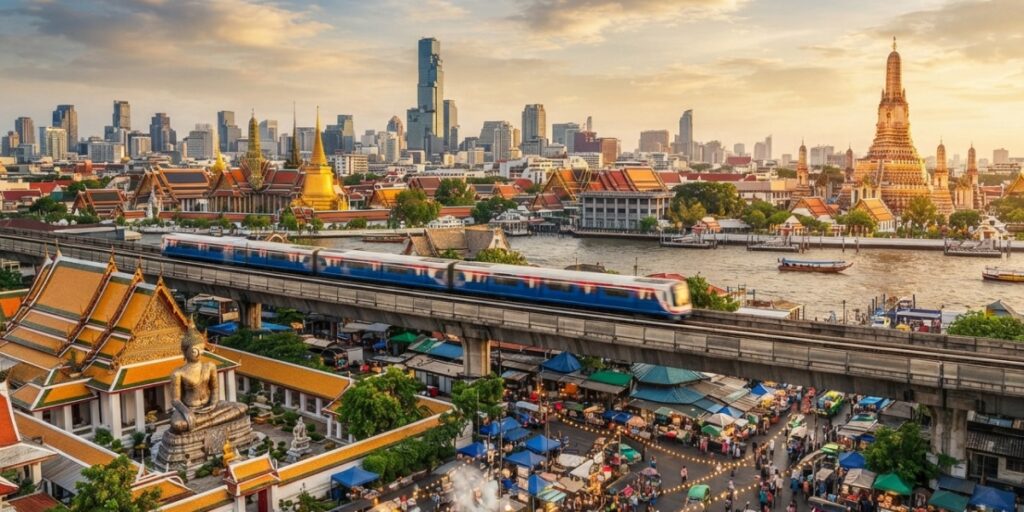
Nearly every trip starts here, and for a first-timer that's the right instinct. Thailand's capital crams temples, markets, street food, and a surprisingly slick metro (the BTS/MRT) into one loud, exhilarating sprawl. Best for: first-timers, nightlife, street food. Top sights include the Grand Palace and Wat Phra Kaew (home of the Emerald Buddha), Wat Pho's giant reclining Buddha, Wat Arun across the river, and the markets around Khao San Road. Visitors should follow local dress rules when visiting temples, including covering shoulders and knees. For where to stay, anywhere near a BTS/MRT line makes getting around easier and helps avoid Bangkok's traffic, with popular areas including Sukhumvit, Siam, Silom, and Riverside. Getting there is easy, as Bangkok is the main international gateway with two airports Suvarnabhumi Airport (BKK) and Don Mueang International Airport (DMK). Honest caveat: it's hot, loud, and famously gridlocked two or three days is plenty for most people before the city starts to wear you down.
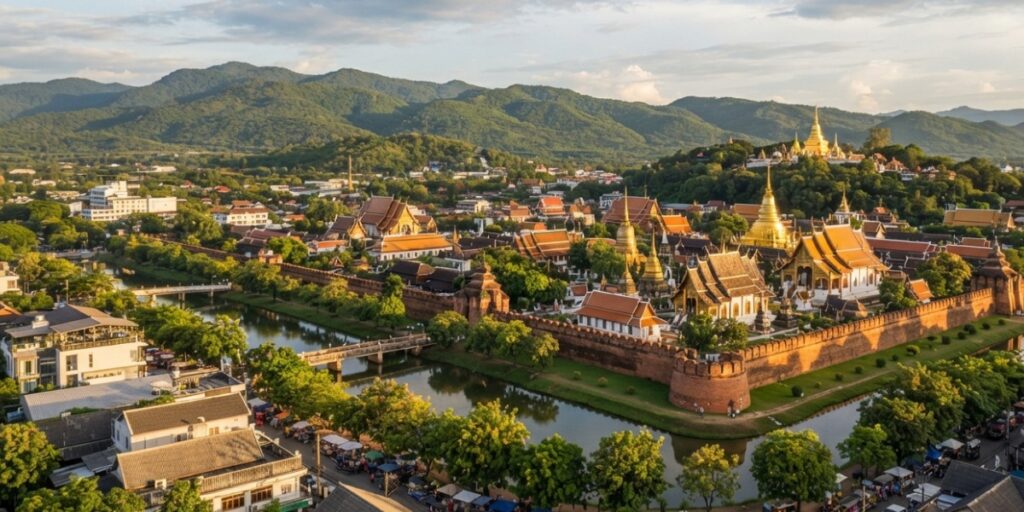
Chiang Mai feels like a different country from Bangkok: mountains on the horizon, a moated old town, and what many argue is the best food in Thailand. This is the slow travel favourite, the place people mean to stay three days and end up staying two weeks. Best for: culture, food, families. Top sights include the mountaintop temple Wat Phra That Doi Suthep, the old city temples and moat, the sprawling night bazaar, and ethical elephant sanctuaries that focus on conservation and no-riding experiences. Where to stay: the Old City for temples, or the hip Nimman area for cafés and nightlife. Getting there: a short domestic flight, or the overnight train or bus from Bangkok. Honest caveat: burning season (typically around February–April) can blanket the region in genuinely bad air, so it is worth planning your visit around air quality conditions.

Further north again, Chiang Rai is Chiang Mai's calmer cousin, best known for a handful of surreal, modern temples that look like nothing else in the country. Best for: unusual temples, a quieter pace. Top sights include the White Temple (Wat Rong Khun), the Blue Temple (Wat Rong Suea Ten), the eerie Black House (Baan Dam), and the Golden Triangle, where Thailand, Laos, and Myanmar meet on the river. Where to stay: the town centre works as an easy base for day trips, with areas around the Clock Tower and central markets being convenient options. Getting there: bus from Chiang Mai (roughly 3–4 hours) or a day tour. Honest caveat: the headline temples are doable in a single day, which is why plenty of people visit Chiang Rai as a day trip rather than an overnight stop.

An easy day trip north of Bangkok, Ayutthaya was the Thai capital from the 14th to 18th centuries, and its temple ruins are a UNESCO World Heritage site.
Best for: history, ruins, a day out from Bangkok. Top sights include Wat Mahathat (that famous Buddha head cradled in tree roots), Wat Phra Si Sanphet, and Wat Yai Chai Mongkhon. Where to stay: most treat it as a day trip, though a night lets you slow down. Getting there: a cheap train, a bus, or an organised day tour from Bangkok. Honest caveat: the ruins are spread out with limited shade, so rent a bike or hire a tuk-tuk and go early midday here can be brutal. (One for history lovers: nearby Sukhothai, Thailand's first capital, has quieter and arguably finer ruins if you can spare the time.)

Over on the Andaman coast, Krabi is the dramatic one towering limestone karsts, clear bays, and the launch pad for some of Thailand's most photographed beaches. Best for: beaches, island-hopping, first time beach trips. Top sights include Railay Beach (reachable only by boat), Ao Nang as a base, day trips out to the Phi Phi Islands, and the Tiger Cave Temple. Where to stay: Ao Nang, for the convenience and the boat connections. Getting there: fly straight into Krabi, or come by bus and ferry from Phuket and the islands. Honest caveat: the marquee spots Maya Bay and Phi Phi get genuinely busy, and some areas have visitor limits or seasonal restrictions, so go early or travel off-season.

Phuket is Thailand's largest island and its most developed beach destination: resorts for every budget, full throttle nightlife at Patong, and a transport hub for the rest of the Andaman. Best for: resorts, nightlife, easy island access. Top sights include Patong for the nightlife, quieter Kata and Karon beaches, Old Phuket Town's photogenic architecture, and boat trips to Phi Phi and James Bond Island. Where to stay: choose your beach carefully the island is huge and getting between areas isn't always quick. Popular areas include Patong for nightlife, Kata and Karon for beaches, and Old Phuket Town for culture and food. Getting there: Phuket International Airport is one of Thailand's busiest airports and is well connected internationally. Honest caveat: here's the honest bit Phuket is big, built-up, and can feel more resort-strip than Thailand. Plenty of seasoned travelers quietly rate it overrated and would send you to Krabi instead; if authenticity matters more to you than convenience, base yourself elsewhere.
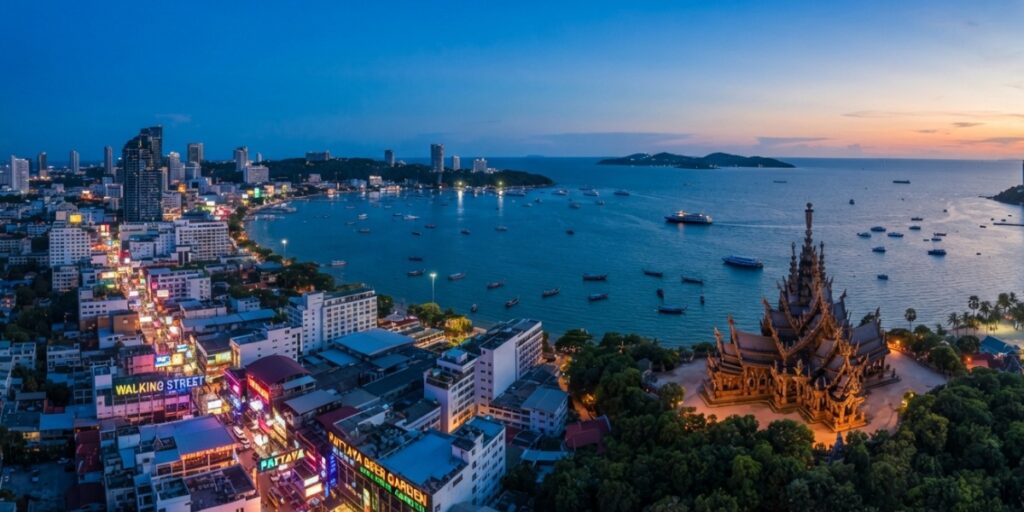
The closest beach city to Bangkok, Pattaya is defined by its nightlife (Walking Street), even though it hides some family-friendly corners too. Best for: nightlife, a fast beach break from Bangkok. Top sights include the neon of Walking Street, a boat over to Koh Larn for clearer water, and family draws like the Sanctuary of Truth. Where to stay: it depends entirely on whether you're here for the party or the quieter beaches. Popular areas include Central Pattaya and Walking Street for nightlife, while Jomtien Beach offers a more relaxed atmosphere. Getting there: about 2 hours by bus or car from Bangkok. Honest caveat: the central nightlife scene really isn't for everyone and definitely not for families looking for a quiet beach holiday. It's the most divisive place on this list, so book with your eyes open.
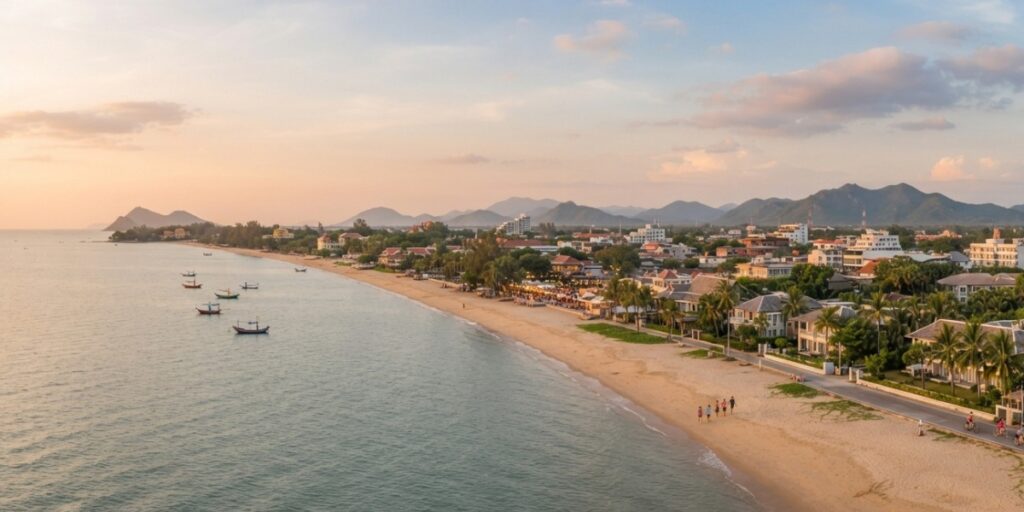
Once a favourite of Thai royalty, Hua Hin is the easygoing beach town, better suited to families and slow trips than to anyone chasing a scene. Best for: relaxed beaches, families, weekend getaways. Top sights include Hua Hin Beach, the excellent night market, and nearby national parks such as Kaeng Krachan National Park and Sam Roi Yot National Park. Where to stay: along the beach, or near the night market for easy access to restaurants and attractions. Getting there: around 3–3.5 hours by road or train from Bangkok. Honest caveat: the beaches here are pleasant rather than postcard perfect come for the calm, not for Andaman-blue water.
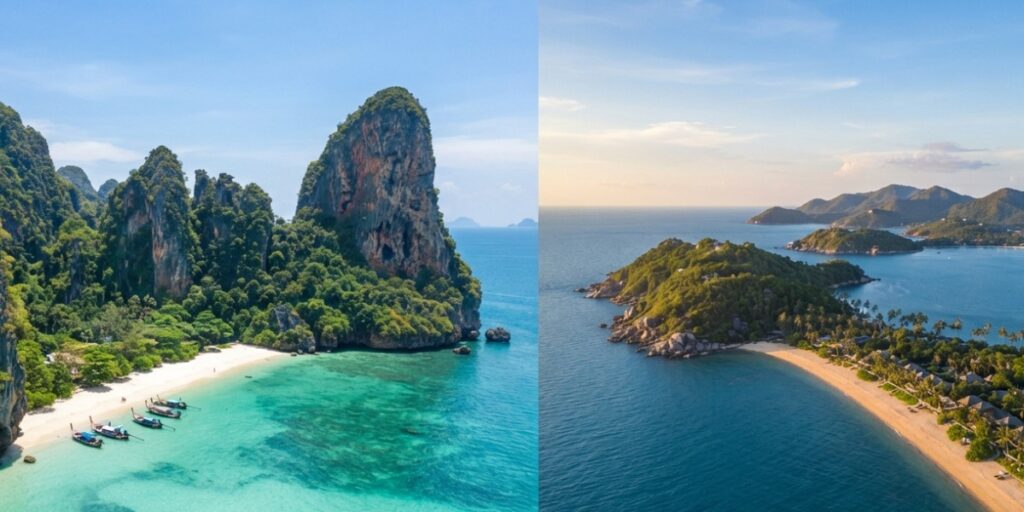
Most Thailand trips end up part city, part beach and the beach half comes down to one real decision: which coast. The two island groups aren't interchangeable.
The takeaway that actually matters: let timing steer your choice of coast, because the two run nearly opposite rainy seasons. When the weather's washing out one side, the other is usually just fine so you're rarely stuck.
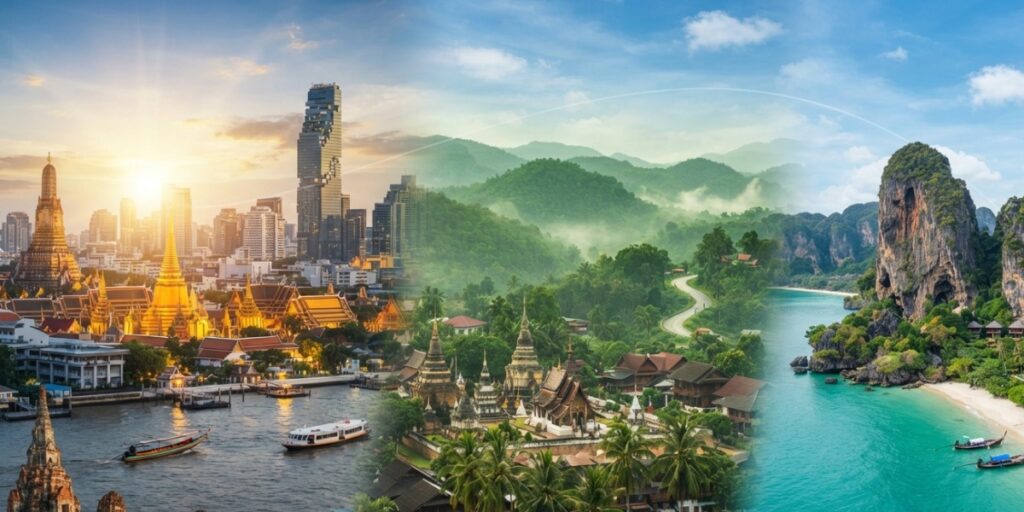
If it's your first trip and you'd rather not overthink it, this classic loop is hard to beat over about 10–14 days:
Bangkok (2–3 days) → Chiang Mai (3–4 days) → one beach or island — Krabi for cliffs and island-hopping, or a Gulf island for calmer water — (4–5 days).
You get the big city, the cultural north, and a proper beach finish, with quick domestic flights stitching it together. Slot in Ayutthaya as a day trip out of Bangkok if you love a good ruin.

Thailand runs on three broad seasons, though they shift depending on where you are:

A handful of things that make a Thailand trip run smoother:
Still sorting the rest of the trip? Our international travel checklist runs through the essentials before you go.
Bangkok and Chiang Mai are the classic first-timer pairing the big city and the cultural north usually rounded off with a beach or island like Krabi. All three are easy to reach, well set up for visitors, and together they show you a real cross-section of Thailand in one trip.
Chiang Mai for its old city temples and unhurried pace, Bangkok for the Grand Palace and Wat Pho, and Chiang Rai for its striking modern temples like the White Temple.
The Andaman coast (Krabi, Phi Phi, the Similan Islands) for dramatic cliffs and clear water, and the Gulf islands (Ko Samui, Ko Tao, Ko Pha-Ngan) for calmer seas and diving. Which comes out on top depends partly on when you're going.
Phuket is convenient and stacked with resort and nightlife options, but it's large and heavily developed, and a lot of travelers feel it doesn't quite feel like the "real" Thailand. If you're after cliffs and island-hopping with more character, many would point you to Krabi instead.
Ayutthaya, the former capital and a UNESCO World Heritage site, is the easiest to reach a day trip from Bangkok. Sukhothai, Thailand's first capital, has quieter and arguably finer ruins if you have more time.
Bangkok for the sheer range, and Pattaya for its famous (and divisive) Walking Street. Out on the islands, Ko Pha-Ngan is the home of the Full Moon Party.
November to February is the most comfortable overall and peak season on the Andaman beaches. Because the two coasts run opposite rainy seasons, though, there's almost always somewhere with good beach weather.
Get your Airhub eSIM in minutes and travel without roaming surprises.
Download the Airhub app to purchase, manage and top up your eSIMs anytime, anywhere!