









Ready to try eSIMs and change the way you stay connected?
Download the Airhub app to purchase, manage and top up your eSIMs anytime, anywhere!
App exclusive5% off at checkout
Looking for the best eSIM for international travel? Compare coverage, data, speed, hotspot, pricing, and local, regional, and global plans.

Anyone who travels enough knows the specific sinking feeling: you land, come off airplane mode, and your phone just... searches. No maps, no ride, no message home that you've arrived. A travel eSIM makes that problem disappear before you've even boarded but the moment you start shopping, every provider swears it's the best one on earth, and most of those claims are worth exactly nothing. The truth is quieter: the right eSIM depends far more on your trip than on anyone's marketing.
So treat this as a buyer's guide rather than a sales pitch. We'll go through what actually matters when you're choosing the best eSIM for international travel coverage, data, speed, hotspot, top-ups, price and then the decision that quietly makes or breaks the whole thing: local, regional, or global. And we'll be honest about where Airhub is the right call and where you'd be better off with a different kind of plan entirely.
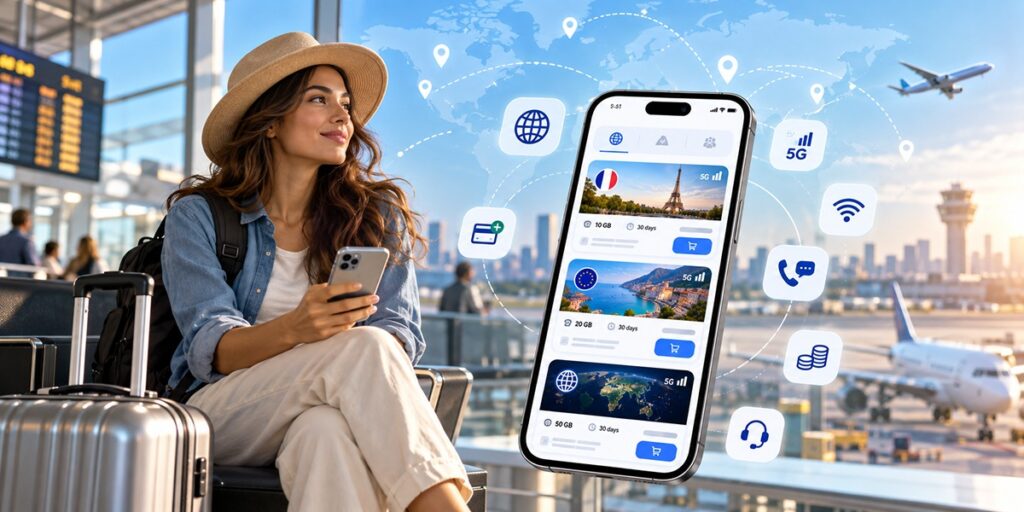
Line up ten providers and they'll look almost identical. The differences that actually decide your trip hide in the details, so run anything you're considering through this list before you pay:

This is where most people either save real money or throw it away, and it has nothing to do with which brand you choose, only with your itinerary.
A local, single country eSIM is the value play when you're staying put. You'll almost always get more data for your money than a global plan would give you ideal for a city break, a work trip, or a one stop holiday. A regional eSIM is the sweet spot for a single area with a few stops, a Europe rail trip or a Southeast Asia loop, say: one plan covers the whole region, usually cheaper than going worldwide and far simpler than buying a fresh local SIM in every country. And a global eSIM earns its keep for the multi-continent traveler, or anyone who simply doesn't want to think about it one plan, dozens of countries, more per gigabyte than a local plan but worth every cent once your route starts sprawling.
The rule of thumb, stated plainly: the more borders you cross, the more a regional or global plan justifies its premium; the longer you sit in one place, the more a local plan wins on price. Don't pay for worldwide coverage you're never going to touch.
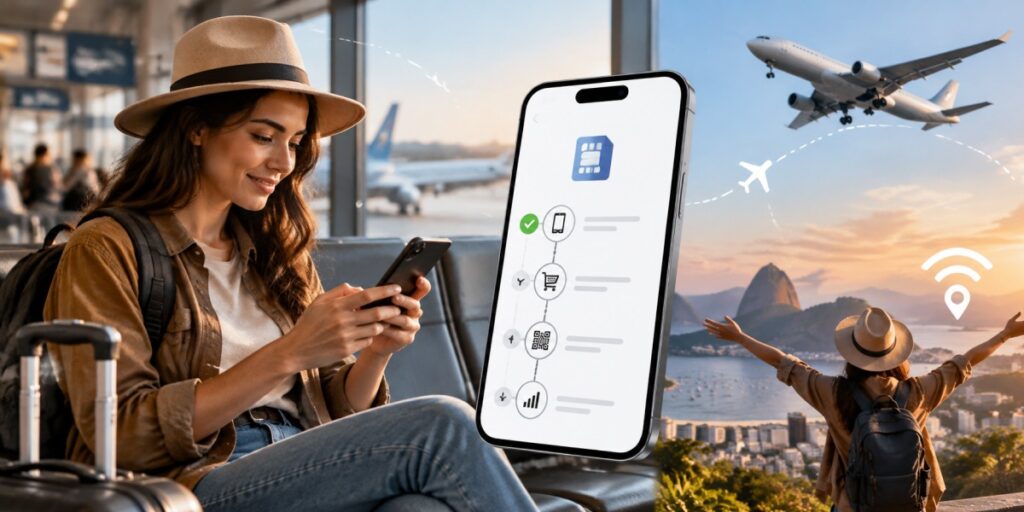
First, the one thing worth checking before you get excited: your phone has to support eSIM. Most recent ones do newer iPhones (XS and later), most Google Pixels, and recent Samsung Galaxy models among them but take thirty seconds to confirm yours is on the eSIM compatible devices list.
After that, setup is genuinely a few-minute job:
So why reach for an eSIM at all, instead of the two old standbys? It comes down to two honest comparisons.
Against roaming: your home carrier's roaming is the most effortless option and, reliably, the most expensive one perfectly fine for a single quick call abroad, genuinely painful across a two week trip. An eSIM is prepaid, so you know the number before you go and there's no ugly surprise waiting on your next bill.
Against a local SIM card: buying a physical SIM after you land can actually be the cheapest route of all but it means tracking down a shop, showing your passport, popping out your home SIM, and often losing your usual number for the duration. An eSIM hands you the local network pricing without any of that ritual: installed before you land, home number still lives beside it. The one honest caveat is that a local SIM bought in-country can occasionally beat an eSIM on raw price, so if you're settling into a single country for weeks, it's worth pricing both.

If your trip crosses borders, this is Airhub's home turf. It runs eSIM for international travel across 190+ countries with instant QR code activation, so you buy before you fly and land already connected and you can scroll and compare eSIM data plans by destination and data size before you commit to anything.
Where it genuinely shines is the regional and global end of that checklist above the multi-country routes where the alternative is juggling a stack of local SIMs. For a long stay in one country, do the honest thing and price it against a local plan; for a trip that hops between places, a single Airhub plan almost always wins on convenience. That's the un spun version: buy the plan your route actually calls for, and this is a strong option when that route is a wide one.
There's no single "best eSIM for international travel" there's only the one that fits the trip in front of you. Put any option through the checklist (coverage, data, speed, hotspot, top-up, calls, price, support), pick the plan type your route demands local for one country, regional for one area, global for a sprawling itinerary and make sure your phone's on board. Sort it before you leave, and that "no service" dread never gets a chance to steal your first hour on the ground.
Yes, that's the entire point of a travel eSIM. You buy a plan for your destination (or a regional or global one covering several countries), install it before you fly, and it latches onto a local network the moment you land. No physical SIM to swap, and no roaming charges from your home carrier.
Not a single plan that covers literally everywhere even "global" plans have gaps, with China and some island nations the usual holdouts. Global eSIMs do cover a large majority of destinations on one plan, but always check the specific coverage list for your route before buying.
Yes. Buy and install it before you leave, while you've got Wi-Fi, since installation needs a connection then activate it on arrival. Sorting it in advance is what lets you walk past the airport SIM queue and be online from the moment you land.
Most recent phones are newer iPhones (XS and later), most Google Pixels, and recent Samsung Galaxy models among them. Older or some budget handsets may not. Check yours against the eSIM compatible devices list before you count on it.
Almost always. Roaming with your home carrier is easy but typically the priciest way to get data abroad. A prepaid travel eSIM lets you pay a set price upfront for the data you need, with nothing nasty waiting on the bill when you're home.
Match it to the route: local for a single country (usually the best value), regional for one area with several stops (Europe, Southeast Asia), and global for multi-continent trips or frequent travelers who want one plan for everything. To build one around your actual destinations, compare esim data plans by trip.
Get your Airhub eSIM in minutes and travel without roaming surprises.
Download the Airhub app to purchase, manage and top up your eSIMs anytime, anywhere!