










Ready to try eSIMs and change the way you stay connected?
Download the Airhub app to purchase, manage and top up your eSIMs anytime, anywhere!
App exclusive5% off at checkout
Plan your Rome trip with this 4-day itinerary. Discover top attractions, hidden gems, food, travel tips, and make the most of your trip.
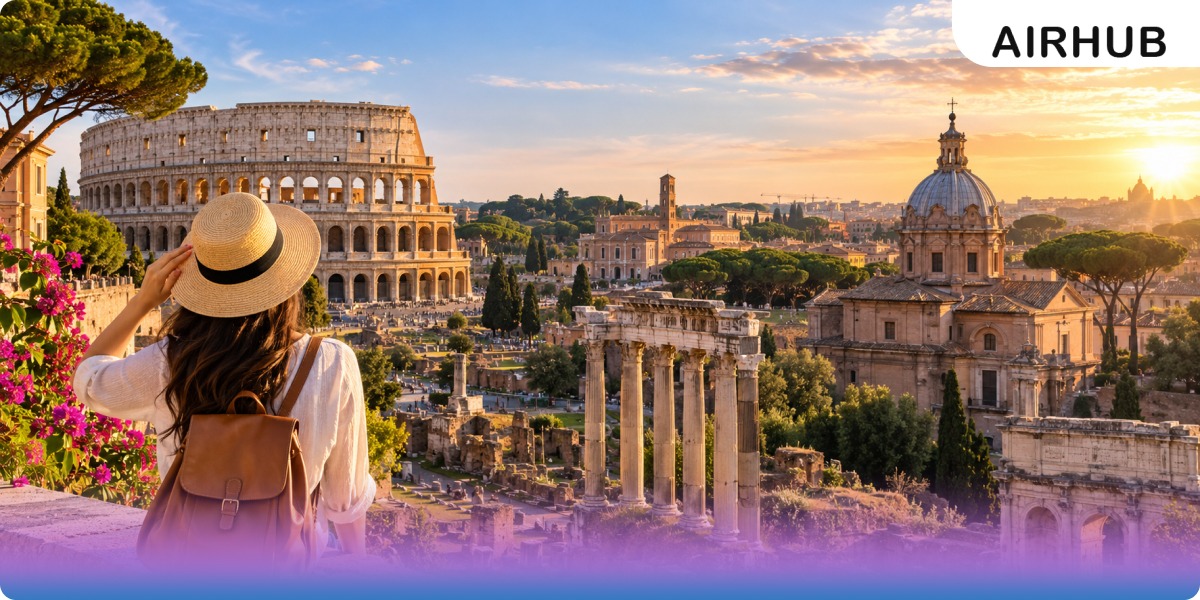
Rome punishes the unprepared. Not maliciously it's just that the city packs three thousand years of history into a centre small enough to walk across, and everyone else has the same idea about when to see it. Show up at the Trevi Fountain at noon and you'll photograph the backs of two hundred strangers; show up at dawn and it's practically yours. That gap between a frazzled day of queues and a genuinely great one almost always comes down to two things: the order you do things in, and the hour you do them. This 4 days in Rome itinerary is built around exactly that, mapping out what to see each day in a sensible geographic flow, when to go to sidestep the worst of the crowds, how to lock in the big-ticket sites before they sell out, and where to eat once you have.
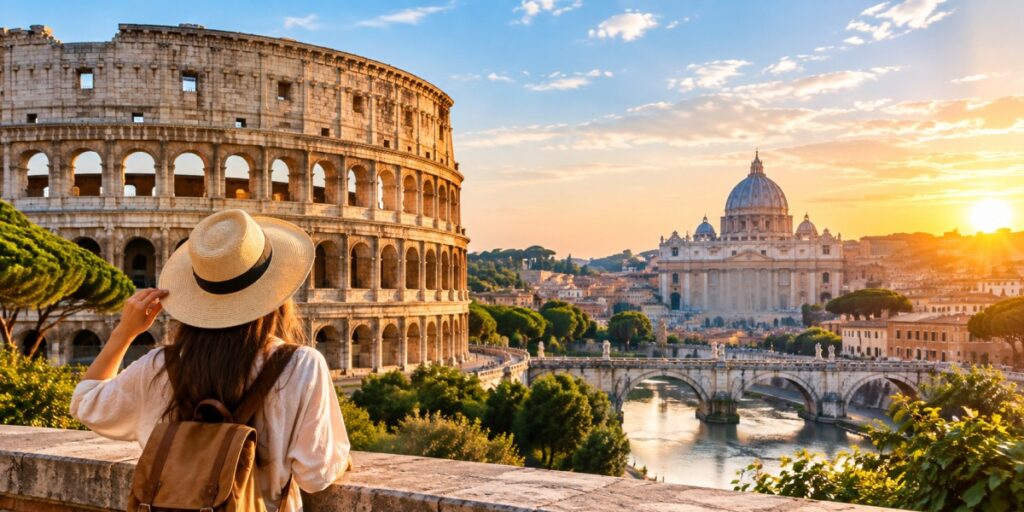
For a first trip, four days is the sweet spot. It's long enough to see the heavy hitters the Colosseum, the Vatican, the tangle of piazzas in the historic centre without turning the whole thing into a forced march, and it still leaves an afternoon or two to sit in a square with a coffee and do very little. You won't see all of Rome. Nobody does; that's what the second trip is for. But four days covers the essentials properly, which beats covering everything badly.
Here's the one rule that quietly makes or breaks the trip: don't stack two major sights on the same day. The Colosseum and the Vatican each ask a lot of you physically and mentally and if you try to do both between breakfast and dinner, you'll be running on empty by early afternoon and enjoying neither. Give each its own morning.
(Working with less time? There's a one, two, and three day version at the end.)
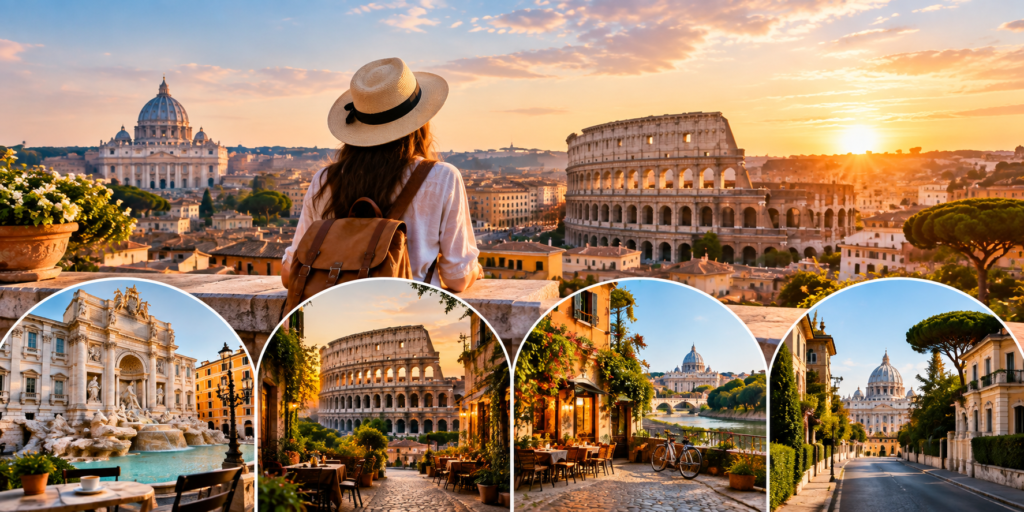
Rome's great logistical gift is that its sights cluster in a fairly small central patch, so basing yourself in or near the historic centre buys you more exploring and far less commuting. Four neighbourhoods tend to suit first-timers, each with a different personality:
| Day | Focus | Highlights |
| Day 1 | Ancient Rome | Colosseum, Roman Forum, Palatine Hill → evening in Monti |
| Day 2 | Historic centre | Pantheon, Trevi Fountain, Spanish Steps, Piazza Navona |
| Day 3 | Vatican City | Vatican Museums, Sistine Chapel, St Peter's → evening in Trastevere |
| Day 4 | Neighbourhoods | Trastevere & Testaccio, or a Catacombs / Tivoli day trip |
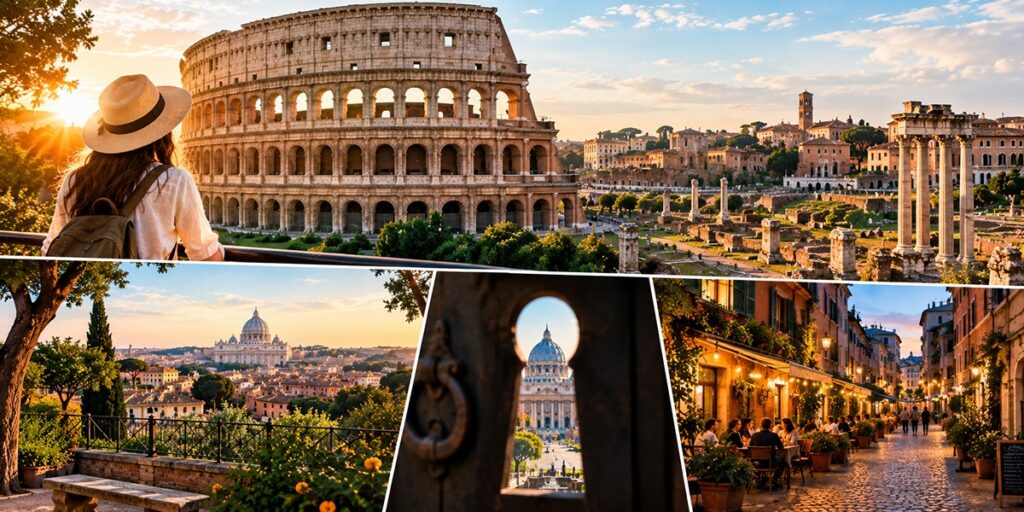
Begin where the city itself did — in the dense cluster of ancient sites at Rome's core.
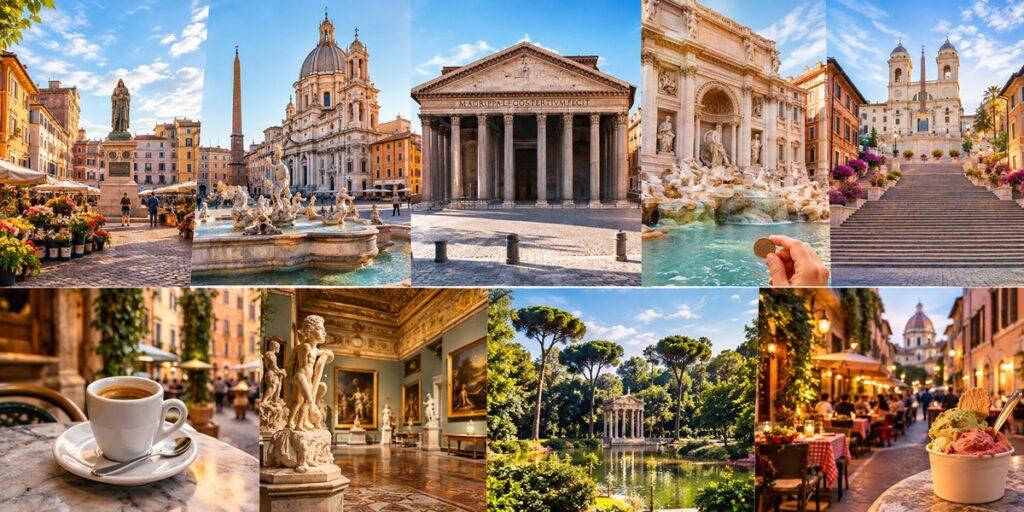
Today is a walking day through Rome's most photographed piazzas and fountains and if you take one thing from this section, let it be this: go early.
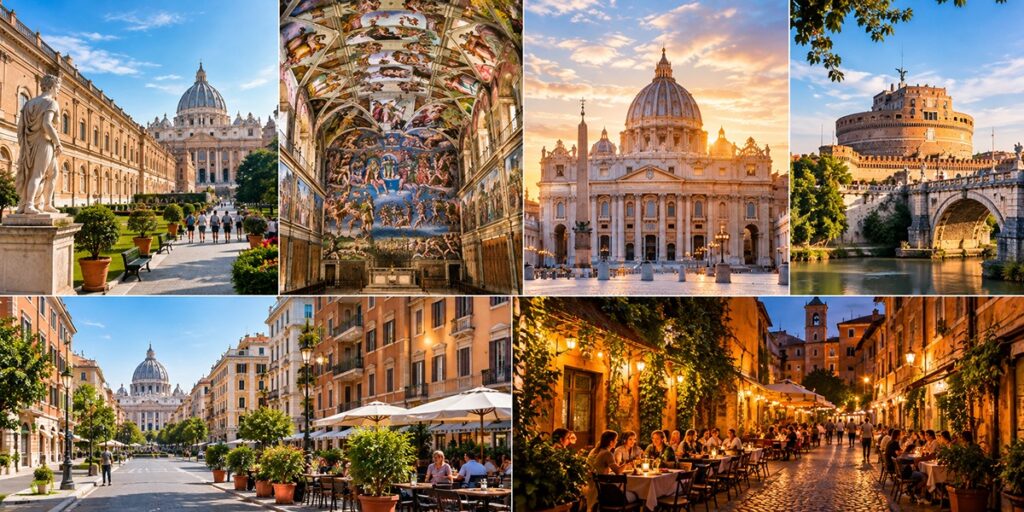
The Vatican is Rome's other colossus, and it's worth handing it a morning all to itself. Between the Vatican Museums, the Sistine Chapel, and St Peter's Basilica, it's genuinely staggering and you don't have to be religious to feel it.
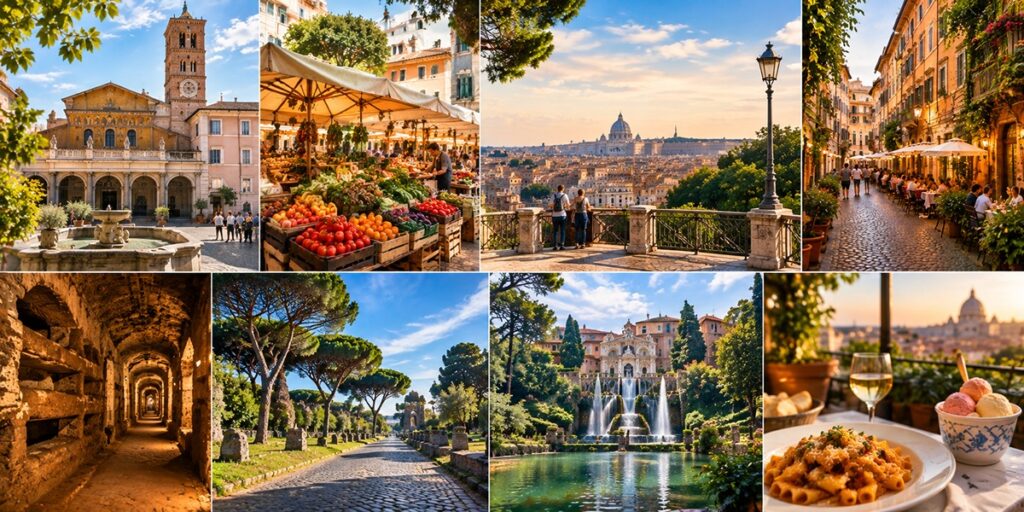
With the big sights behind you, give the final day to the Rome that people actually live in and if you took the earlier tip and shifted St Peter's here, start your morning there.
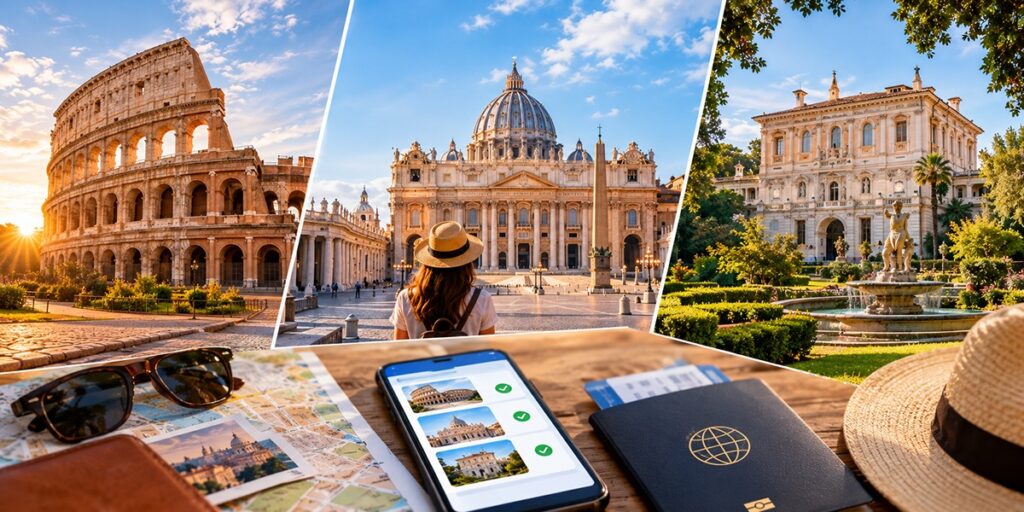
Three sights genuinely need booking ahead — chance it and you're looking at hours in line, or missing them outright.
The whole timing strategy fits on a sticky note: piazzas at dawn, ticketed sights on first entry, shady neighbourhoods and viewpoints saved for the hot afternoons.
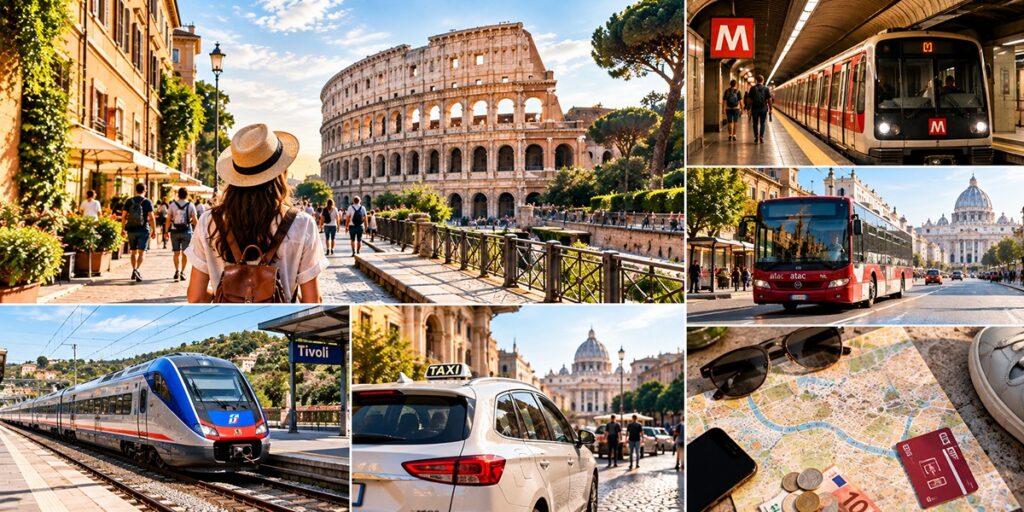
The historic centre is compact and properly walkable you'll do most of this itinerary on foot, which makes a decent pair of shoes more valuable than any transit pass. For the longer hops (out to the Vatican, Testaccio, or the Catacombs), the metro and buses run by ATAC plug the gaps; single tickets are cheap and valid for a set travel window. Regional trains handle nearby escapes like Tivoli. And for taxis, stick to official licensed cabs or a reputable app, and settle how the fare works before you set off.

Between booking timed-entry tickets on your phone, following a walking route through the centre, and decoding the occasional menu, you'll want data that's live the second you landnot another hunt for café Wi-Fi. A travel eSIM Italy plan handles that: set it up before you fly, scan a QR code, and you're connected on arrival, with those skip-the-line ticket QR codes ready to go when you reach the turnstile. Installing it takes a couple of minutes. Browse Airhub's plans if it's useful for your trip.
Yes — four days is ideal for a first visit. You can cover the Colosseum, the Vatican, and the historic centre without rushing, and still have time for the food and the atmosphere. You won't see everything, but you'll do the essentials properly.
With one day, do a morning Colosseum-and-Forum visit, walk the historic centre past the Pantheon and Trevi, then hit the Vatican near closing when it's quieter. With two days, add a proper Vatican morning and an evening in Trastevere. With three days, follow Days 1–3 of this itinerary and drop Day 4.
Centro Storico for sheer convenience, Monti for a hip, central base by the Colosseum, Trastevere for atmosphere and nightlife, or Prati for a quieter, family-friendly stay near the Vatican.
Book official timed-entry tickets ahead and take the earliest slot of the day. For the Vatican especially, first entry — well before the 10am-to-4pm crush — is far and away the calmest.
Spring (April–June) and autumn (September–October) bring the nicest weather and slightly thinner crowds than peak summer — though Rome is busy year-round. Summer is hot and heaving, so lean hard on early starts and shady afternoons.
Pickpockets in crowds and on packed buses, unlicensed "helpers" hovering near the big sights, and the overpriced, forgettable food parked right next to the landmarks. Stick to official tickets, licensed taxis, and restaurants a few streets back from the crowds.
Get your Airhub eSIM in minutes and travel without roaming surprises.
Download the Airhub app to purchase, manage and top up your eSIMs anytime, anywhere!