
In today’s hyper-connected world, our phone’s SIM card holds the keys to our digital life. But can those keys be copied? SIM card cloning is the sneaky process of duplicating the data on your SIM to another card. If a person clones your SIM, they're impersonating you on the mobile network. In this post, we will discuss how your SIM card puts you in a vulnerable situation and how eSIM can save you from this situation.
Table of contents
- What is a SIM Card?
- Hidden Risks of Your SIM
- What Does it Mean to Clone a Phone's SIM?
- What are the Risks of a Cloned SIM?
- eSIM Security: Your Safer SIM Card Option
- eSIM vs Physical SIM Security
- Why Choose eSIM?
- How to Get an eSIM Online?
- Airhub: Your eSIM Co-Pilot
- Prevent SIM Card Cloning with Ease!
- FAQs
What is a SIM Card?
A SIM is a small chip inside your phone that identifies you to your mobile carrier. Think of it as a passport for your device: it holds your account’s unique ID (the IMSI) and encryption keys, allowing you to make calls, send SMS messages, and access mobile data. Because the SIM holds your identity, having physical access to it (or hacking it) can put you at risk. That’s why cloning a phone's SIM card puts you at a huge risk.
Hidden Risks of Your SIM
Your SIM may seem harmless, but it makes you a juicy target. For one thing, SIM swap scams have exploded: attackers impersonate you to convince your carrier to port your number to a new SIM. In such an attack, the crooks gain all your SMS and calls, and can bypass your bank’s phone-based two-factor authentication (2FA).
Legacy vulnerabilities also lurk on the SIM: exploits like Simjacker (which abuses old SIM Toolkit apps) or flaws in the SIM’s Java Card have been used to track and hack phones remotely. Even if these attacks are rare, they show that any software (including your SIM) can harbor bugs. The bottom line: the SIM is a gateway. If scammers get control of it, through physical theft, cloning, or tricking carrier staff, they can hijack your identity.
What Does it Mean to Clone a Phone's SIM?
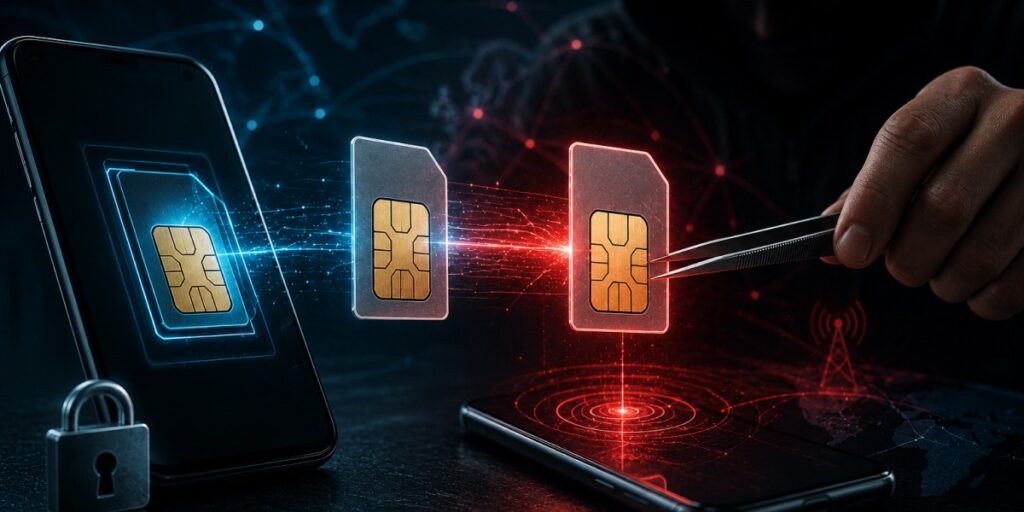
So what exactly is SIM cloning? In simple terms, it means copying all the data from one SIM into another blank SIM card. The copied SIM (the clone) carries the same International Mobile Subscriber Identity (IMSI) and authentication key (Ki) as the original. To the mobile network, both SIMs look identical; it’s like giving someone else the same passport you have.
What are the Risks of a Cloned SIM?
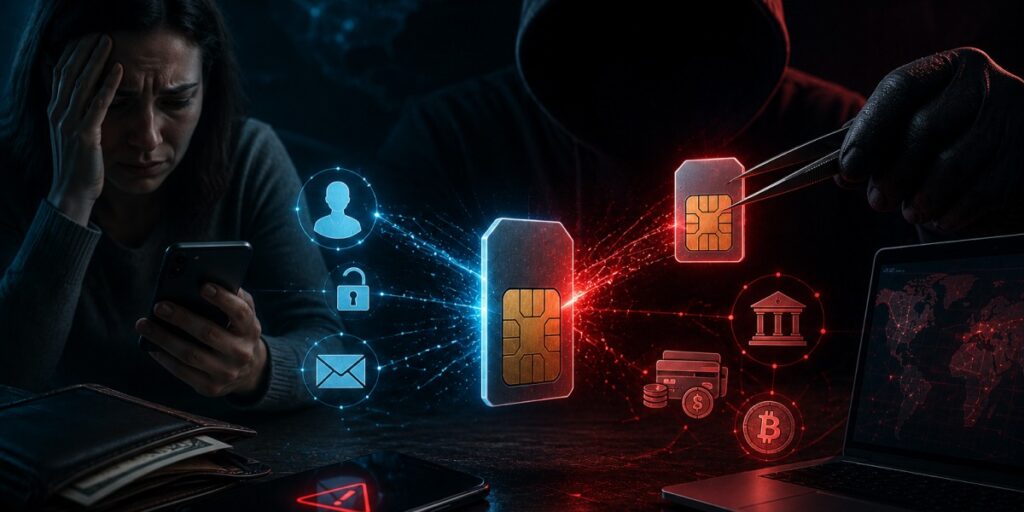
If your SIM card vulnerably fell for a cloning attack, there are many more threats you are exposed to:
- Identity Hijack: A cloned SIM hands over all your phone privileges to someone else. They get your incoming calls and SMS, including one-time passwords (OTPs) sent by banks or services. In effect, they’ve gained the keys to your world.
- Account Takeovers: With your OTPs and texts, criminals can reset your online passwords. They can log into your email or social accounts and lock you out, pretending to be you. It’s one of the most powerful forms of account theft.
- Financial Fraud: Control of your phone number in many cases is a direct path to your money. Scammers can make bank transfers, empty crypto wallets, or buy things while you are the one paying.
eSIM Security: Your Safer SIM Card Option
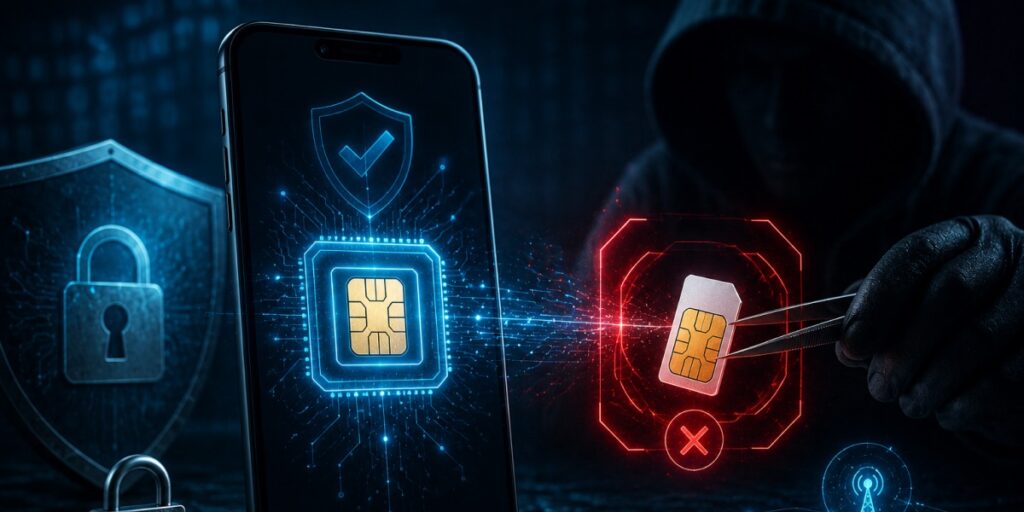
Enter the eSIM security, a modern alternative that can thwart many of the above attacks. An eSIM (embedded SIM) is built into the phone’s hardware; there’s no physical card to slide in or out. Instead, your carrier or provider remotely installs a SIM profile into the device’s secure chip.
This design makes eSIMs inherently more secure in practice. For one, there’s no physical SIM card to steal or clone. Traditional cloning tricks require reading data from a SIM chip with specialized hardware, but an eSIM’s secrets are locked inside the phone. Even if someone steals your phone, they can’t yank out the eSIM. Disabling it requires carrier intervention, and a thief would still need your account credentials and carrier cooperation to reassign it.
eSIM vs Physical SIM Security
If you are still not convinced enough, you have to analyze this, the eSIM vs physical SIM card comparison table, to know what the difference is between having a SIM card and an eSIM:
| Aspect | Physical SIM | eSIM (Embedded SIM) |
| Form Factor | Removable plastic card | Built into device hardware |
| Susceptible to Cloning | Yes, a thief can read a SIM’s data | Nearly no, no external access to clone |
| Theft / Loss | Stolen SIM = lost number (can be reused) | Stolen phone = SIM stays on device; carrier locks it out |
| Activation / Switching | Manual SIM swaps; physical trips | Scan QR or app setup; instant over-the-air |
| Travel Convenience | Need local SIMs or expensive roaming | Instantly add global plans (no plastic needed) |
| Carrier Control | Medium, carriers rely on user ID checks | High–profile encrypted and managed by the carrier |
| Security (OTP risk) | High, SMS OTPs are vulnerable if the SIM is compromised | Lower, OTPs remain private without a physical SIM |
| Ideal Users | Basic phone use, legacy devices | Travelers, multi-SIM users, security-minded |
Why Choose eSIM?
The benefits of going digital with an eSIM go beyond security; it’s also about convenience and flexibility. Here are some quick wins of choosing eSIM technology:
- No Roaming Hassle: Skip sky-high roaming fees. You can buy a local or global data plan on the fly and add it to your phone. (No hunting for a shop to buy and insert a SIM.)
- Multiple Plans on One Phone: Most eSIM phones let you store several profiles. For example, keep your home number active and add a foreign number for travel – all on the same device.
- Instant Activation: Purchases and activation happen online. As soon as you buy an eSIM plan (on Airhub or elsewhere), you get a QR code and will be online in minutes.
- Lock Down Your Privacy: Without a plastic SIM, thieves can’t swipe your identity. eSIM’s digital nature means there’s nothing to “clone” with off-the-shelf tools.
All these perks have answered your question: Are eSIMs safe? You eliminate many attack vectors and get a more flexible service.
How to Get an eSIM Online?
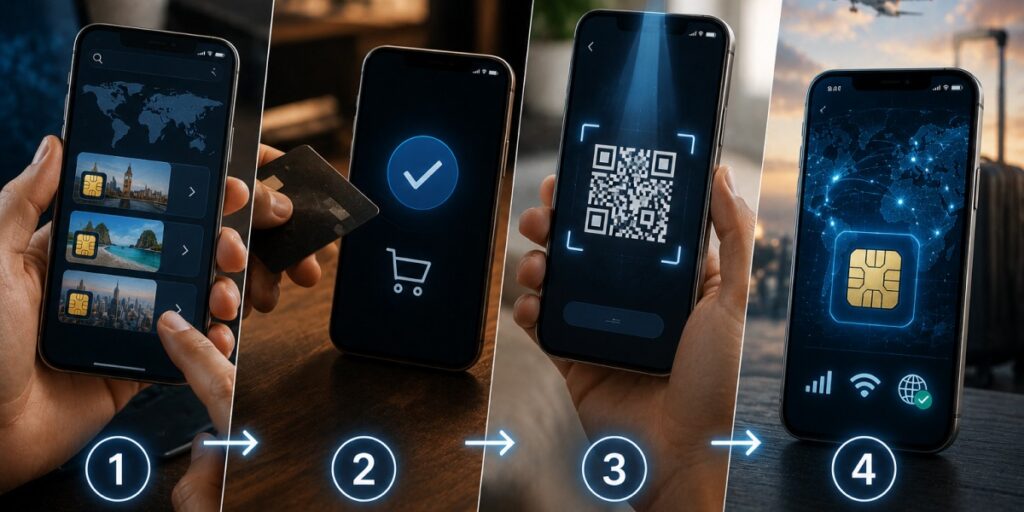
Switching to an eSIM is easier than it sounds, you just have to follow a few steps:
- Select a provider: Search for a trustworthy eSIM provider. You can analyze reviews and ratings on different platforms online.
- Buy Online: Select one eSIM plan and pay for it as you like. Online providers offer you multiple payment methods.
- Scan & Install: After purchase, you’ll receive a QR code via email. Scan it in your settings to get connected to the internet.
It’s that simple. You never have to juggle tiny plastic cards again. You can simply buy an eSIM online from trusted services like Airhub to get connected and protect your privacy seamlessly.
Airhub: Your eSIM Co-Pilot
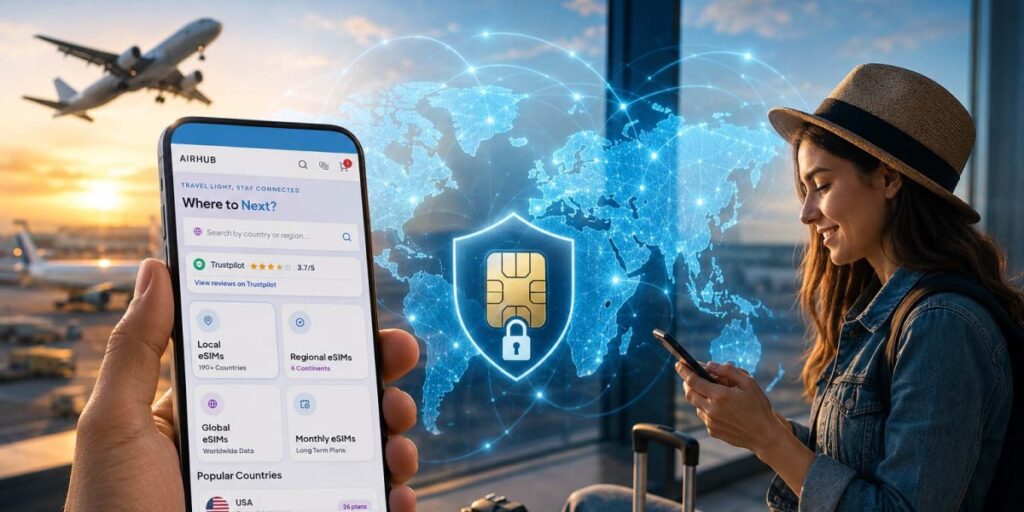
For travelers and digital nomads, Airhub stands out as an eSIM platform that makes this transition easy. Airhub offers instant eSIM data plans in 190+ countries. You simply open the Airhub app or website, pick where you’re headed and how much data you need, pay, and you’re sent a QR code. Scan it, and your eSIM is ready to roll. Maps, messaging, and calls all work the moment you land. Also, secure yourself from threats, as no one can make an eSIM clone.
Prevent SIM Card Cloning with Ease!
SIM card cloning might sound like sci-fi, but it’s a very real scam that can turn your phone against you. We’ve seen that attackers who clone or swap a SIM gain full control of your number, with devastating consequences for your accounts and privacy. The good news is, you can stop letting old plastic SIMs put you at risk. By switching to an eSIM, you add a strong shield: one that’s built into your device and managed by the carrier.
FAQs
1. What is SIM card cloning?
SIM card cloning is copying the information on one SIM into another. A cloned SIM has the same IMSI and security keys as the original, so the network sees it as your device.
2. What should I do if my SIM is cloned?
First, contact your mobile carrier immediately. Ask them to deactivate the compromised SIM and issue you a new one. Change your account passwords and enable stronger 2FA methods instead of SMS codes. Monitor your financial and online accounts closely for any unauthorized activity.
3. Is eSIM safer than a physical SIM card?
Generally, yes. An eSIM is embedded in your device and protected by strong encryption. There’s no removable card for thieves to steal or clone. Because it’s managed by the carrier, it’s locked to your phone and harder to port away compared to a plastic SIM.
4. Can eSIM be cloned like physical SIMs?
eSIMs can’t be easily cloned. The eSIM’s digital profile is encrypted and tied to the device. A hacker would need not only your encrypted keys but also your carrier’s systems credentials to duplicate it, an extremely unlikely scenario.
5. Are eSIMs more secure for travelers?
Yes. Travelers using eSIMs avoid physical SIM swaps and reduce exposure to local SIM scams. You can buy a plan online and connect on arrival, without handling plastic cards. Many use eSIM for the convenience and added security: for example, over half of eSIM users first adopted it for travel.


