








Ready to try eSIMs and change the way you stay connected?
Download the Airhub app to purchase, manage and top up your eSIMs anytime, anywhere!
App exclusive5% off at checkout
Explore the top places to visit in maldives and plan your perfect beach vacation. Plan your tropical getaway with beaches, and island adventures.
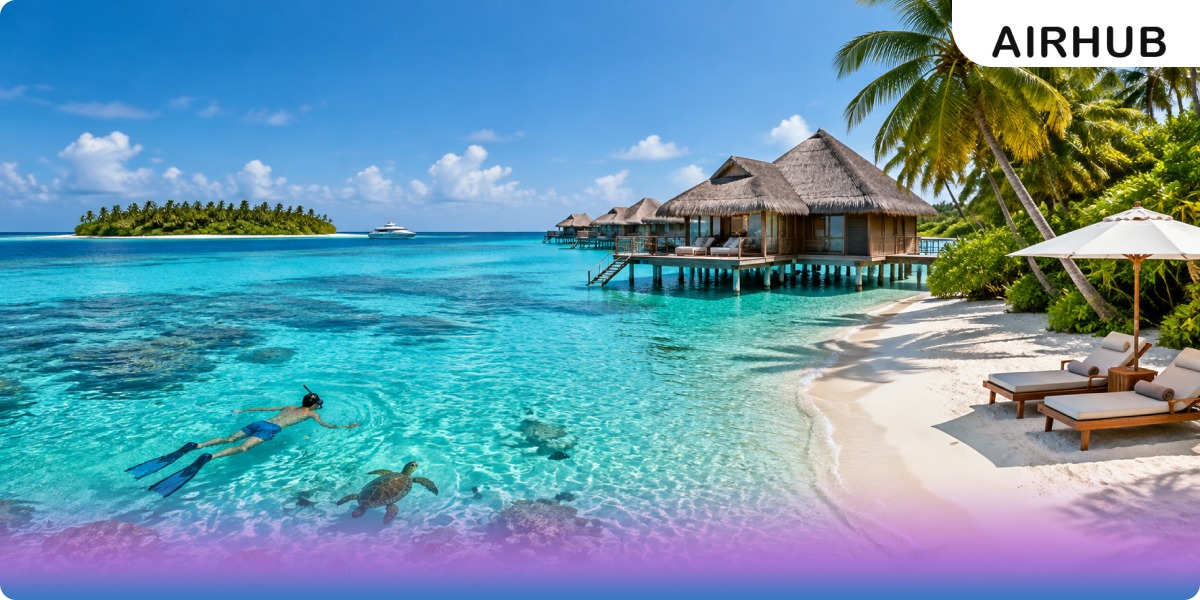
Over a thousand coral islands are scattered across this stretch of the Indian Ocean, and the brochure clichés impossibly blue water, powder-white sand, reefs humming with life happen to be true. But there's a catch nobody tells first-timers until the booking screen is open: you don't tour the Maldives the way you'd tour a city, ticking off sights between hotels. You choose an island, maybe two, and that island becomes the trip. Which flips the real question. It isn't "what are the best places to visit in the Maldives" so much as which island is right for you and how the pieces fit together once you land.
That's what this guide is built to solve. We'll start with how a Maldives trip actually works, then when to go, then the islands themselves grouped into luxury resort islands, budget-friendly local islands, and natural wonders each with the details that actually help you choose. Near the end there's a quick "which island for you" match, plus the practicalities of getting around and staying connected.
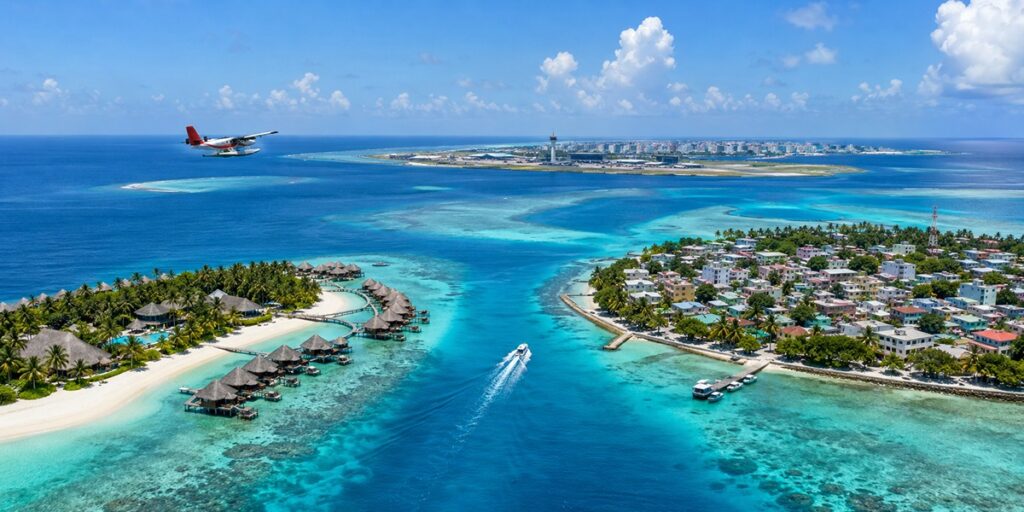
Get this part straight and everything else falls into place. Nearly every international visitor lands at Velana International Airport (Malé), and from there you transfer to your island a transfer that quietly sets the tone for the whole trip:
Then there's the distinction that trips up most first-timers — the two very different kinds of island you can stay on:
One more piece of vocabulary: islands cluster into atolls the natural ring-shaped groups like North Malé, Baa, and Ari. You'll see those names on every booking page, so it helps to think of them as the Maldives' neighborhoods.
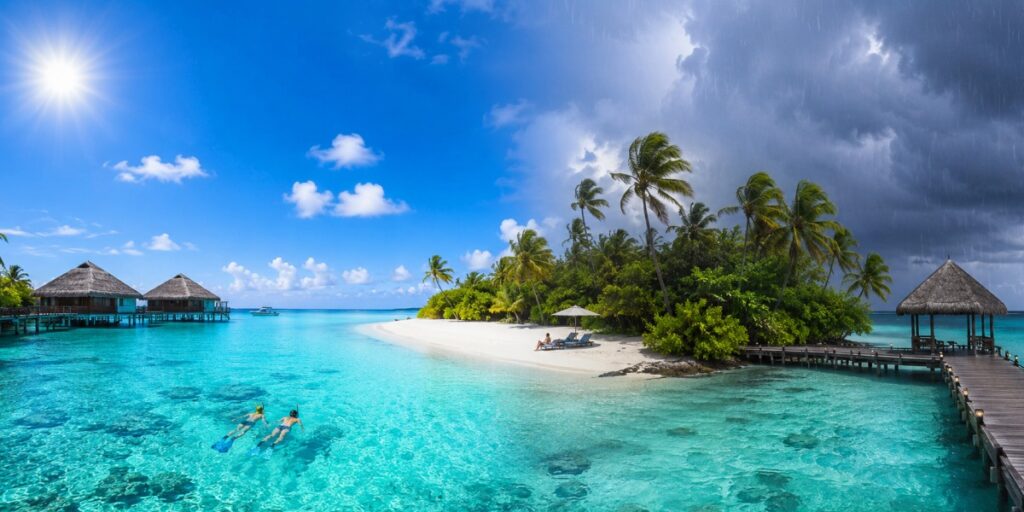
It's warm here all year, but two seasons are worth planning around. The dry season (roughly November to April) is the headline act: clearest water, lowest humidity, best visibility for diving and snorkeling and, inevitably, the highest prices. The wet season (roughly May to October) flips the trade-off, running greener, quieter, and cheaper, with more rain (usually short tropical bursts rather than washed-out days) and a bit more wind. Chasing perfect weather? Go in the dry season. Chasing value? The shoulder months on either side are the sweet spot.
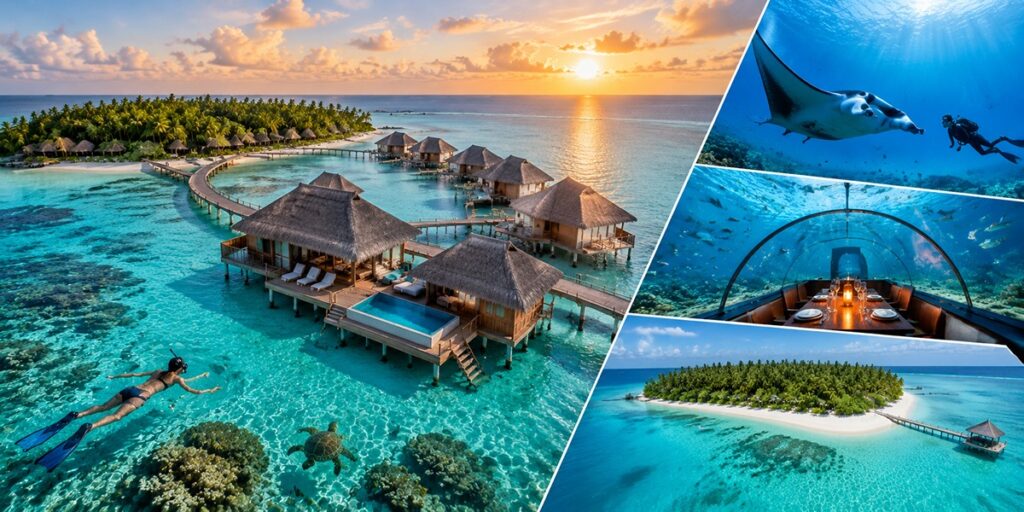
These are grouped by island type, so you can tell at a glance what kind of stay each one really is.
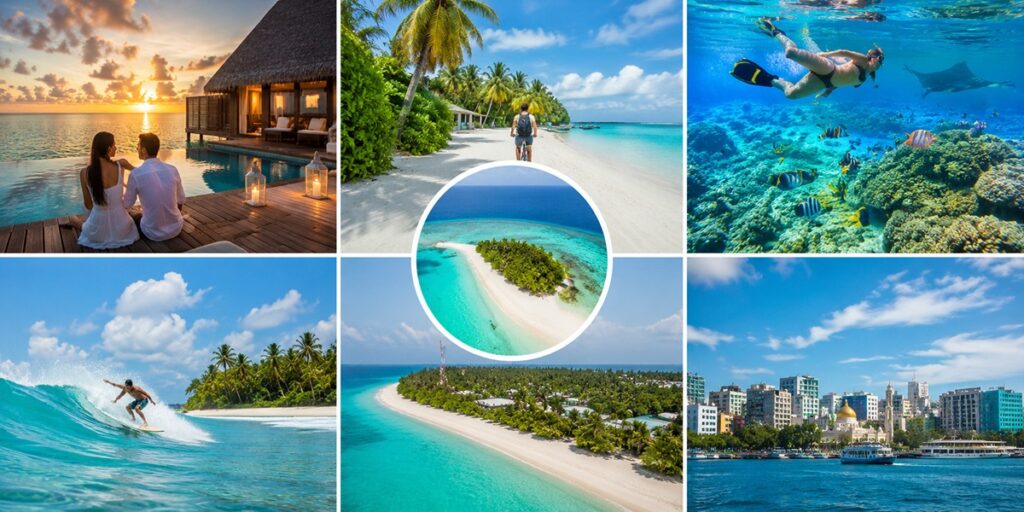
Pressed for time? Match your trip to the island that fits it:
| If you're… | Head to | Island type |
| Honeymooning / celebrating | Rangali, Baa Atoll resorts | Luxury resort |
| Travelling on a budget | Maafushi, Thulusdhoo | Local guesthouse |
| A diver or snorkeler | Ari Atoll, Hanifaru Bay | Resort / marine site |
| Chasing surf | Thulusdhoo | Local island |
| After peace and seclusion | Fulhadhoo, Dhigurah | Local island |
| Wanting a quick culture stop | Malé | Capital |
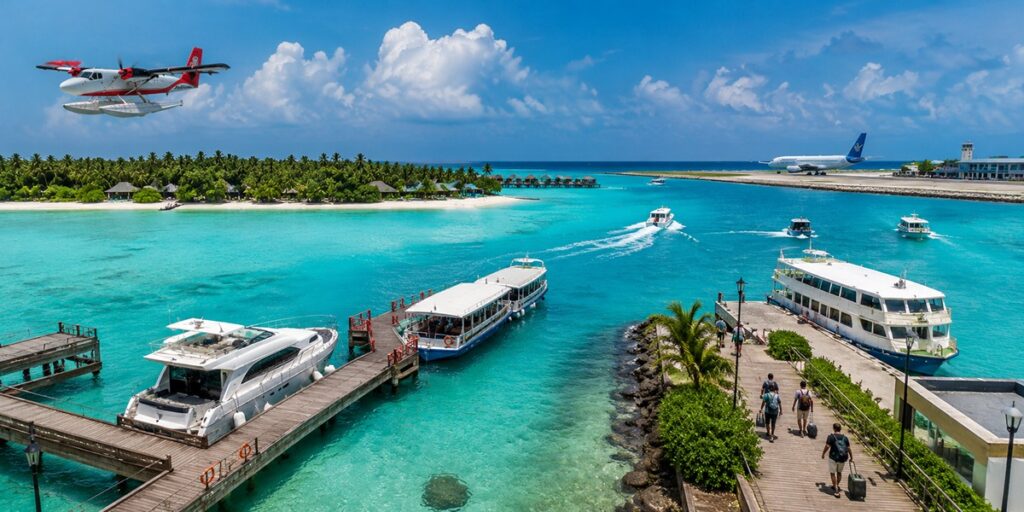
Forget spontaneous island-hopping out here the sea is the road, and it rewards a bit of planning. Seaplanes serve the remote resorts, but only in daylight and with baggage limits. Speedboats handle shorter resort transfers and plenty of local islands. Domestic flights bridge Malé and the far-flung atolls, usually with a boat for the final leg. And public ferries are the cheapest way to move between local islands, if the slowest and they don't run every day. One quirk to plan around: because each resort has its island entirely to itself, nipping over to a neighbor for dinner generally isn't possible. You eat where you sleep.
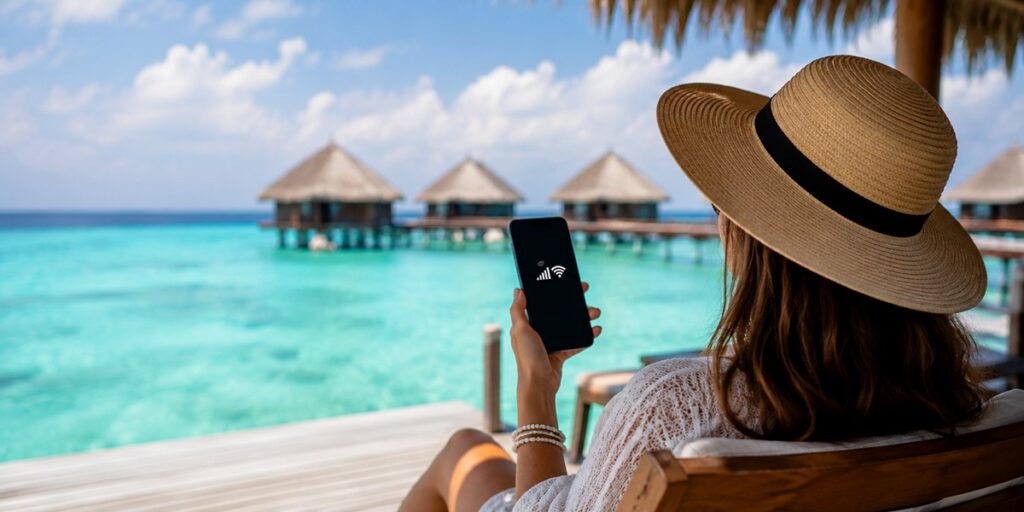
Resort Wi-Fi is common, and often genuinely good right up until you step onto a seaplane, a speedboat transfer, a sandbank picnic, or a local island, at which point it evaporates. And roaming charges out here can sting. Carrying your own data is the difference between sharing the sunset in real time (or pulling up a booking mid-transfer) and waiting until you're back within range of a router.
The easy fix is a travel eSIM: buy it before you fly and you're online the moment you touch down at Malé. An eSIM Maldives plan from Airhub covers your trip's data with no SIM-shop queue and no roaming bill waiting at home, and installing it takes a couple of minutes with a QR code. New to the idea? Here are the benefits of using one for travel, and it's worth a quick run through an international travel checklist before you go.
Give Malé a half-day, then commit to one island that fits your style Maafushi for budget and local life, an Ari or Baa Atoll resort for luxury and diving. A lot of first-timers pair one local island with one resort island to get both sides of the Maldives in a single trip.
A resort island is a single private resort taking up the whole island polished, secluded, and pricey. A local (inhabited) island is a real Maldivian town with affordable guesthouses: you gain local life and lower prices, but alcohol is generally unavailable and swimwear is limited to designated bikini beaches.
The dry season, roughly November to April, brings the best weather and clearest water and the steepest prices. The wet season, around May to October, runs greener, quieter, and cheaper, with more rain.
For a relaxed, beach-first trip, about 5–7 days does it. If you want to combine a local island with a resort, or reach a remote atoll, give yourself 7–10.
By boat and plane, never by car. Speedboats and public ferries cover nearby islands; seaplanes and domestic flights reach the remote atolls. Your transfer is usually arranged with your resort or guesthouse once you've booked.
No. The glowing plankton at Vaadhoo is a natural, seasonal event, not a nightly guarantee so treat catching it as a lucky bonus rather than a fixed item on the itinerary.
Get your Airhub eSIM in minutes and travel without roaming surprises.
Download the Airhub app to purchase, manage and top up your eSIMs anytime, anywhere!